This Month’s Featured Article
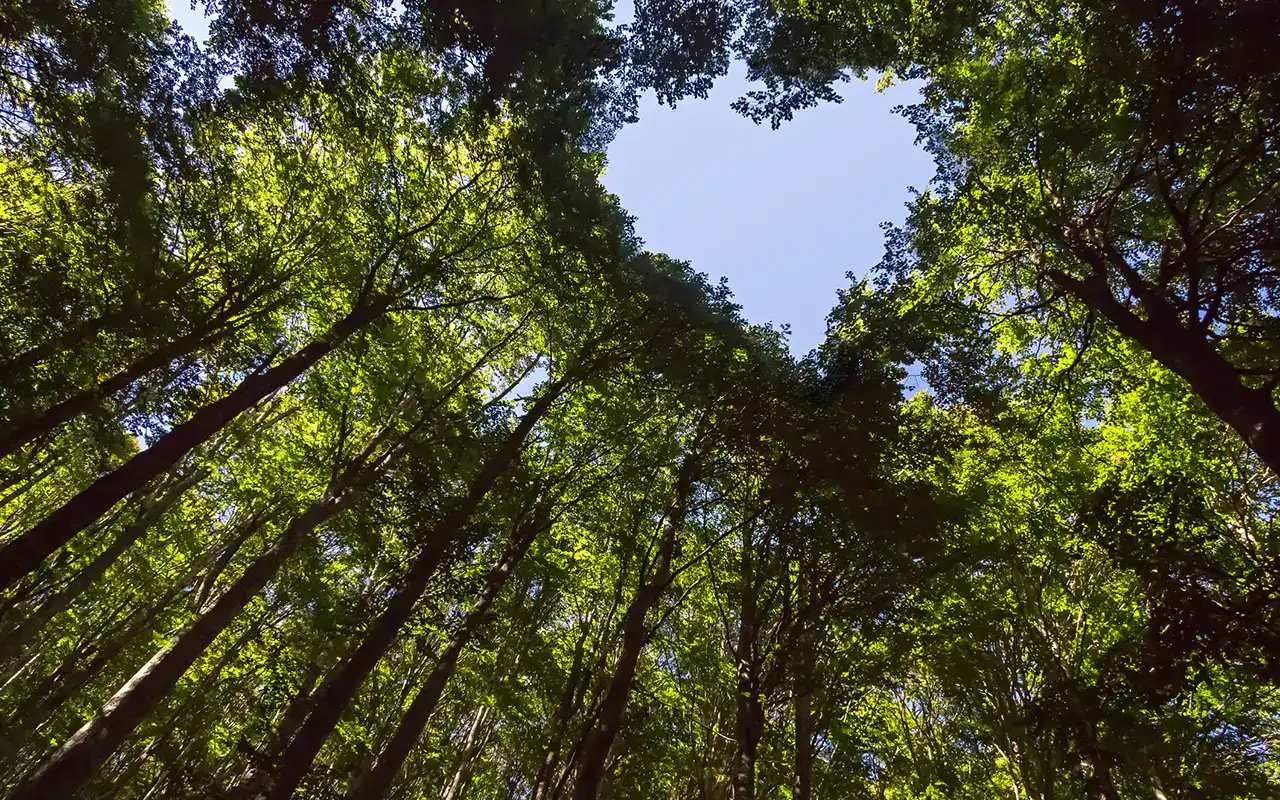
FOREST BATHING
At this very moment, I’m leaning back lazily – and perhaps a tad dangerously – in a somewhat shabby but deliciously comfy chocolate brown microsuede recliner, savoring my first in a string of daily rituals. This one is conceivably my favorite; at the very least, it’s a requisite part of each day – if I want to stay alert, that is.
Inevitably, there will be more cups of coffee to follow. Like my late dad, I’m partial to a robust roast – straightforward and strong – reminiscent of the aromatic cups ’o joe I remember my folks getting every summer from those classic diners that are ubiquitous throughout the Northeast. My lifelong preference for full-bodied, hot-as-you-can-tolerate coffee has led many of my loved ones to describe me not only as a coffee fiend with a penchant for drinking mud; some have gone so far as to label my own brew “cowboy coffee.” I can’t argue with the portrayal.
With mug in hand, my longish legs are stretched out before me, one crossed over the other. My slipper-clad feet are extended comfortably over the chair’s edge. From afar, I likely look like an elongated, fuzzy, oddly contoured, and lumbering checkerboard, thanks to the cuddly red-and-black robe I’m wearing – a gift from my thoughtful mother-in-law a few Christmases back.
My husband, Jason, has an identical robe hanging on his side of the closet. Soft and comfy, they’re perfect for keeping us snug when we’re hunkered inside our cabin.
Stretching those legs and
exploring the AT
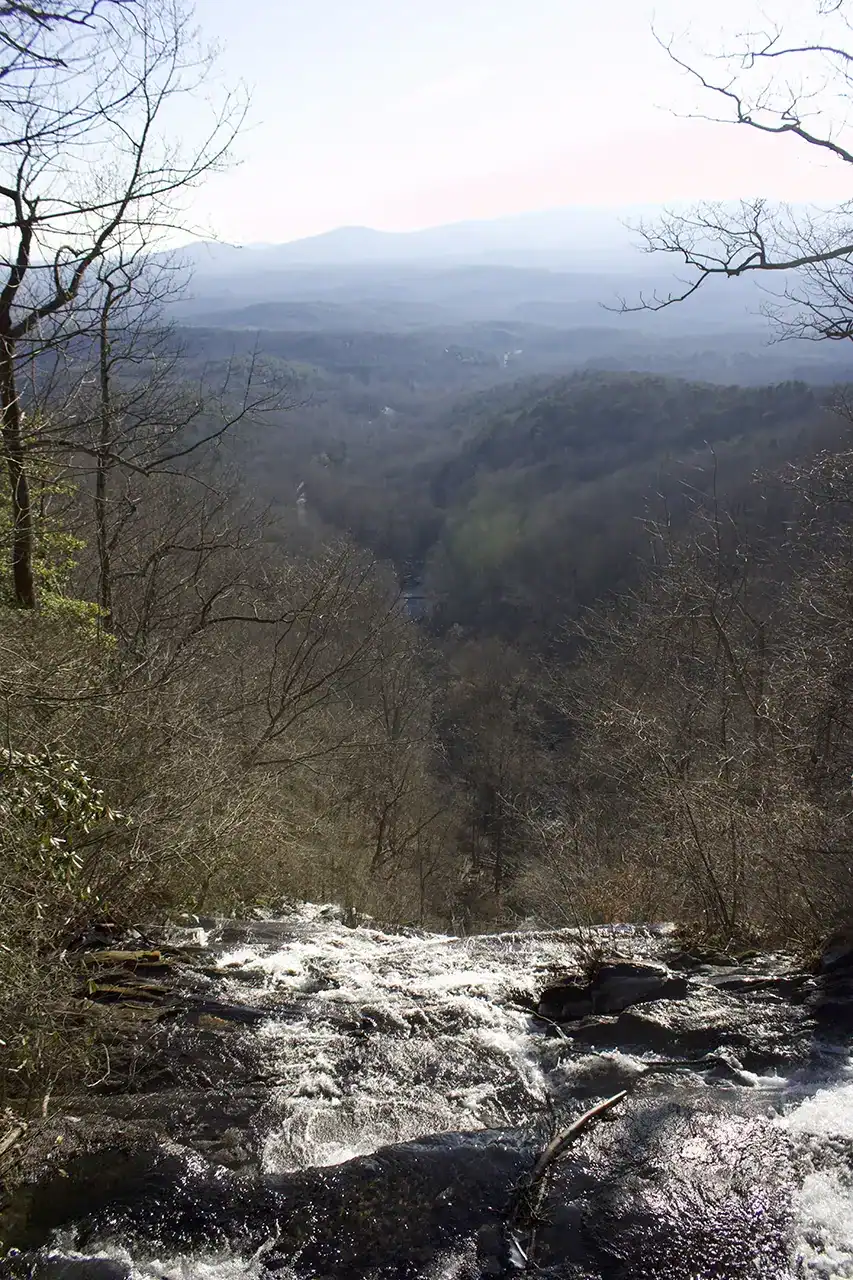
Currently, I’m ensconced in a quaint but modernized split-log cabin that’s flooded with light, deep in the Blue Ridge Mountains. Specifically, I’m in Ellijay, Georgia, near the southern terminus region of the Appalachian Trail, which stretches northward, ending in Maine.
Several of our Harlem Valley towns belong to the AT Community, including Pawling and Dover, New York. The Harlem Valley “is part of the 2,190-mile-long Appalachian Mountain landscape known as the Wild East. Only an hour train ride from New York City, visitors can explore 16 miles of the AT through Dover and Pawling, with hikes ranging in ability from easy rolling terrain to rock scrambles,” according to the Appalachian Trail Conservancy.
Just across the border, there’s more trail to explore as the AT continues into the Nutmeg State. It “skirts the town [of Falls Village, Connecticut] along the east side of the river, with a portion of the Trail forming part of a gentle, one-mile, universally accessible loop. Just below the bridge on the west side of the Housatonic is a picnic area that offers a scenic view of the river.” From NYC, it’s about an hour and 15 minutes by car to Hartford, the nearest city.
Thru-hikers trudging along US Route 7 in Connecticut, which parallels the AT, will likely chance upon some other familiar towns we all know and love near the trail, like Kent, Cornwall Bridge, and Salisbury – where AT hikers famously pop into LaBonne’s Market for a quick pick-me-up and frequent friendly chats with locals. Bull’s Bridge, a covered bridge and waterfall near Kent, is another popular attraction, but the scenic spot gets so packed that even the AT Conservancy warns it’s “best visited on a weekday due to its popularity and limited parking.”
In Massachusetts, AT hikers are encouraged to visit Mount Greylock near North Adams, roughly two-and-a-half hours from Boston. It’s the state’s highest point at 3,491 feet, providing 360-degree views via a 93-foot-tall tower that honors war veterans. On a clear day with good visibility, it’s been reported that hikers “can see for 90 miles” from atop the tower.
For details, go to appalachiantrail.org.
Back to the Blue Ridge Mountains
This is my first time staying in the Blue Ridge region. It’s our first trip to Georgia as a family and the first time we’ve visited Ellijay. It’s lovely. Ellijay is the Apple Capital of Georgia, with Georgia being the Peach State.
We landed in Georgia one day before the Southeast saw the “Ice Storm of a Generation,” as news stations dubbed the rare cold snap that brought ice, snow, and extremely low temperatures within 24 hours of our arrival.
A couple of inches of snow have fallen since. That was the storm’s first phase (more followed shortly afterward – not much by northern standards, but those Georgians were certainly frozen in their tracks). The Arctic blast gave us the perfect chance to revel in a wintry wonderland at a slower-than-usual pace; it was all we could have wished for and more during our midwinter getaway.
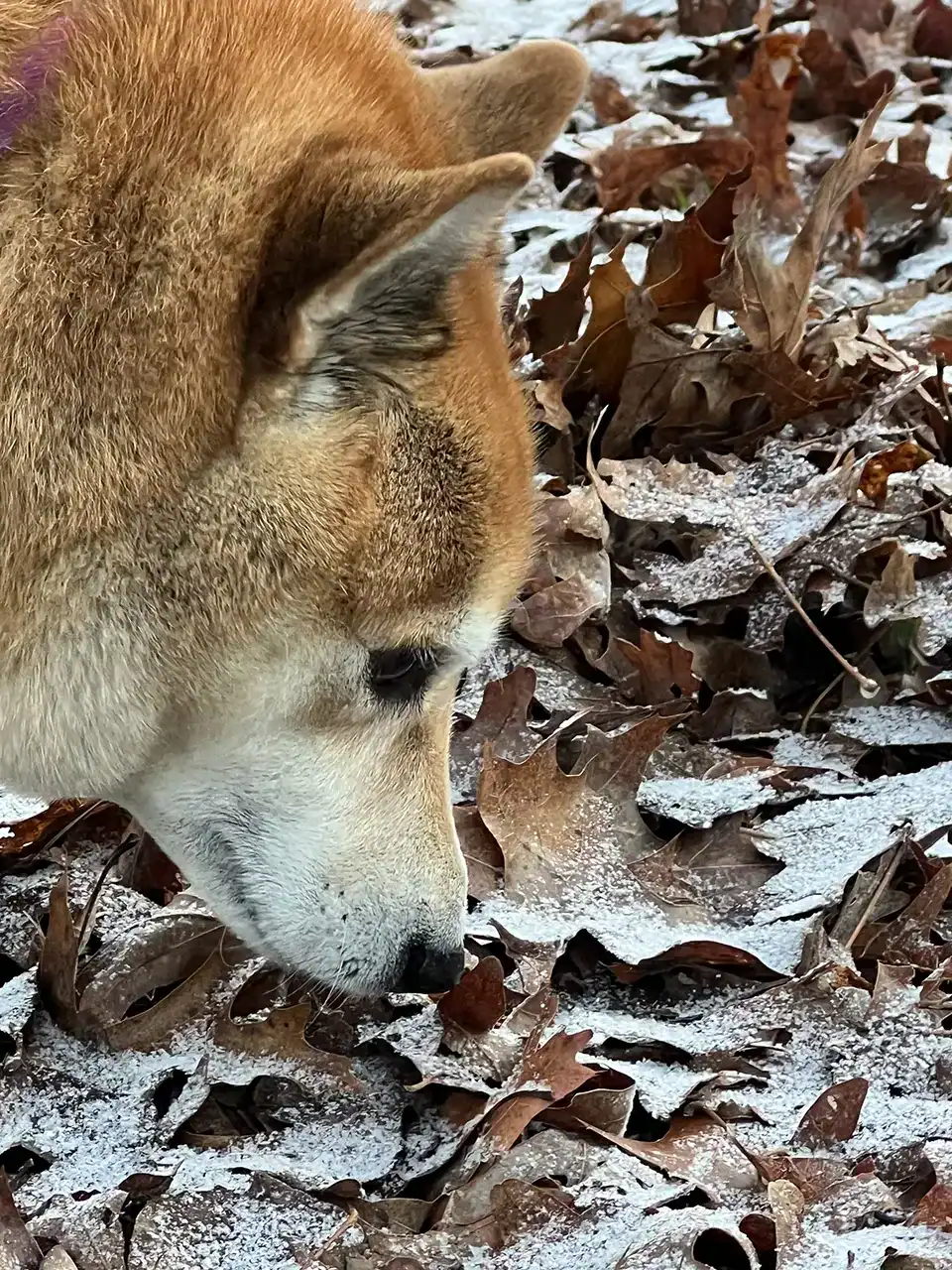
The unexpected storm (unexpected before our holiday, at least) provided a beautiful backdrop while exploring the Blue Ridge region. We chose this area intentionally, so we could bring Bailey, our nine-year-old Shiba Inu. Ellijay is very dog-friendly.
Bailey is accustomed to walking along beaches and boardwalks, parks and preserves; she’s never experienced real winter weather before. Happily, she loves the change of scenery and the different climate. In fact, this vacation has basically been all fun and games for Bailey thus far – just one great, big adventure!
Jason and I are somewhat shocked by how fun and fulfilling it’s been watching Bailey experience the snow and the great outdoors – with minimal restrictions – for the first time. She’s been squeezing the maximum amount of joy from every moment. I would have thought it impossible, but our little furball may be endearing herself to us even more during this mountainside escape. Completely engrossed in her surroundings, she’s been on her best behavior, and she’s been listening like a champ. We’re very thankful she’s following her training and thrilled she’s so excited to be here. Seeing Bailey this elated is beyond gratifying.
Bailey’s joyful presence and adorable antics during this trip may be the best part – she’s giving Jason and me more pleasure than almost any other activity. The smile on her face says it all. Shibas are known for their smiles, and the grin on Bailey’s foxy-looking orange countenance has never been more prominent than during this vacation.
Part of me is curious if Bailey’s glee and affinity for the mountains is in part some subconscious recall, as she’s actually a Georgia native. Jason got Bailey as a puppy from a breeder here, though she hasn’t been back since.
Recall: By a native and of nature
Since arriving in Georgia, Bailey’s been investigating every nook and cranny; it’s all brand-new to her. Outside, it’s ice crystals and snowflakes; everything is silvery and white. The rural dirt road is little more than compressed rocks and grit, lined on both sides by a forest floor still carpeted with fallen leaves, frozen into place and dusted with snow. Herds of deer wander it constantly. Bailey’s Nirvana.
Bailey seems as keen on the concept of forest bathing as I am. It was one of the main reasons Jason and I chose the Blue Ridge Mountains for our getaway. From the anecdotal evidence I’ve gathered while here, forest therapy (aka forest bathing) is just as alluring – and just as meaningful – to canines as it is to humans.
I get it.
Forest bathing
This ancient concept has Shinto and Buddhist roots. Its modern-day revival, called “Shinrin-yoku,” was reintroduced in Japan in 1982 thanks to the Ministry of Agriculture, Forestry & Fisheries’ then-director, Tomohide Akiyama.
The Forest Therapy Society explains at fo-society.jp/en that forest bathing is “a research-based healing practice through immersion in forests with the aim of promoting mental and physical health and improving disease prevention while at the same time being able to enjoy and appreciate the forest.”
The FTS adds that humans were born with five senses into a very simple environment. As of 2026, we’ve “moved very far away” from our native ecosystem into manmade and unnatural settings.
Our bodies, our souls, our psyches crave nature.
“Today we live in a modern artificial environment, which is different from the original living environment, and this is very stressful on us,” the Society website explains, listing ways in which forest bathing can reduce stress and positively affect our state of mind.
The FTS further claims those who bring nature into their daily lives and allow it to seep into their senses “will feel the trees and wind in the forest.”
Feeling the trees and the wind
For the entirety of our sojourn, Jason, Bailey, and I have been doing just that – embracing nature – and we’re enjoying a closer and more meaningful relationship with our native environment as a result. Even Bailey’s been communing with the surrounding natural world in a way I’ve never observed. She’s run after deer for hundreds of yards, only to return promptly when called. She’s sniffed and smelled under every possible rock, twig, and leaf in her path, but to our amazement, walks away leaving her discoveries practically undisturbed. She’s investigated what seems like hundreds of microscopic snowflakes only to realize they melt instantaneously, yet that does little to quell her curiosity about why those cold bits of fluff keep falling from the sky, nor does it dissuade her from continuing to inspect them.
We feel more in sync with the great outdoors than ever, and we regularly venture outside to explore Mother Nature’s offerings. Jason agrees: It’s been magical.
We can breathe deeper, laugh harder, sing louder, and walk farther. It feels amazing.
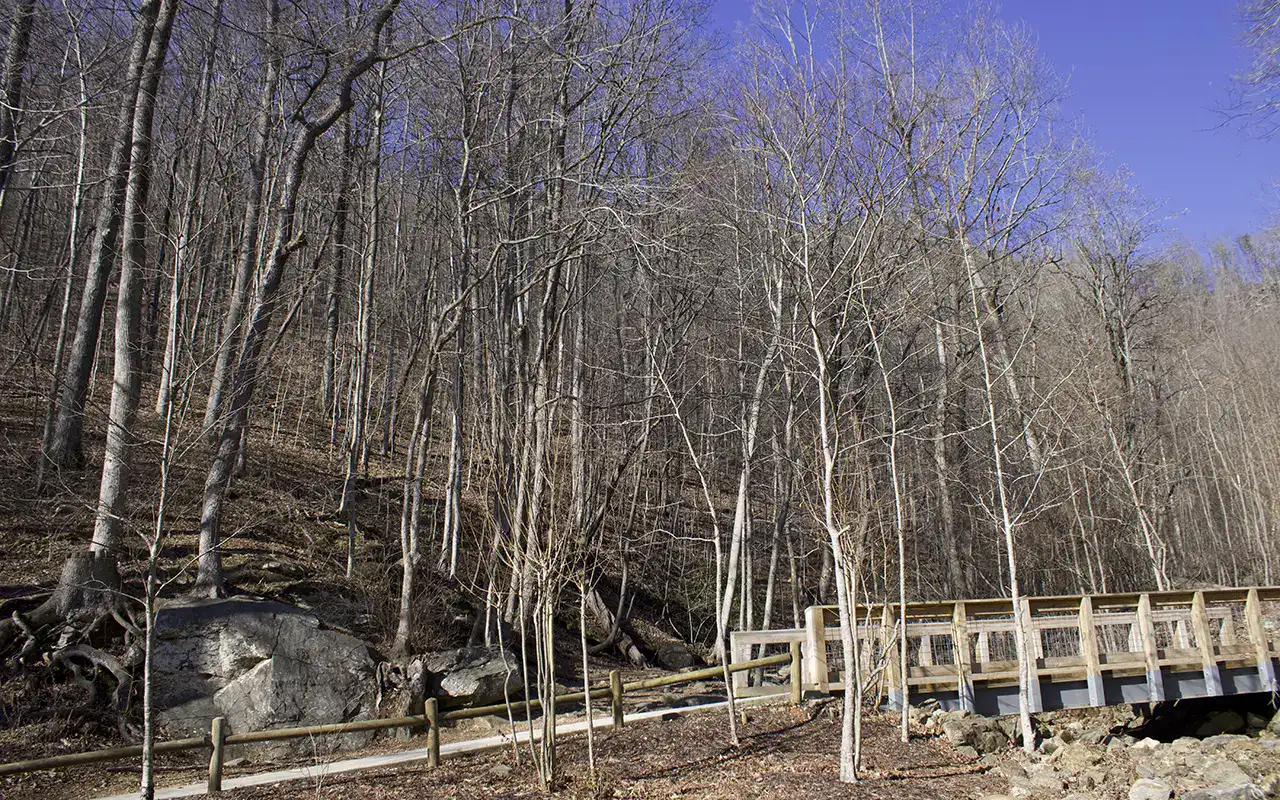
Each day, we flounce amid the flora and fauna, ramble along riverbeds, cross over creeks, and wander upon waterfalls. Even when the deep freeze kept us indoors, we huddled near the fireplace to stare out at the beautiful views beyond and, when brave enough, bundled up to venture onto one of the many porches and breathe in the cold mountain air. It’s been both inspiring and invigorating!
The point? It’s possible to immerse yourself in nature anywhere. Doing so promises to help unlock your senses in a visceral way; it has for me (and for Jason), which has helped me tap into my creativity. It’s been a stimulating and liberating experience.
I’m amazed what a dose of fresh air can do. Best of all, gulping in all that air is free and available to everyone. The basic mix of gases – primarily nitrogen and oxygen – is essential for human life, and it can do wonders for our spirit and our soul.
No wrong way
The best part of it all is that there’s really no wrong way to nature bathe, and the Society seems to back me up on this.
“We advise individuals to find the most relaxing method that is best for them,” states the website. “Although the trigger to what makes us feel relaxed varies, we will realize that we enjoy being in nature and are made to fit in a natural environment.”
Outdated science implied one must do strenuous activity for it to be beneficial. Today an increasing number of doctors place a priority on mental health and realize that an inquisitive mind, a soaring spirit, and a serene soul are vital for a flourishing and healthy body. Personally, I know when my mind is calm, my body seems to function more harmoniously, too.
Forest bathing helps. The basic premise is simple: submerge yourself in a forest. If a traditional forest isn’t immediately or easily available, think outside the box. Find a local park, a botanical garden, a nature preserve, or even a patch of grass in your backyard – just claim a bit of green space for a spell and submerge yourself in its wonders. Though a forest is the ideal environment to gain optimal benefits, the main goal is to immerse yourself in nature – its sights, its sounds, its smells.
The Society explains why forest therapy works: “From the moment you step into a lush forest covered with dense vegetation and fragrant fresh soil, you can feel the surrounding life with your senses. We experience the therapeutic and relaxing power of the forest.”
Activities to enjoy while forest bathing may be found online, along with relaxation techniques like mindful meditation, yogic breathing, and aromatherapy. The FTS suggests forest walking or visiting quaint towns and villages dotted along many of the forests where we live, work, or visit. Other recommendations include enjoying natural resources like hot springs, or preparing healthy meals with fresh local ingredients, perhaps foraged during a forest trek (make sure all ingredients are safe to eat!).
Local and thru-hiking
Checking out the wildlife is a common motivator for many who forest bathe. And while many people hike locally or regionally, others pursue more inspirational feats of strength and endurance, like hiking the nearly 2,200-mile-long AT. Generally, it takes the average hiker about six months to complete the entire length of the AT. Its starting point is in Springer Mountain, GA, and it ends at Mount Katahdin, ME.
The consensus seems to be that whether taking a brief break or an extended adventure in nature, everyone can benefit from forest therapy. People see a lot of green – rather than spend a lot of green – while soaking in all of nature’s glory.
Those who dip a toe into the waters of forest bathing may be surprised by how powerful the experience is, and how long the effects can last. Beyond new discoveries or unexplored territory, those who try this modern-day therapy rooted in ancient wisdom may find the tranquility and calm they’re seeking – something we could all use.
And once a toe gets dipped into the waters of forest bathing, participants may be surprised by just how powerful the experience is and by how long the effects last. I’m even willing to bet those who try this modern-day therapy rooted in our Earth’s ancient wisdom will quickly find themselves awash in the tranquility and calm they’ve been seeking – something we could all use a little more of, if not a lot – as we try to leave each day’s stressors behind… •