This Month’s Featured Article
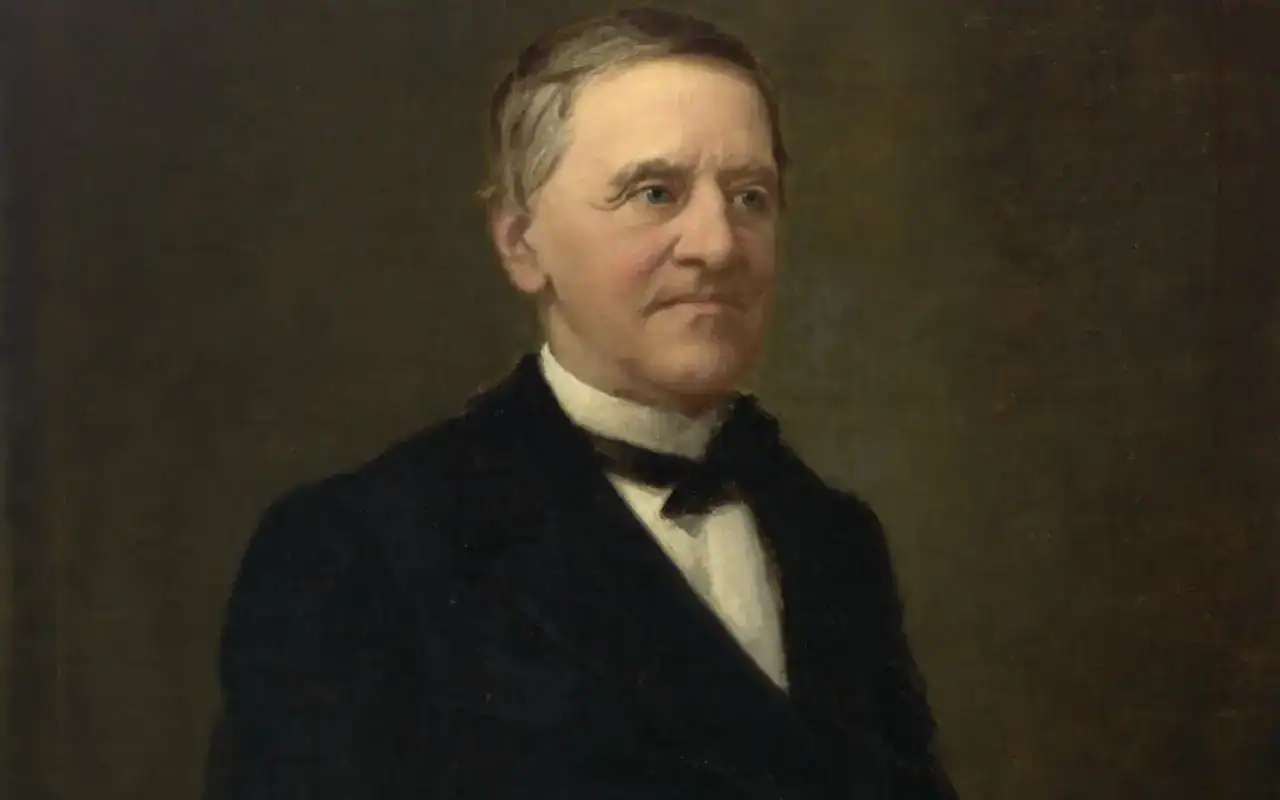
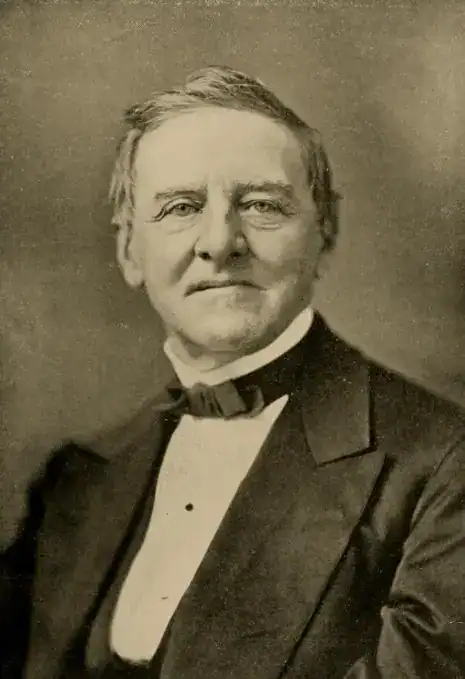
SAMUEL TILDEN
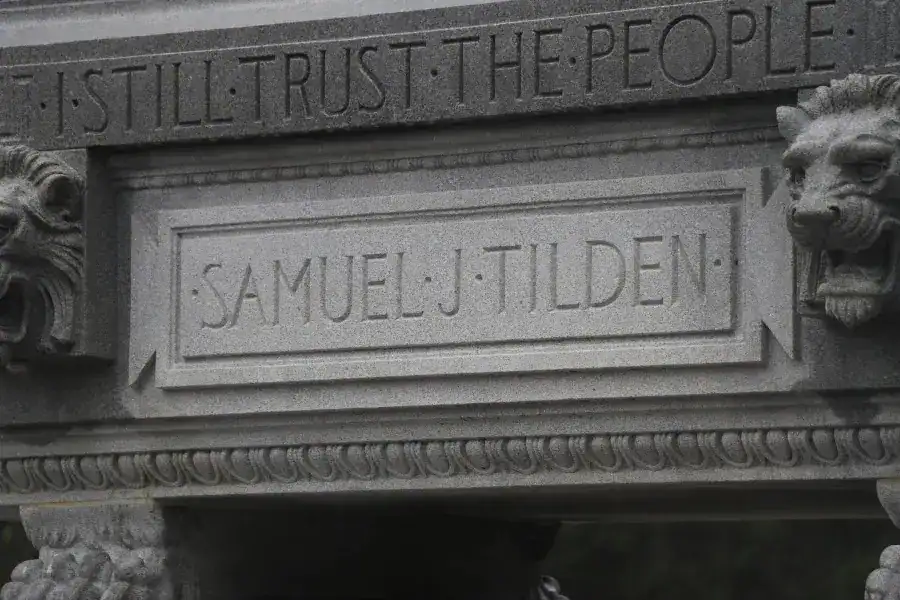
“I still trust the people”
– Epitaph of Samuel J. Tilden
He’d have had every right to not.
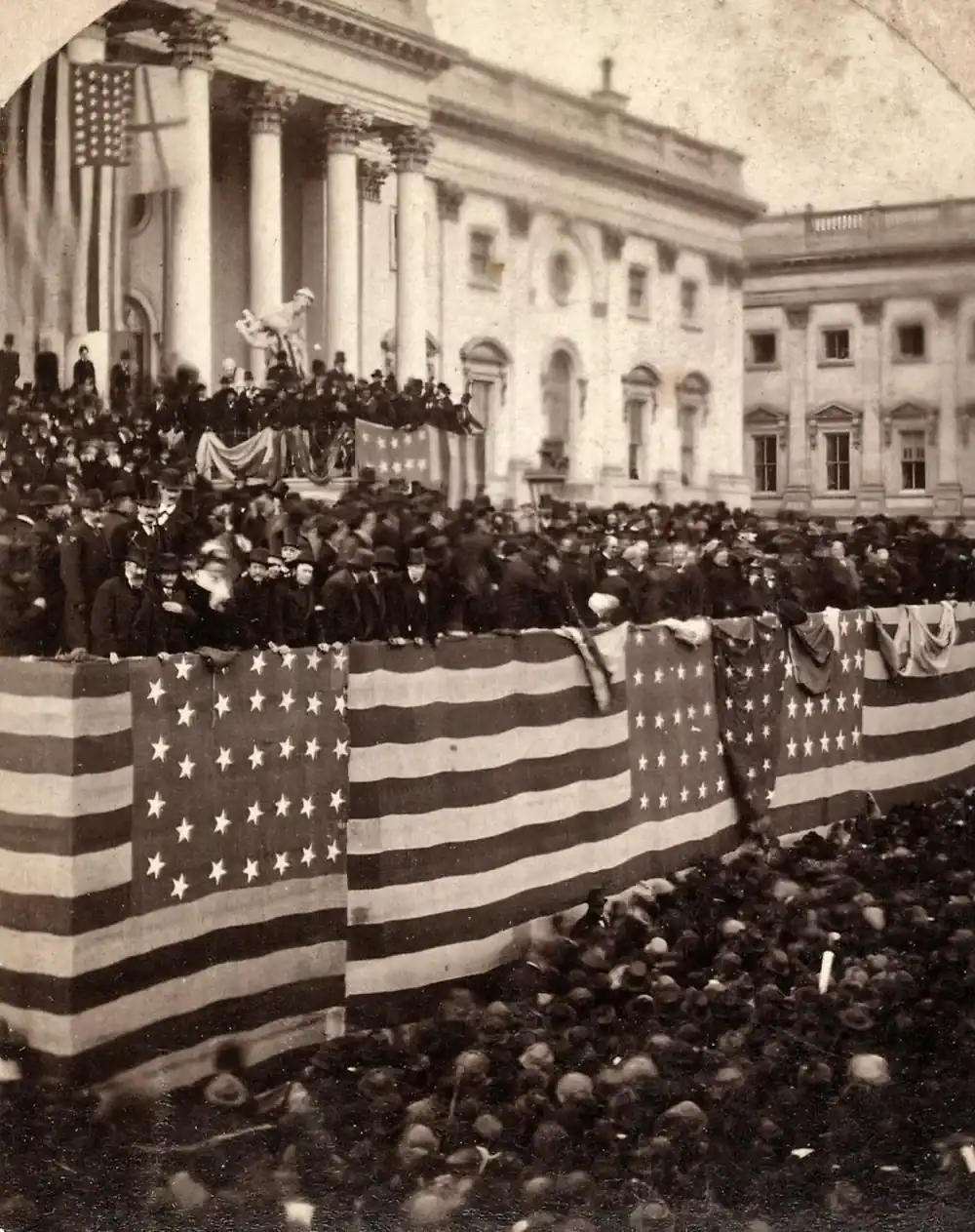
The 1876 United States presidential election was expected to be close, but not so close that the victor would go officially undeclared until three days prior to the scheduled March 5, 1877, inauguration, following the work of a Congressionally appointed electoral commission. Nor, when they headed to the polls on November 7, 1876, would anyone have suspected that Chatham, New York’s political potentate, Louis Payn, known as “The Marshal,” would play a role in what many would say was a put-up job that handed victory to the man who had in fact been turned away at polls.
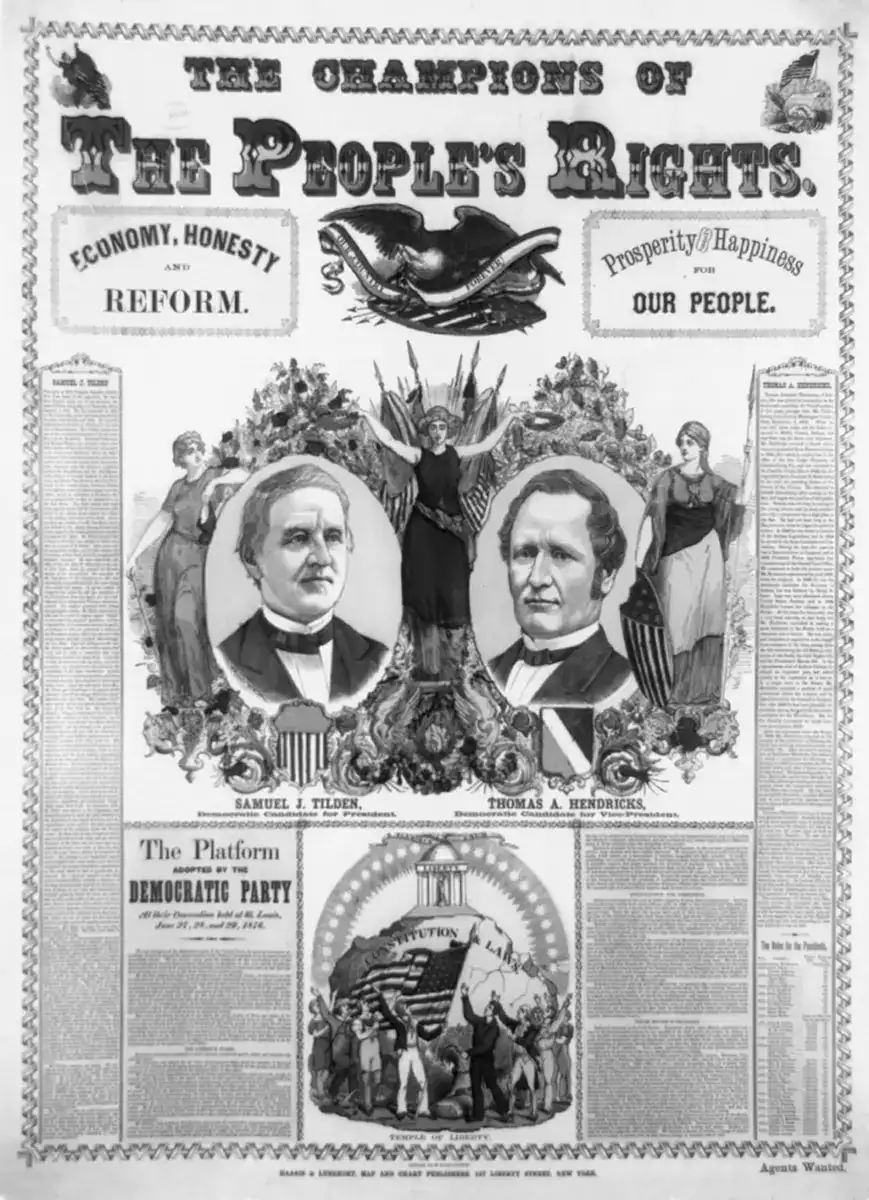
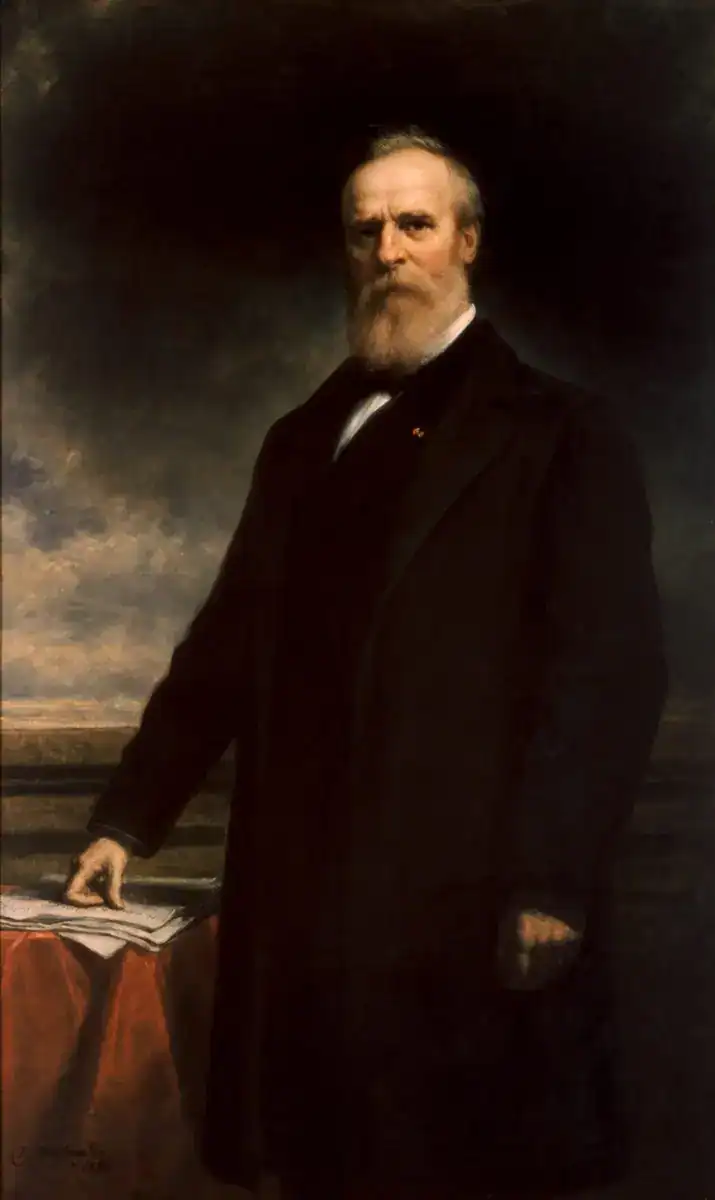
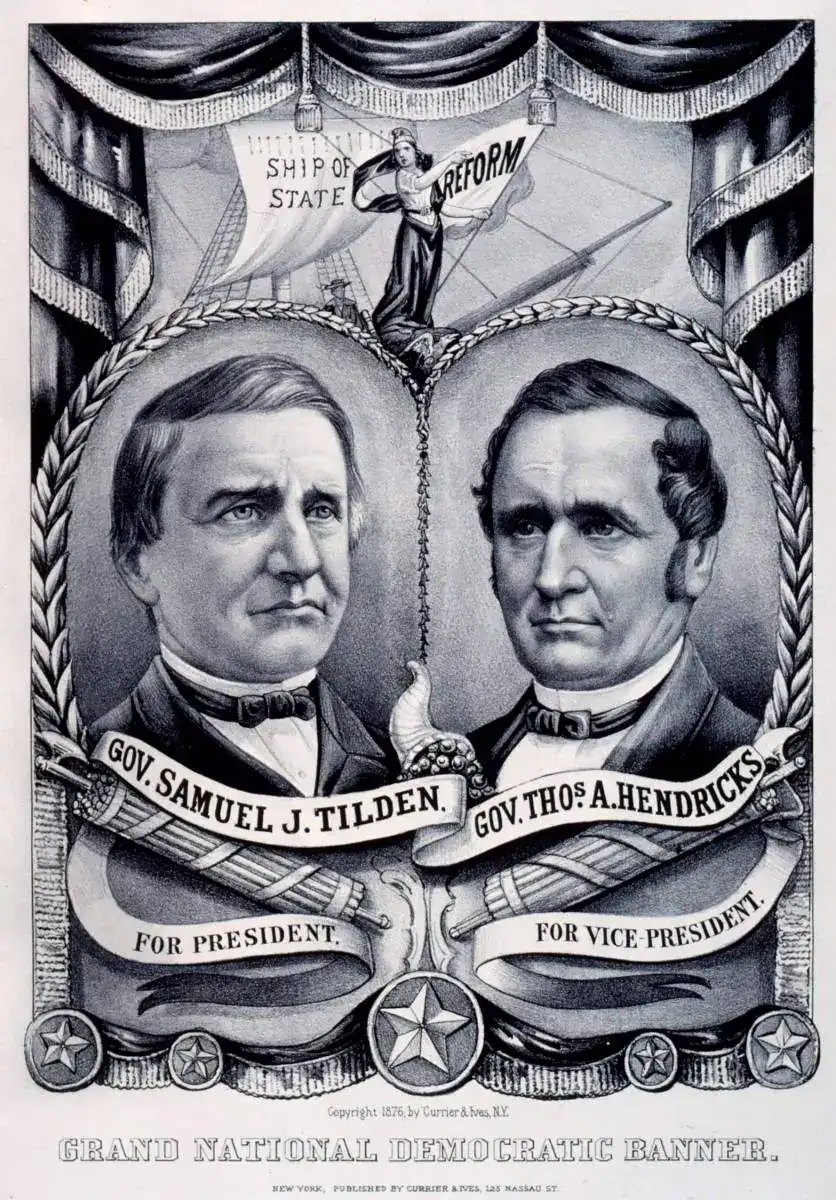
The race – in those days, campaigning by presidential candidates on their own behalf was frowned upon – was between 62-year-old New York Governor Samuel J. Tilden from New Lebanon, a Democrat, and Republican Ohio Governor Rutherford B. Hayes. It would be described by a Smithsonian Internet post as the “ugliest, most contentious, and most controversial presidential election in US history,” notwithstanding elections of recent times.
From New Lebanon to the
White House?
Born in New Lebanon, NY, on February 9, 1814, Tilden’s professed political idol was Kinderhook’s Martin Van Buren, the 8th President of the United States and friend of the family. Tilden would eventually establish his law practice in New York City and reside in Yonkers.
Fervent, one might say, was the opposition to Tilden, with the election arriving on the heels of a campaign in which Tilden’s opposition “called him everything from a briber to a thief to a drunken syphilitic. Suspicions of voter fraud in Republican-controlled states were rampant, and heavily armed and marauding white supremacist Democrats had canvassed the South, preventing countless blacks from voting,” noted The Chatham Courier.
Lest we forget, the Civil War had ended a scant 11 years prior, leaving in its wake the attendant issues of its time. As most of us have come to learn in one fashion or another, very little in the political realm happens in a vacuum. What might the Port Jervis Tri-States Union editorial page have to say, in late September 1876, under the headline, “Look, Before You Leap?” “If any argument can convince the people that the election of Tilden for president will be disastrous, that which promises to the former Southern slave holders’ reimbursement for their slaves, their cotton, their property of all kinds, taken or destroyed by the Union armies in their transit through the South in the event of Tilden’s election, ought to deter thoughtful and right-minded men from casting their votes for this Apostle of Democracy.”
On election night, Tilden was announced the winner by many newspapers of both the popular vote by some 260,000 total votes, and by the critical Electoral College tally. A gloomy Hayes prepared his concession speech and turned in for the evening. But when the dust settled the next morning, Tilden stood at 184 Electoral College votes, one short of the 185 needed at the time for a win. Florida, Louisiana, and South Carolina and their total of 20 electoral votes were deemed too close to call, leaving Hayes at 165. Hayes would refuse to concede, although he was known to opine that he felt Tilden had indeed carried the day.
Pahhhtyyy!
Jubilant Chathamites placed an ad in The Chatham Courier for a “Grand Parade in Chatham Village in honor of the successful candidates on Saturday, November 11. All the political organizations of the county, without regard to party, are invited to join in this celebration” for Tilden, who would have been the second man elected president from Columbia County in 40 years.
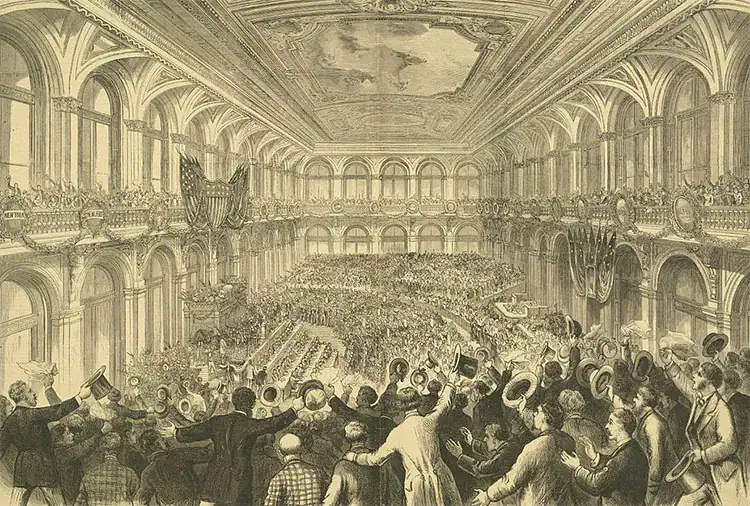
Louis Payn had been a strong supporter of a third term for President Ulysses S. Grant, to the point that Grant later noted he would have snagged that third nomination by his party – decades prior to the establishment of the 22nd Amendment, limiting presidential terms – if he’d had more supporters like Payn at the national convention that ultimately chose Hayes after a long and bitter fight. As a good party leader, though, at the end of the day Payn stood behind the candidacy of Hayes.
In Chatham, a “crowd of some 50 men milled around the telegraph office in the railroad depot on election night,” the Courier said. “While the fragrance of hard cider and wood smoke from a pot belly stove were redolent in the pleasantly warm station, outside, horses which had brought men from all sections of the county were hastily blanketed … in the confines of the telegraph office an operator wrote out the presidential election returns as they rattled and clacked in on his metal receiver.”
“Some Columbia County townships were slow in reporting the count of paper ballots, particularly the 4th District of Chatham, where the election board had repaired to a local tavern for a post-election collation. The results would not reach Chatham until the following morning on the first Rutland train.” Let it be noted that Chatham’s 4th, considered a heavily Republican district, turned out to have “firmly backed Tilden’s bid for the presidency.”
Bitter mood
When December 6, 1876, rolled around and it was time for individual states’ electors to cast their ballots, noted the Miller Center, “Generally, the process went smoothly but in four capitals – Salem, Oregon; Columbia, South Carolina; Tallahassee, Florida; and New Orleans, Louisiana – two sets of conflicting electors met and voted so that the US Congress received two sets of conflicting electoral votes.”
According to Wikipedia, initially it appeared Tilden had carried Florida by 91 votes, South Carolina by several hundred, and Louisiana by more than 6,000. When time came for electors to vote, “Republicans controlled the bodies charged with determining the validity of election results in all three states. On November 22, the South Carolina canvassing board adjourned after declaring that Hayes had won the state’s electoral votes. On December 4, the Louisiana canvassing board announced that it had thrown out 15,623 votes due to “systemic intimidation.” Subsequently, Florida fell in line and selected Hayes as the winner of the state’s electoral votes, giving him the 185 he needed to assume office.
The tinkering was not quite complete. Congress would soon take up the election issue, and in January 1877 it would establish the Electoral Commission, composed of five senators, five Supreme Court justices, and five members of the House of Representatives (seven Democrats and eight Republicans, one – a justice – noted for his independent decisions) to hear “arguments from lawyers who represented both Hayes and Tilden. Associate Justice Joseph P. Bradley emerged as the swing vote in the decision to name the next president of the United States,” according to the Smithsonian. Oddly enough, Hayes was not supportive of the commission, but changed his mind with the realization that to deny its work would delegitimize the eventual winner.
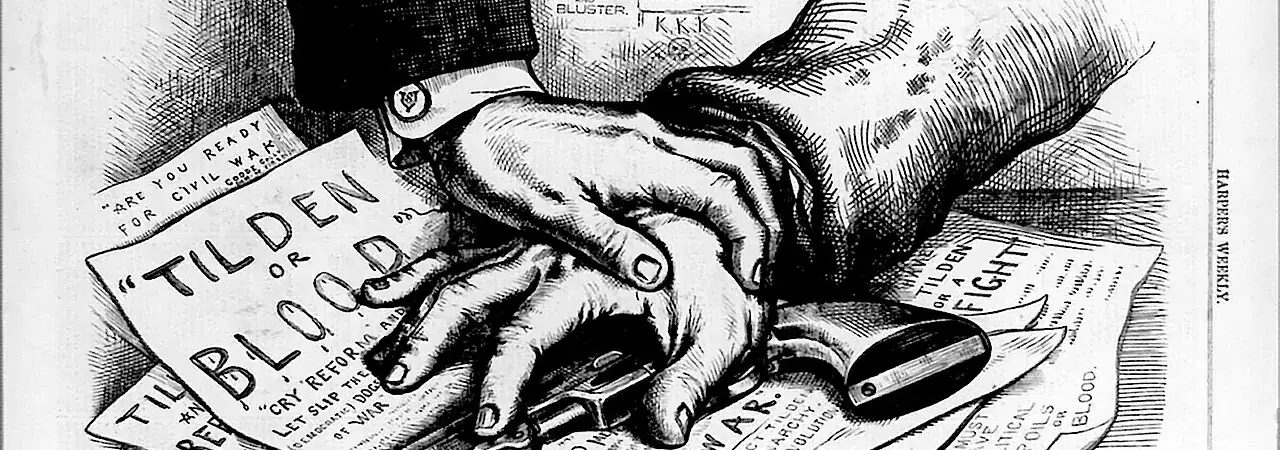
“The disputed electoral votes were dealt with and in each case the vote, on purely party lines, was 8-7,” noted The Chatham Courier. “The final tally was Hayes 185 while Tilden still held to his original 184. A bitter mood prevailed throughout the nation, and there were reports and counter-reports of possible anarchy or rebellion. Democrats still referred to Tilden as ‘Mr. President,’ and they insisted that their man assume the role of Chief Executive, election commission or not.”
When all was said and done, and all machinations and shenanigans apparently deemed to have concluded, Hayes was said to have received 4,036,298 votes, with 4,300,590 going to Tilden, according to Britannica.com.
On the morning of March 8, Payn, said to be as “keen as a Damascus blade” and at that time United States Marshal for the Southern District of New York, was summoned by telegraph to New York on a matter of “supreme importance.” Upon his return, Payn was carrying a pistol and an official document calling for the “immediate arrest of Samuel J. Tilden” should he or any of his supporters attempt to seize the presidency. Alas, Payn was never forced to brandish his weapon or serve the documents. Tilden, known to be a “believer in the Republic, in orderly process … refused to incite his followers into acts of anarchy.”
“I can retire to public life with the consciousness that I shall receive from posterity the credit of having been elected to the highest position in the gift of the people,” said Tilden after his defeat, “without any of the cares and responsibilities of the office.”
Not so fast?
Upon attempts by the Democratic Party to draft him to run again in the 1880 and 1884 presidential elections, Tilden responded with a lengthy letter detailing why that would not be happening, in the process leaving us with words that would serve us well in any era.
As published in the June 13, 1884, Maysville, KY, Daily Evening Bulletin (and a host of other newspapers across the country), Tilden wrote: “Of a people to elect their rulers – violated in my person, I have accorded as long a reserve of my decision as possible, but I cannot overcome my repugnance to enter a new engagement which involves four years of ceaseless toil. The dignity of the presidential office is above a merely personal ambition, but it creates in me no illusion. Its value is for its great power for good to the country.” •