This Month’s Featured Article
TRI CORNER FEED
Tri Corner FEED (which stands for food equity, education, and distribution), was established in 2023 as an evolution of Linda and James Quella’s seven years of hands-on farming experience in the region at Q Farms, which was located in Sharon, CT. Through their farming work, they came to understand not only the strengths, but also the weaknesses of the local food system.
“While nutritious, locally produced food is grown in the area, it remains out of reach for much of the community,” explains Tri Corner FEED’s director of food programs, Blake Myers. “At the same time, local farmers face ongoing challenges in accessing strong, sustainable markets that support their long-term viability.”
In response to these gaps in the system, Tri Corner FEED was launched as a nonprofit organization dedicated to strengthening the regional food system through expanding access to nutrient-dense food by partnering with local farmers and making food available to community members based on their ability to pay. “This approach supports both community food security and the economic stability of local farms.”
A history of farming
Like Linda and James, Blake also comes from a lengthy farming background. She grew up in Central Illinois on her family’s nearly 200-year-old farm. “The community that I was raised in was deeply rooted in agricultural heritage, and from an early age, I was surrounded by farming as both a way of life and a cultural foundation.”
In high school, she was in Future Farmers of America for four years, and although most of the agriculture in the region where she grew up focused on commercial corn and soybean growth, the agriculture classes that she took broadened her perspective. These classes introduced Blake to farming technology, the impacts of agriculture on the environment and communities, and the complexities of food systems beyond large-scale commodity production.
After graduating high school, Blake spent several years living and working around the globe as a model, spending much of her time in big metropolises, which naturally offered a sharp divergence from her rural upbringing. “Traveling internationally sparked a deep curiosity about how different cultures grow, prepare, and value food – and how food shapes daily life across the globe,” she shares.
Feeding that curiosity, Blake put down roots in New York City in 2015 and began her bachelor’s studies at The New School through the Bachelor’s Program for Adults and Transfer Students. “The flexibility of the program allowed me to pursue a course load that reflected my wide-ranging interests, including film, food studies, gender studies, and cultural studies. Exploring these subjects side by side helped me understand the many intersections between food, culture, identity, and social systems, and how they continue to shape and influence one another.”
When she and her partner began looking for a home in the Hudson Valley in 2019, Blake says the region immediately felt “familiar and grounding.” The agricultural landscape echoed the environment that she grew up in and made returning to a rural, agrarian setting feel natural. Since joining the Tri Corner FEED team in 2024, she says she has, “been deeply grateful to be a part of a project that feels like a culmination of my life’s experiences – bringing together my agricultural roots, global perspective, and academic interests into work that feels both meaningful and aligned.”
Feeding the community at the Tri Corner FEED Market
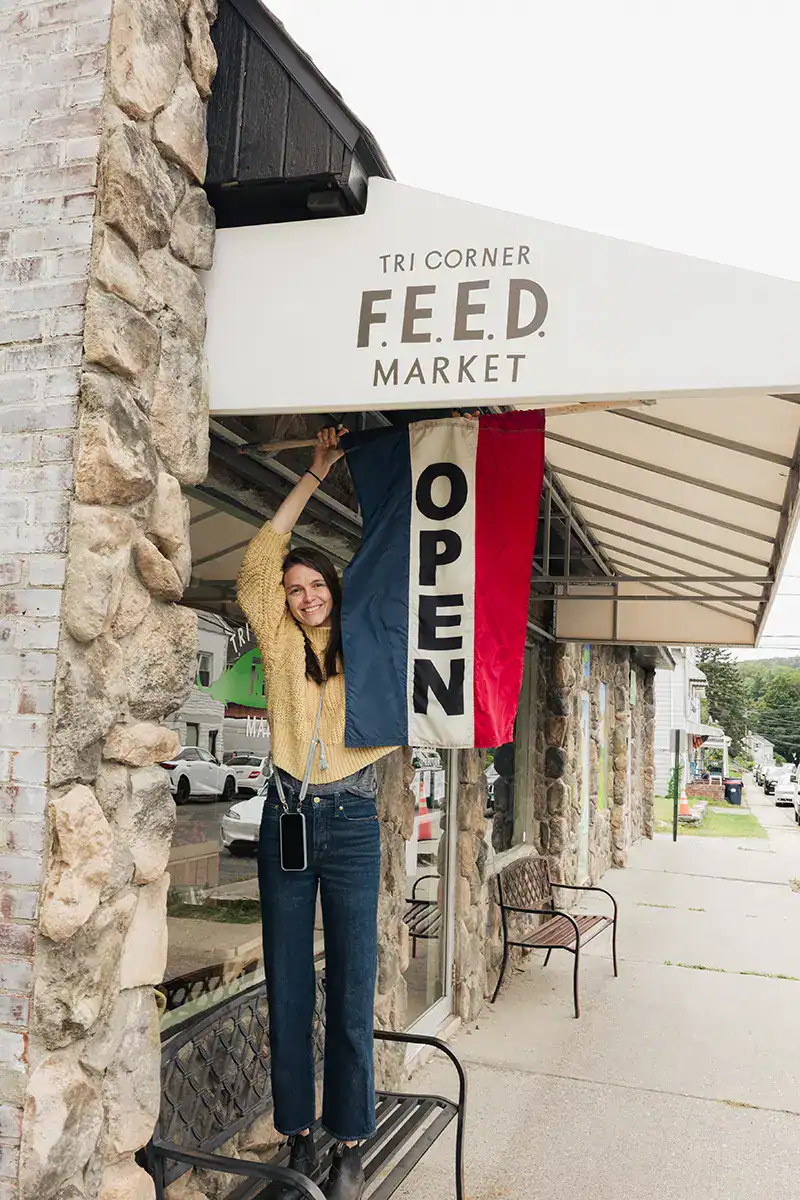
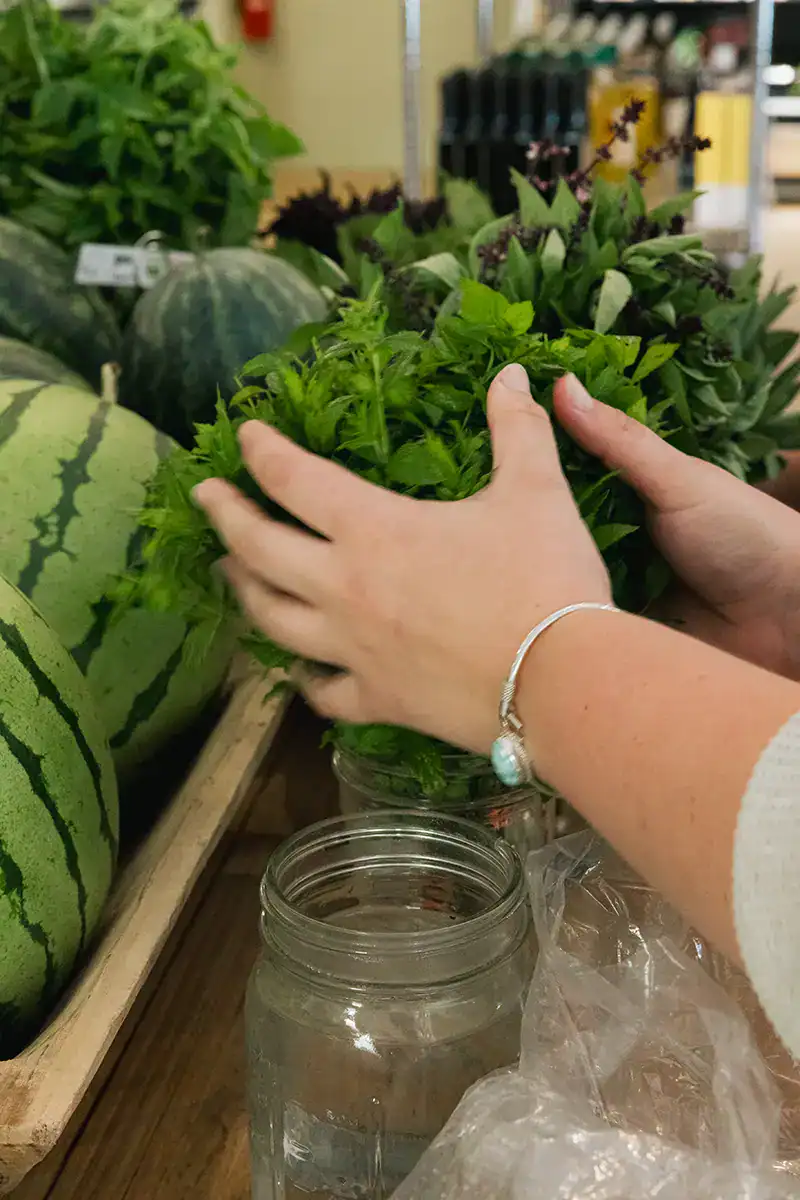
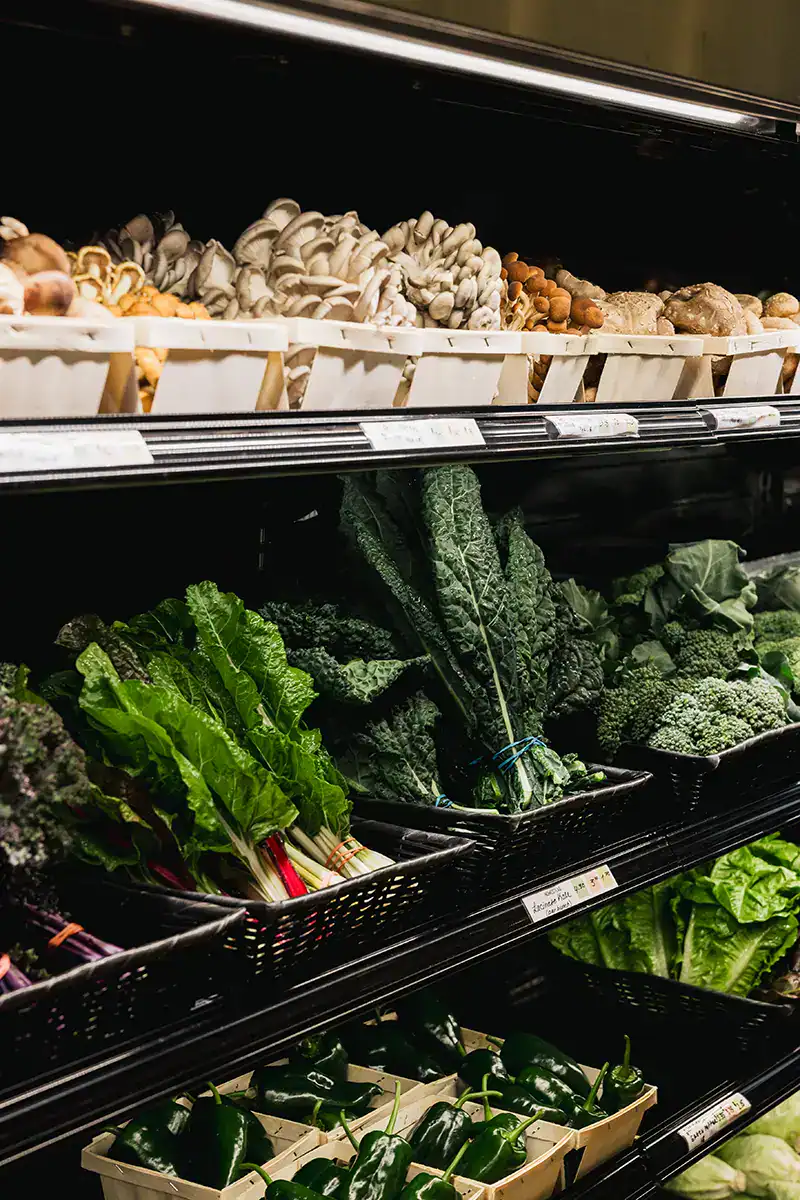
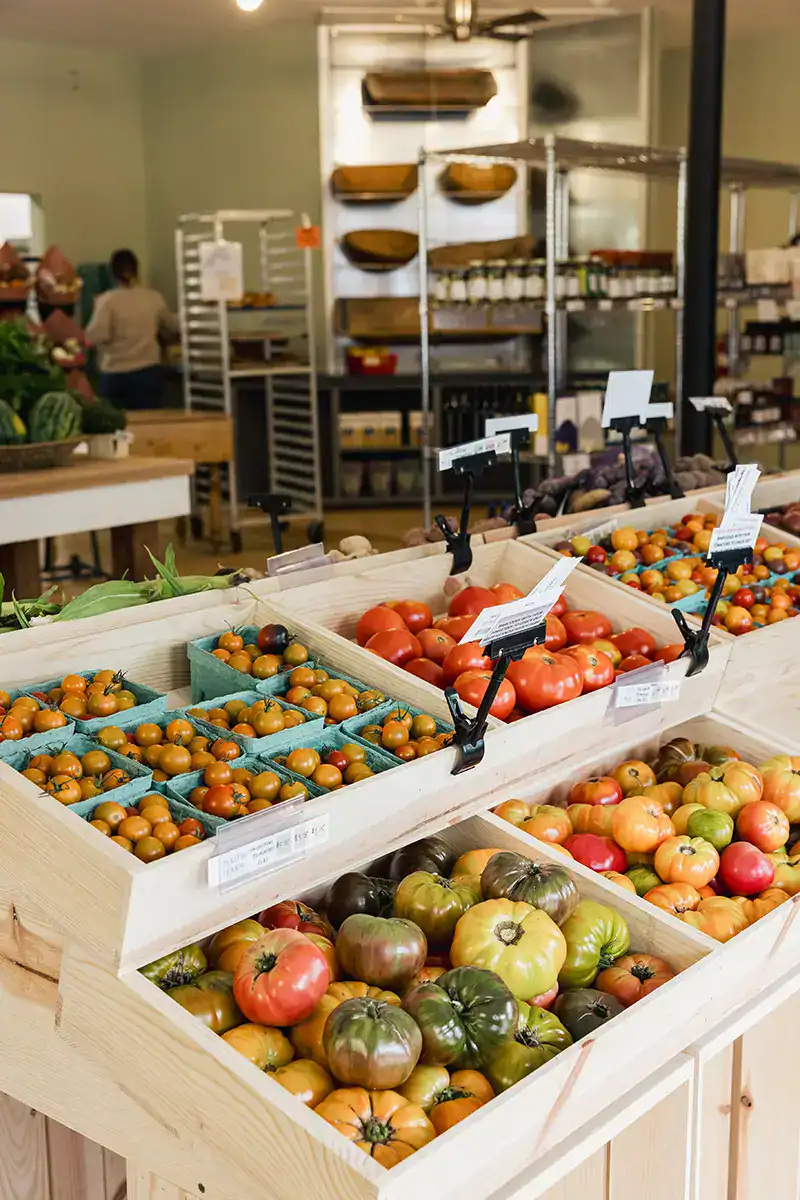
Tri Corner FEED operates as a 501(c)3 nonprofit, with the Tri Corner FEED Market serving as one of the organization’s core programs. The market, located at 56 South Center Street in Millerton, NY and operating from Friday through Tuesday, offers a carefully curated selection of products from local farms and producers, alongside a number of other culturally relevant staple items. Shelves at the market are stocked with fresh vegetables, proteins, milk, dairy products, eggs, and other pantry essentials.
“The guiding philosophy behind the product mix is intentional: the market is designed so customers can assemble complete, nourishing meals using what is available, while supporting local farms and producers,” Blake shares. “While the store might not carry everything, we strive to offer most of what people need to cook and eat well at home.”
The market prioritizes sourcing food as locally as possible and makes every effort to purchase from local farms and producers whenever it can. Climate and seasonality occasionally require sourcing beyond the immediate region, but the primary guiding principle is simple – “if a product is available locally, it is purchased locally.”
Currently, Tri Corner FEED works with nearly 20 local farms and producers, as well as a few regional distributors. These partnerships ensure that farmers have consistent, reliable outlets for their products, while the community gains access to fresh, high-quality food grown close to home. “Investing in nearby farms helps keep food dollars within the community, supports local livelihoods, and contributes to a stronger, more connected community. In addition, reducing the distance food travels lowers its environmental impact.”
The market functions on a sliding scale payment system, which allows customers to pay according to their budget and circumstances. Customers who plan to shop regularly are invited to register through the organization’s online form, where they are able to select the pricing tier that feels most accessible to them. Currently, Tri Corner FEED offers three pricing tiers: 100% or no discount, for those who can comfortably meet all of their needs; 30% discount, for those who can sometimes meet all of their basic needs, and 60% discount, for those for whom it is difficult to meet all of their basic needs. Pricing tiers are also flexible and can be adjusted over time as life circumstances change.
“This approach accomplishes two important goals. First, it preserves dignity and privacy by ensuring that a customer’s pricing choice remains their own business. Second, it allows staff to build genuine relationships with the community – learning names, offering a warm greeting, and creating a welcoming, human-centered shopping experience. At its core, the sliding scale model is designed to make choosing food easier, more affordable, and more accessible for everyone,” Blake explains.
For Blake, the daily interactions within the market are one of the most rewarding parts of her work. “Meeting new community members, witnessing conversations unfold, and seeing connections form across different backgrounds makes the space feel truly alive,” she says. “Hearing directly from customers about how the market has made a tangible difference in their lives – whether by improving access to food, creating a sense of belonging, improving health, or simply offering a welcoming space with friendly staff – reinforces the importance of the work and the impact it continues to have.”
Food equity & education programs
Tri Corner FEED’s food equity and education programs are designed to address immediate food access needs, as well as the long-term health of the local food system. Each of the programs is rooted in the belief that aspects such as food security, farm viability, and community are all deeply intersectional.
The Food Sovereignty Program focuses on purchasing food directly from local farms and donating it to three food pantries in the area. This program is modeled after the Glynwood Center for Regional Food and Farming’s food sovereignty program, located in Cold Spring, NY. Like Glynwood, Tri Corner FEED’s program guarantees farm income for the duration of the agreement, providing stability and predictability for the local producers. At the same time, partner food pantries receive a consistent supply of high-quality, locally raised proteins and/or produce.
“As funding cuts continue to make regional food bank supplies more unpredictable, this reliable access to fresh, nutrient-dense food has become especially meaningful for pantry partners and the neighbors they serve,” Blake says.
Another core program is the Community Advocates for Food Security, which is a volunteer-based effort that supports community engagement. “This group plays an essential role in helping Tri Corner FEED carry out projects, connect with community members, and sustain its programs over time,” Blake explains. “Volunteers act as both supporters and ambassadors, strengthening the organization’s relationship with the broader community.”
Education is an important piece of Tri Corner FEED’s work and is woven throughout all of its programs. The organization partners with other local organizations and businesses to highlight the many individuals and efforts contributing to the regional food system. “Through collaboration and shared learning, these education programs aim to build awareness, deep understanding, and inspire collective action around food equity and food security.”
Turning passive participation into active action
Tri Corner FEED initially started as a small pop-up stand serving roughly 40 customers one day each week. The organization has evolved into a fully established market operating five days per week and reaching about 400 households. This growth has not only expanded the organization’s capacity to support a greater number of local farms, but has also provided the opportunity to connect with more community members and create a more welcoming, inclusive space “where everyone feels they belong.”
Naturally, with this growth has also come increased reach and impact, but the core of the work has remained the same: Tri Corner FEED continues to operate from the belief that food is a basic human right and that everyone deserves access to sufficient, safe, and nutritious food.
“Through education, advocacy, and collaboration, the organization remains committed to empowering individuals and the broader Tri Corner community to build resilient food systems that support the health and well-being of people and the planet alike,” Blake shares.
Looking ahead, Tri Corner FEED hopes to continue to deepen relationships with those working in the local food system, as well as the community at large. Blake says that the market has also helped shift many customers from being passive consumers to active participants in the local food system.
“Moving forward, Tri Corner FEED hopes to build on that momentum by continuing to share knowledge, resources, and information that deepen understanding of where local food comes from and why local systems matter,” she says. “Expanding education and community engagement efforts will remain an important part of this process, helping to foster informed participation, mutual support, and sustainability for both farmers and our community.”
“There are countless rewarding aspects to this work, but at its core, it is deeply rooted in people and relationships,” she continues. “One of the most meaningful parts is getting to know the local farmers and learning about the many thoughtful, innovative ways food is grown and produced in the Tri Corner region. The agricultural landscape here is incredibly inspiring and being able to share the stories, practices, and products of these farms with the wider community is both a privilege and a source of ongoing motivation.” •
Tri Corner FEED is located at 56 South Center Street, Millerton, NY. They are open on Mondays, Fridays, and Saturdays from 10am-5pm, and Tuesdays and Sundays from 10am-4pm. Learn more about Tri Corner FEED at tricornerfeed.org and follow them on Instagram @tricornerfeed.