
Real Estate
Give me shelter: What’s new with garages?
Garages are a relatively new addition to real estate, a new word in the English language with the advent of cars in 1902. By the mid 1920s, Ford was selling over two million Model T’s every year in the United States, and real estate agents at the time reported that the first question asked by home buyers was about the garage. Today garages are largely invisible in real estate listing descriptions – seldom photographed, not usually highlighted as a key feature, and with size typically not included in square footage calculations; however, over 80% of home buyers reportedly factor in the garage when making their decision.
Garages are critical to buyers, especially those looking at new construction or high-end properties. Tom Callahan, expert renovator and real estate agent with Elyse Harney Real Estate, includes garages in all of his renovation projects, “Garages today are as important as a pool” in the experience of Callahan. “Virtually all new homes we design include a garage,” Jimmy Crisp of Crisp Architects in Millbrook observed. “Sometimes it’s part of the home and sometimes it’s free standing. The second story of a garage is a great place for a gym, guest quarters, home office, painting studio, or music studio.”
At the more accessible end of the real estate spectrum in standard multi-home developments, rare in our region, garages, after growing in size through the 2000s, have become smaller since COVID with rising construction costs and shrinking lot sizes. The share of new homes with three or more garage spaces has been decreasing since 2015, and the standard dimension for a two-car garage has declined from 24’ by 24’ to 20’ by 20’, but garages remain an indispensable feature.

An aerial of Lime Rock Park. Photo coutesy of Lime Rock Race Way
Not just a garage
Few buyers need Jay Leno’s 122,000-square-foot garage to store 150 cars, but owners of race cars and vintage classics need someplace to store them securely and conveniently. Lime Rock Park recently completed a 20-unit garage with direct access to the race track, offering racing enthusiasts a place to store their valuable automobiles. Each unit is 20’ by 40’ and can shelter four large cars or six smaller vehicles. Owners can hang out in the fully furnished owners’ lounge with kitchen and have access to the balcony overlooking the back section of the track. They also have the use of a common bathroom complete with shower. Many of these condo units were sold before construction was even completed this summer, at prices from $350,000 for a loft unit and $250,000 without a loft. There are still a few garages available at $250,000.
Luxury and classic cars are increasingly seen as investments and require specialized, secure storage facilities. Popular premium rented storage spaces, such as Precision Auto Storage in Millerton, provide security, privacy, temperature-controlled environments, driver’s lounges, and services like battery charging, washing, detailing, and pick up and drop off. The soon-to-be-opened Covered Bridge Auto Storage in West Cornwall will offer secure and temperature-controlled individual units.
Reimagined garages
Garages are adaptable spaces that can be transformed into something entirely different. The former auto body shop on one-acre of land in Mabbettesville in the Town of Washington was purchased for $350,000 and modified to become Ray’s Custom Training Gym.
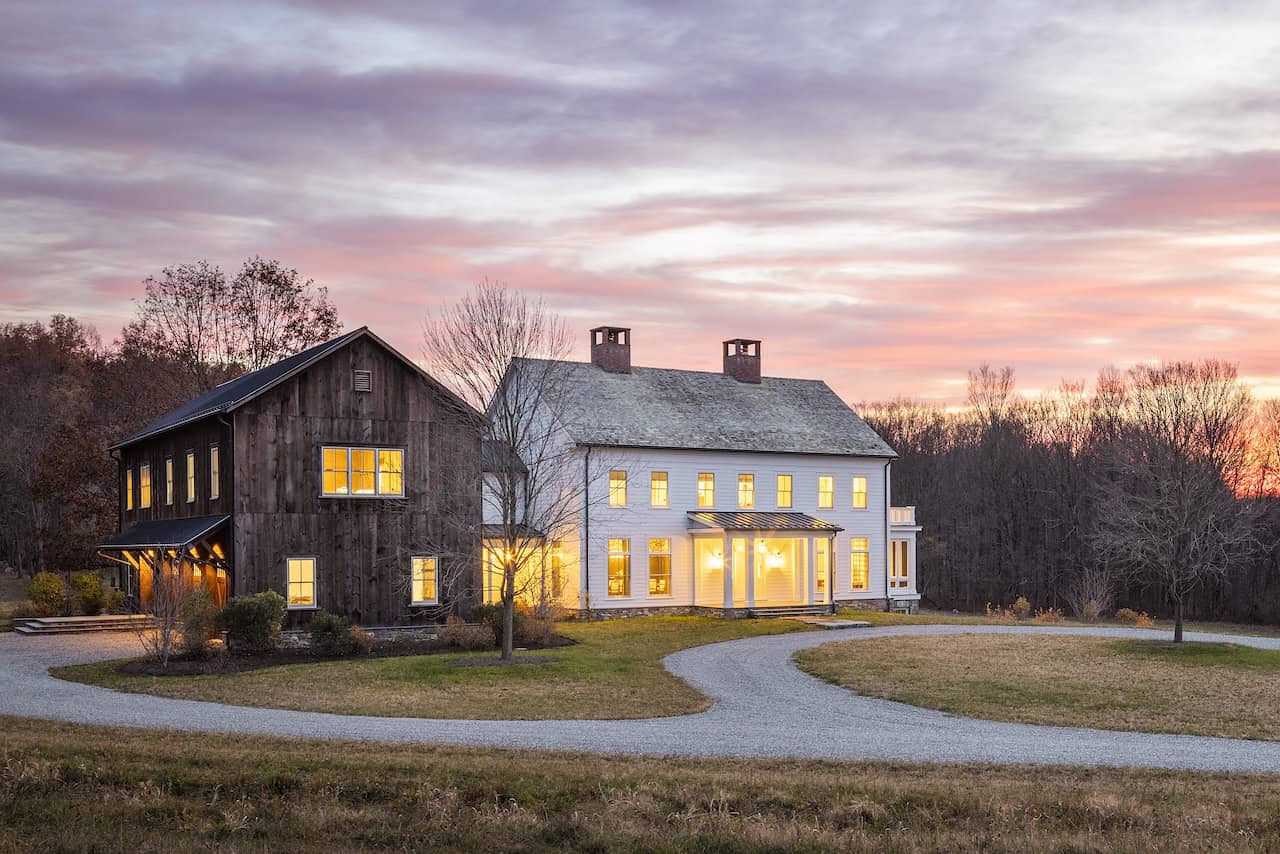
The 1820 antique house at 31 Belgo Road in Lakeville, CT, that Callahan purchased in 2024 for $750,000 and restored with Luis Felipe Arroyo is an elegant example. The pair converted a 22’ by 17’ attached garage into living space and added a striking stand-alone 1,568-square foot-garage with living space above, dramatically upgrading the appearance, utility and eventual resale value of the property.
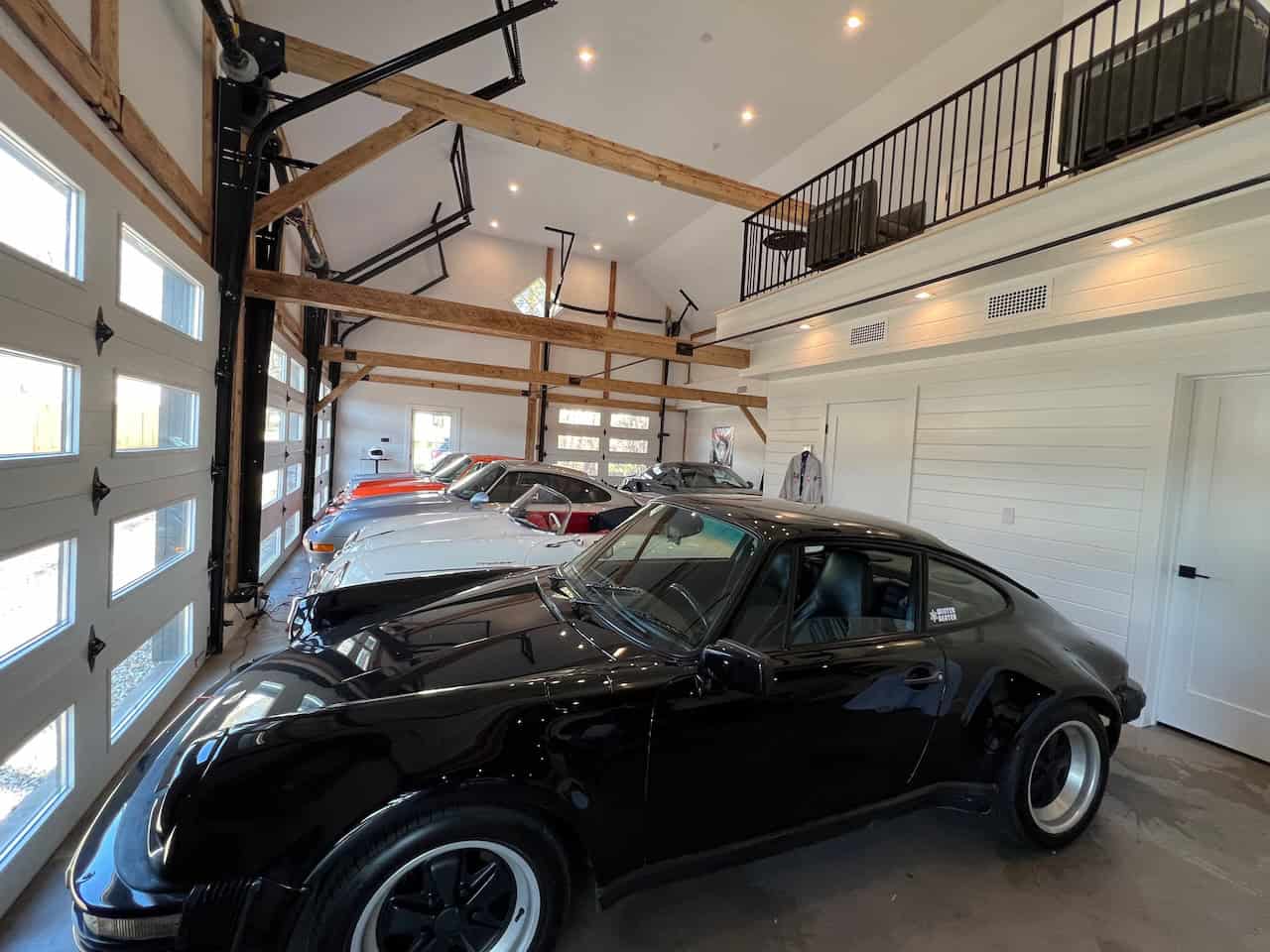
When James Demmert of Main Street Research purchased a former art gallery at 343-344 Main Street in Lakeville for his office in 2021, the converted commercial property on the large parking lot in the back was included in the price of $600,000. “I knew right away that the back building would be an ideal spot for a garage to house my car collection,” Demmert said. With the help of Arroyo, the chestnut beams from the original carriage house were revealed and utilized in the construction of a modern, 1,378-square-foot heated garage to store Demmert’s Porsches.
Should you build a garage?
If you are considering selling your home, building a new garage (like adding an extra bathroom) does not offer a positive return on your investment, and the cost will properly not be recouped in a sale. The cost is just too high, and the return is uncertain. According to Crisp, “We have designed garages that cost as much as a small home. An estimate of the cost to build is anywhere from $200 to $800 per square foot.
On the other hand, replacing unattractive garage doors before sale is an improvement that makes financial sense. The least expensive and most important option is the one everyone dreads – cleaning out and organizing the garage and then adding a coat of paint and maybe even a window. Remember that the overall condition of the garage reflects on the owner’s maintenance of the rest of the home.
Whether building new or adding, realtors always recommend keeping the garage in a style appropriate to the house, ideally with attic space that could be converted into an ADU or other uses, which helps future resale value. Full-time residents seem to prefer garages that are attached to the house, while second homers, who may avoid using the garage in snowy weather, seem to prefer detached garages with a country style that doesn’t look like a suburban two-car garage attached to a ranch.