
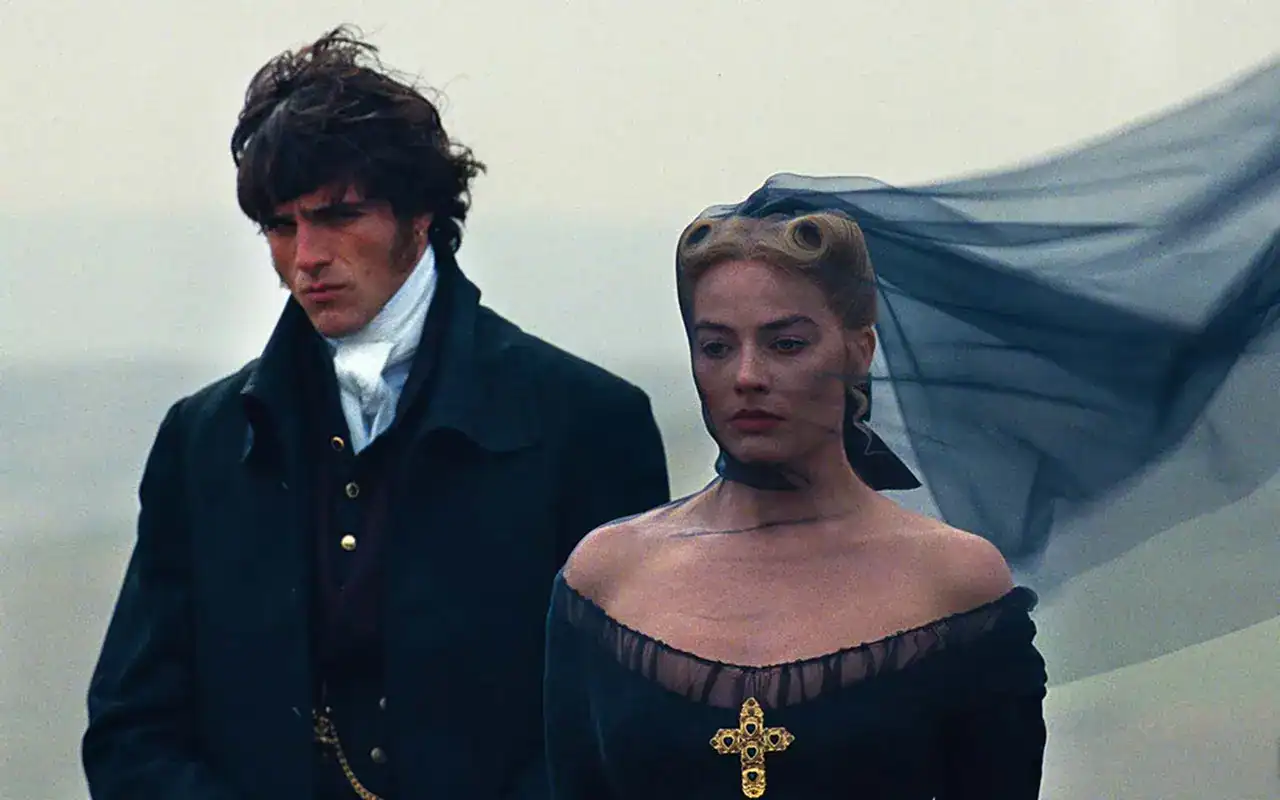
Wuthering Heights” inhabits its own, unique cinematic world.
At its very best, a feature film creates a clearly defined existential space, invites the audience in, then weaves a story that charms, frightens, energizes, motivates, amuses, titillates, educates … or combines several emotional reactions in one package. Buy the ticket, select “play” or start the stream and we’ve agreed for approximately two hours to enter that space.
Some of the critics have not been kind to this most recent adaptation of the classic novel. At a weekend screening, a few members of the audience left displaying emotional tears. One or two of the couples left holding hands. One of the men expressed dismay at missing the end of the golf tournament on television.
So, perhaps Emerald Fennell’s expansive adaptation of Emily Bronte’s 1847 novel is not for everyone. Then, again, not everyone would walk across the street to pay for the latest venture into the “Marvel cinematic universe.” The opening weekend domestic box office of $35 Million/$77 Million worldwide …albeit over Valentine’s Day … might indicate that “Wuthering Heights” may be more than a “chick flick.”
The cast for this epic deserves more than a moment’s mention. For those who recall Margot Robbie as “Barbie,” this is quite a departure. As a tangential note, that Greta Gerwig film has collected nearly $1.5 Billion in worldwide revenue. That’s billion … with a “B.”
Robbie’s Catherine Earnshaw displays a range of tightly crafted emotions from playful to passionate to pitiful. If there is a tragedy in “Wuthering Heights” it is her being crushed by love, displayed and played with deep emotion.
Jacob Elordi preens and postures and creates a character – Heathcliff—that moves from mistreated and misunderstood to misanthrope. Love has infected him, drives him to moments of extreme cruelty and eventual defeat. Love him or hate him, he’s very good at what he does … and doesn’t do.
While the rest of the cast is quite up for the challenge of playing their varied parts, our favorite player is Martin Clunes. Recall that he is the curmudgeonly physician in the long-running “Doc Martin” series which continues in engaging reruns on British fed streaming channels and has now been “cloned” (near pun intended) for a questionable American TV series. Clunes, as Mr. Earnshaw, is magnetic. A drunk, a wastrel, a derelict gambler who loses the family fortune and lives in rubble and rags, his scenes with Robbie and Eldori are a master class in the dissipation of minor English nobility.
Much has been said about the sweeping visuals in “Wuthering Heights.” Seeing the story play out on a big screen is likely worth the price of a matinee ticket. When Heathcliff rides off in a burning sunset, one can only wonder if the crew had to wait days for the right visual (recall the tragicomedy of shooting “Days of Heaven”) or if post-production magicians sustained the obvious color theme of red throughout the film to accentuate his departure.
The marketing budget for “Wuthering Heights” (the film credits employ italics and quotation marks to emphasize that this is an adaptation of the novel) was funded by a $150 Million acquisition fee for an upcoming Netflix run. You might well wait and see, but with an extra two and a half hours and enough in your pocket for a ticket, some popcorn and a beverage of your choice, “Wuthering Heights” exists in a world that floats somewhere above the Yorkshire Moors and invites you to come along for the ride.