This Month’s Featured Article
IT’S ATTAINABLE
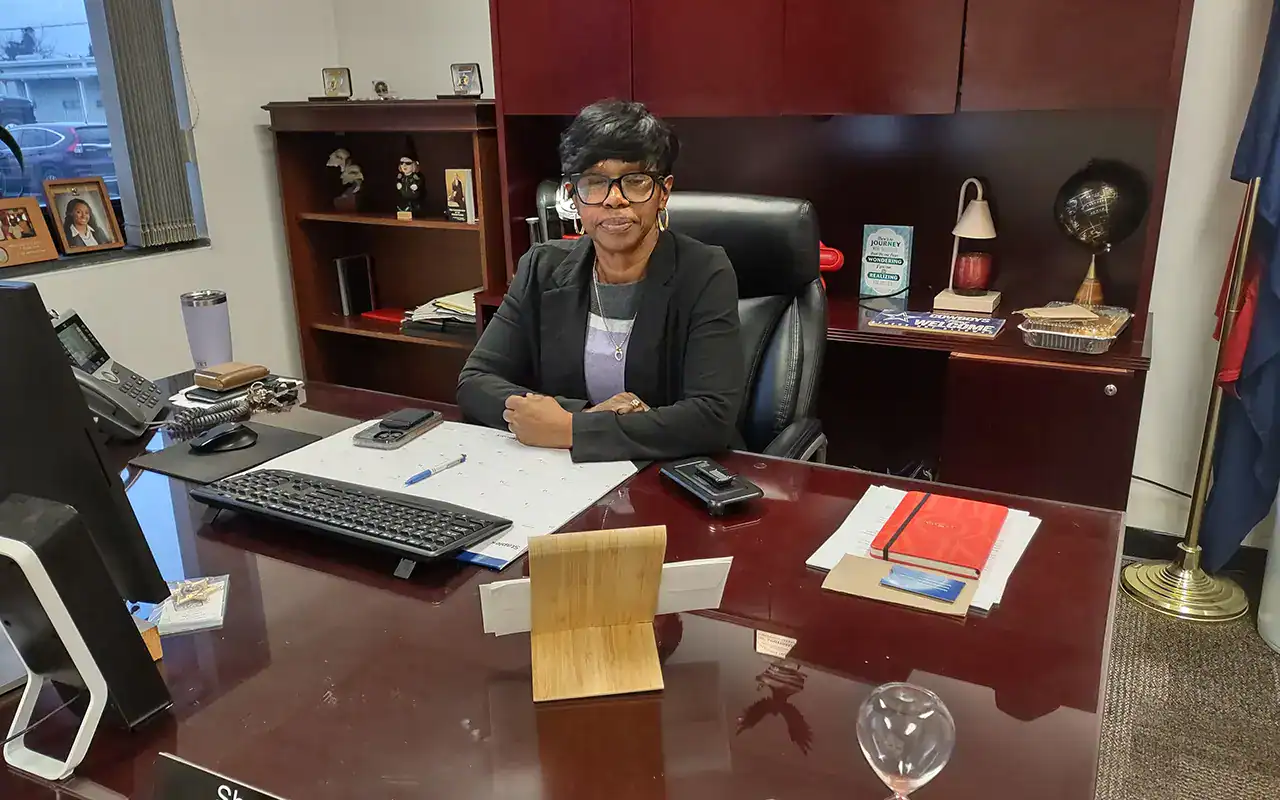
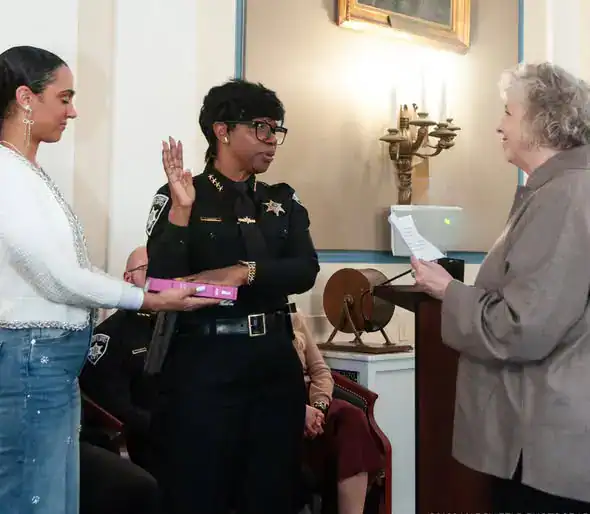
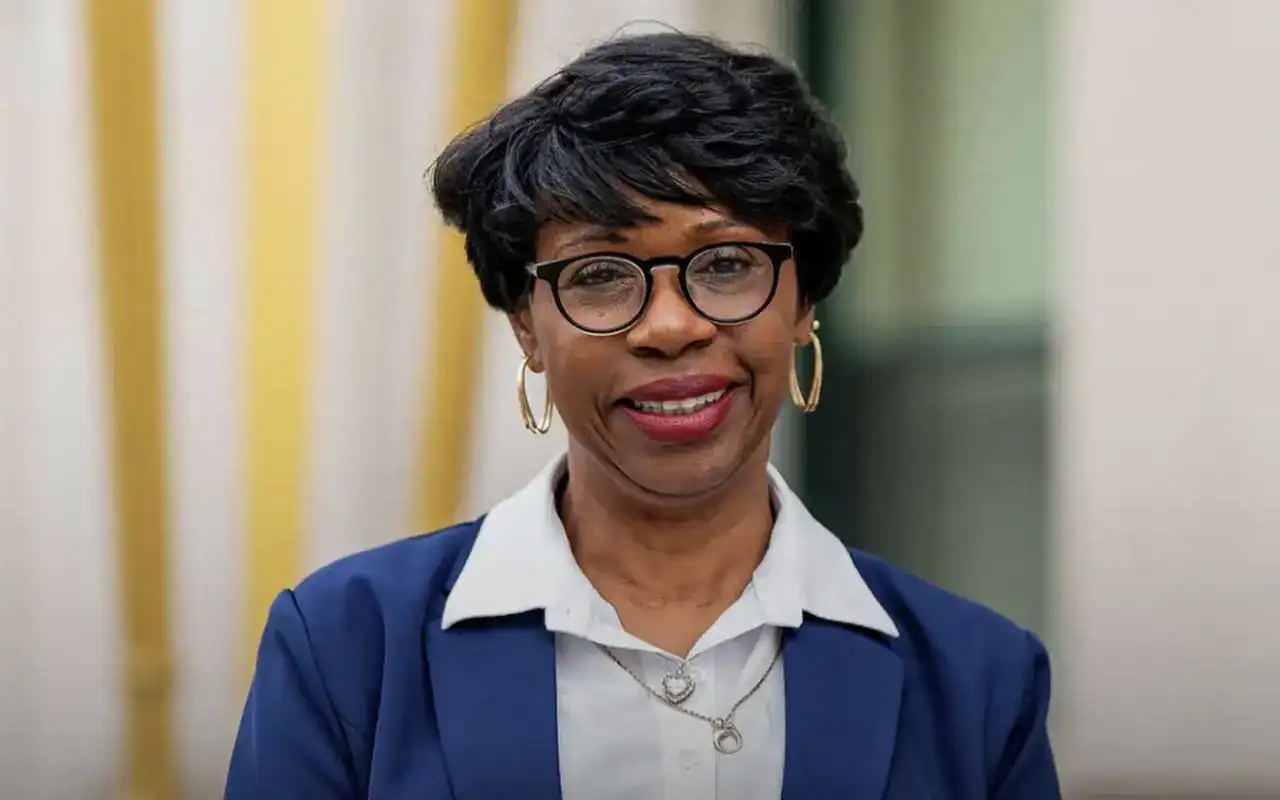
“I went into this feeling I was the most qualified person for the position – who happened to be a Black female,” Columbia County Sheriff Jackie Salvatore said about her recent history-making election as the first Black woman elected to that position not only in that county, but also in the 400-year history of New York State.
Salvatore is a native of Columbia County and went to Hudson schools, then Columbia-Greene Community College. Her family moved from Virginia, “when my mom was pregnant with me.”
A self-described “all or nothing kind of person,” she soon proved her claim of being the most qualified, while relating her journey to the office she now occupies.
It all began with taking civil service exams, which led to a career in the New York State Police, which led to becoming Columbia County undersheriff, which led to the sheriff position.
How it all began
Her habit of taking vocational exams started early. While in high school, a perfect score on the first one she tried, for stenographers, led to a clerical job in a state office. She kept taking any exam “that was a promotional opportunity.” When the envelope with results for the NYSP one arrived, with passing results, “I looked at it and had to determine, ‘Do I really want to do this?’” As a young mother, the deciding factor was financial: “It was a $5,000 a year raise, which was a lot back in 1988.”
A “high energy” 16-month-old daughter meant finding child care: “My parents’ help allowed me to go into the academy.” When it all seemed like it would be too much, “A couple of classmates sat me down and said, ‘Please, do whatever you can.’ They talked me into staying.”
Her first patrol assignment was in Newburgh: “What an eye opener for a young girl who grew up in a relatively small agricultural community!” Salvatore termed it a “very, very good learning experience,” because it exposed her to a lot right out of the academy, “that I wouldn’t get here in Columbia County.”
Unfortunately, the very first thing it exposed her to was an active case of tuberculosis, and she spent most of her first shift at the hospital.
She remembers finding her first time doing shift work exhausting. “Some 11 to 7 shifts, driving home, I had to pull over on the side of the thruway to sleep for a couple of minutes.” Laughing, she added, “One time I got home and went to bed … while Niagara Mohawk was working on the street with a jackhammer right outside my room!”
After a year, she was transferred to the Thruway Troop T Newburgh barracks, and later to the Claverack station. Within three or four months of starting, “I got a call to go to the Community Narcotics Enforcement Team, doing street level enforcement, and spent four years undercover.”
When her father became terminally ill, she was hardship reassigned back to Claverack. Then, after 9/11, Salvatore moved to the Director of Employment Assistant Program.
While still a full-time State Police officer, in 2014 Salvatore went back to school, gaining a degree in Biblical Studies, “of all things.” She was also caring for her family and managing her parent’s construction business, with all the related scheduling, taxes, and other associated paperwork. “There were times I’d come home, go to my office, and tell everyone, ‘Please don’t bother me unless it’s absolutely necessary!’”
The road to becoming sheriff
Further proving the ‘all or nothing’ label, in 2015 she started working at Albany International Airport, loading luggage. She was promoted to supervisor, but decided that driving to Albany for the job wasn’t cost effective, so she quit. While many people took jobs there for the free flights, “That was not for me. The family was flying while I was working,” she laughed.
Four months later she was asked back, as a manager, a position she praised as giving valuable lessons in understanding people, learning their strengths and weaknesses. She was also still managing the family business, plus putting her oldest daughter through college.
In 2016, she retired from the NYSP. Then, several years later, along came the offer to become undersheriff.
“I was managing a literary agent’s office,” Salvatore recalled. “I had turned down an offer from Ulster County to become undersheriff,” not wanting to return to that long drive to work, when Donald Kraft unexpectedly asked her to lunch. He said he was considering a run for sheriff and asking her to join him as the second-in-command candidate.
“You gotta give me a minute to digest this,” she retorted, meaning she had to consider leaving her job and returning to policing. The obvious answer was yes, “And we ran our campaign during COVID!”
An undersheriff, she explained, basically oversees the day-to-day operations of the sheriff’s office. Other officials, including the jail administrator and law enforcement captain, report to the undersheriff, who, she says, “makes sure the machine is well-oiled and runs smoothly.”
In the role, she accompanied Sheriff Kraft to many functions and activities, “all of which I know now helped prepare me for this role.” She explained that Kraft was very day-to-day operations oriented, while, “for me, the undersheriff oversees that.”
She sees her role more as, for example, getting to all of the towns in the county’s board meetings, to know their concerns and thus be more effective. “Fostering community – I’m a big believer in community. I want to get to know who people are, not just meet them if there’s a horrible incident.”
There’s a new sheriff in town
Observing the easy camaraderie between Salvatore and some of the sheriff’s officers at a community event before the elections led to asking how she feels she achieves that. She admitted to some anxiety with how she would be received, as she had never worked with anyone there, but then correctly determined, “I can’t allow that to consume me. I’m just gonna bring me to the table.”
She credits the airport and construction business management stints with helping to understand how workers have to juggle their lives. At the airport, “I had to know workers’ strengths and weaknesses, and use that knowledge to put people in positions they would be more adept at.”
All of that experience, the new sheriff feels, “helped forge relationships with people here,” noting that some said, “thank you for asking,” when she would talk with them, “because that hadn’t always been done before.”
Her concern for her staff is evident. She relates, “If I have an opening, I’ll have a conversation to see how it will impact their life. I don’t want anybody in a position that creates a hardship, puts them somewhere they don’t want to be, or might negatively impact their home life. We have the opportunity to make those adjustments.”
“Having put a lot of miles on my car and feet, I was excited about winning the election, but I didn’t really absorb the gravity of it at first.” The significance of herself gaining the position, “wasn’t my focus during the campaign.”
“It’s like women of color who have ascended to a different position,” she mused, citing, “the audacity of Shirley Chisholm, Rosa Parks, Kamala Harris, and Ruth Bader Ginsberg – trailblazing women who wanted to make something better and proved it.”
Someone who cares and listens
As far as any planned changes, she thought for a moment and then said being director of EAP lets her understand things in ways many in law enforcement officers don’t, including the importance of wellness and how that can impact how officials show up for the public. “I want citizens to know the administration trusts and supports them and that we care about their well-being.”
Backing that claim, an attribute in a letter endorsing her for the position was, “someone who cares and listens.”
Defining her comments, she went on to note, “That doesn’t always mean I acquiesce, but I listen, and I consider how something will affect the person at the bottom. I’m in the driver’s seat, but I need them to make the engine run.”
Salvatore hasn’t begun thinking beyond her term in office. “I’m really, really enjoying the moment every day. The building needs a cohesive unit here. It’s great to see people smile in the hallways.”
Speaking of well-being, she says, “I have a room in my house with probably too many plants, a garden. I love playing in the dirt; it’s therapeutic. I love theater, music, cooking, and riding my motorcycle whenever I can squeeze it in. In winter, I sit in my chair with multiple snacks and the remote and watch whatever.”
The most rewarding part of her career is, “the seat I’m in now.” Out of many memorable accomplishments over the years, she recalls one that was touching and rewarding at the same time; “a single mom who had taken money from her work place. I stood with her at her arraignment, and she got to go home. She had used the money to pay past-due bills and buy her kids coats. I understood on a human level what she did and didn’t want the kids punished.”
Throughout her law enforcement career, she recalled, nothing ever came up to make her question what she was doing in this field, but she did admit to having cases with people who were difficult to interact with, “but nothing made me question why I was doing it.”
Two words she’d like people to describe her as are qualified and caring. “My goal during the campaign was to let people know my experience, qualifications, and what I’d like to implement. I would always put that first, ‘I’m qualified and not gonna be just a Black female. The historical aspect is a byproduct, not the main feature.”
Along with that, “I like setting an example for young women, regardless of ethnicity, because policing is predominantly male. As the first Black woman in a 400-year history, I hope someone who looks like me can now think about what they might want to accomplish and say, ‘It’s attainable.’ ”