
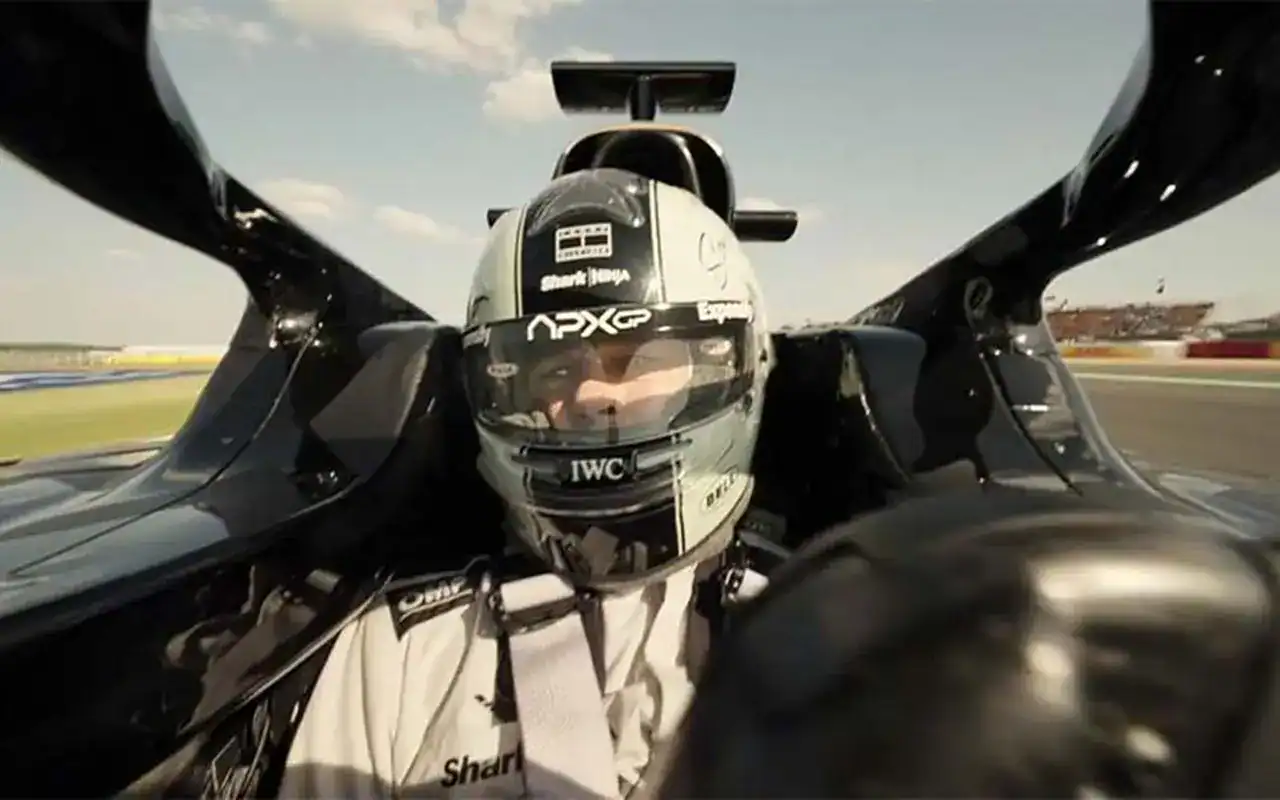
If art imitates life in the film “F1,” then life imitates art in the Netflix series “Formula 1: Drive To Survive.” What goes around (the race track) comes around … in grand style. And, truth be told, the adrenaline rush of the journey is worth it … in both cases.
“F1” is the big budget Brad Pitt star turn that uses the background of world circling Formula 1 racing to showcase the gigantic financial commitment, the complex engineering investment, the monumental egos of Formula 1 drivers … well seasoned with a poignant love story. It’s currently screening on Apple TV+ after a theatrical run that garnered an Oscar win for sound and nominations for Best Picture and Editing. With seven time world champion Lewis Hamilton as one of the producers, one can presume that the end product would have the air of authenticity … and be right.
“Formula 1: Drive To Survive” is the eight season offering on Netflix that boldly forces cameras and microphones into the reality that is Formula 1 racing. These are not moments that are “made for Hollywood.” This is an inside view of a head spinning life that captures the rabid devotion of fans around the world, the intense pressure on drivers and team principals and armies of engineers. It’s reality presented with the best production and post-production (editing) skills available. Each episode has clear focus as the season works through the cycle of races staged across five continents from Dubai to Japan to Portugal to England to Australia to Austin, Texas to Abu Dhabi.
Setting the two programs – one a feature film and the other a documentary series — side-by-side is an interesting exercise in determining where that elusive line between fact and fiction actually exists. The dedication it takes to stream, season by season, through “Formula 1 : Drive To Survive” is paid off by knowing which driver, which team captures the trophy for each season. With the exception of the elusive Max Verstappen, whose $70 Million salary makes him the highest paid driver in history, the dedicated viewer gets to know the character and the foibles of the pilots of these 200 MPH land rockets.
In “F1,” the canvas is the final third of an imagined season with intrigue, deception, accidents and passion compressed into a very glitzy, entertaining package. There is character development … and the characters certainly resemble the professionals they represent… but they are a work of fiction, designed to entertain for the duration of the film, then drift off into memory.
We can understand that there are those who have steered clear of “race car movies.” One can only applaud omitting “Talladega Nights” all six iterations of “The Fast and the Furious” and “Herbie: Fully Loaded” from a personal “top ten” list. “Le Mans” with Steve McQueen may creep in near spot number 20 as the list expands, and “Ford v. Ferrari” would likely come in near that spot, as well. But “F1” and “Formula 1: Drive To Survive” offer a different sort of attraction. Technology in the form of microscopic cameras mounted on speeding cars, drone photography and cameras strategically placed on the tracks have elevated both of these productions to the point where “F1” was nominated (and won one) for several Oscars while “Formula 1: Drive To Survive” has captured two EMMY awards and been nominated for five more.
Sunday afternoons with NASCAR (“Drive fast … turn left”) may not be your idea of a compelling weekend. The closest you may have come to a drag race might have been being cut off when two lanes became one. “F1” and “Formula 1: Drive To Survive” are much more than primers on motor racing. They are both worthy of investing some time on the family couch, the best seat in the house. High energy entertainment at home … a brilliant choice when one checks the prices at the local gas station.