Featured Artist
SOMETHING TO CROW ABOUT – DANIELLE MAILER
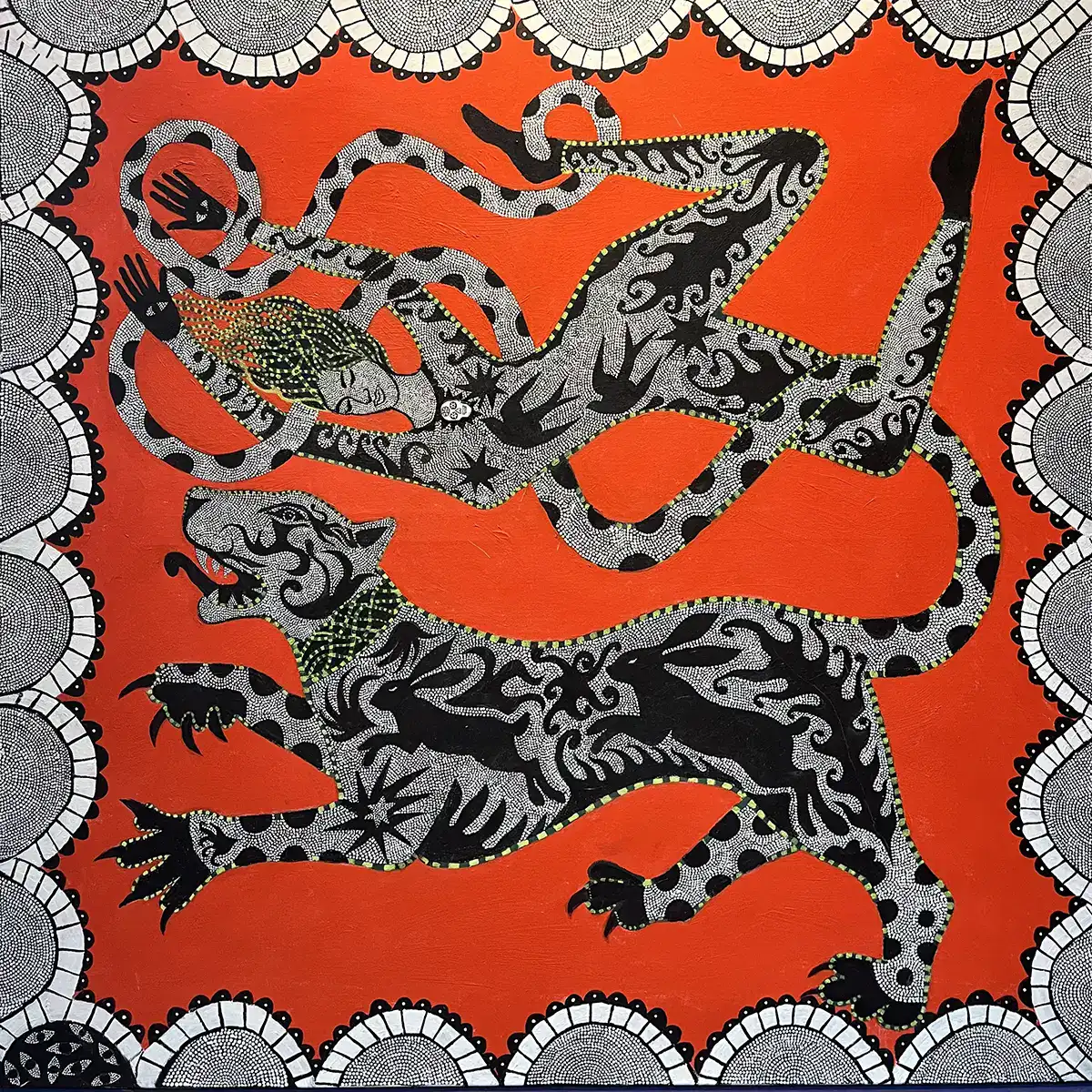
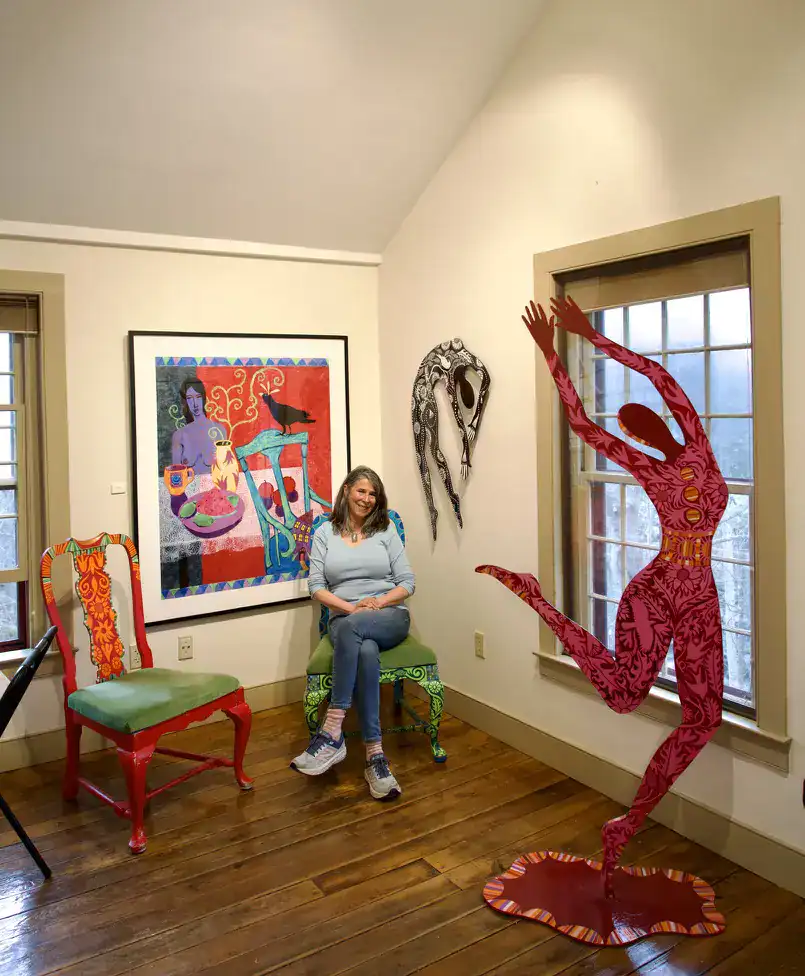
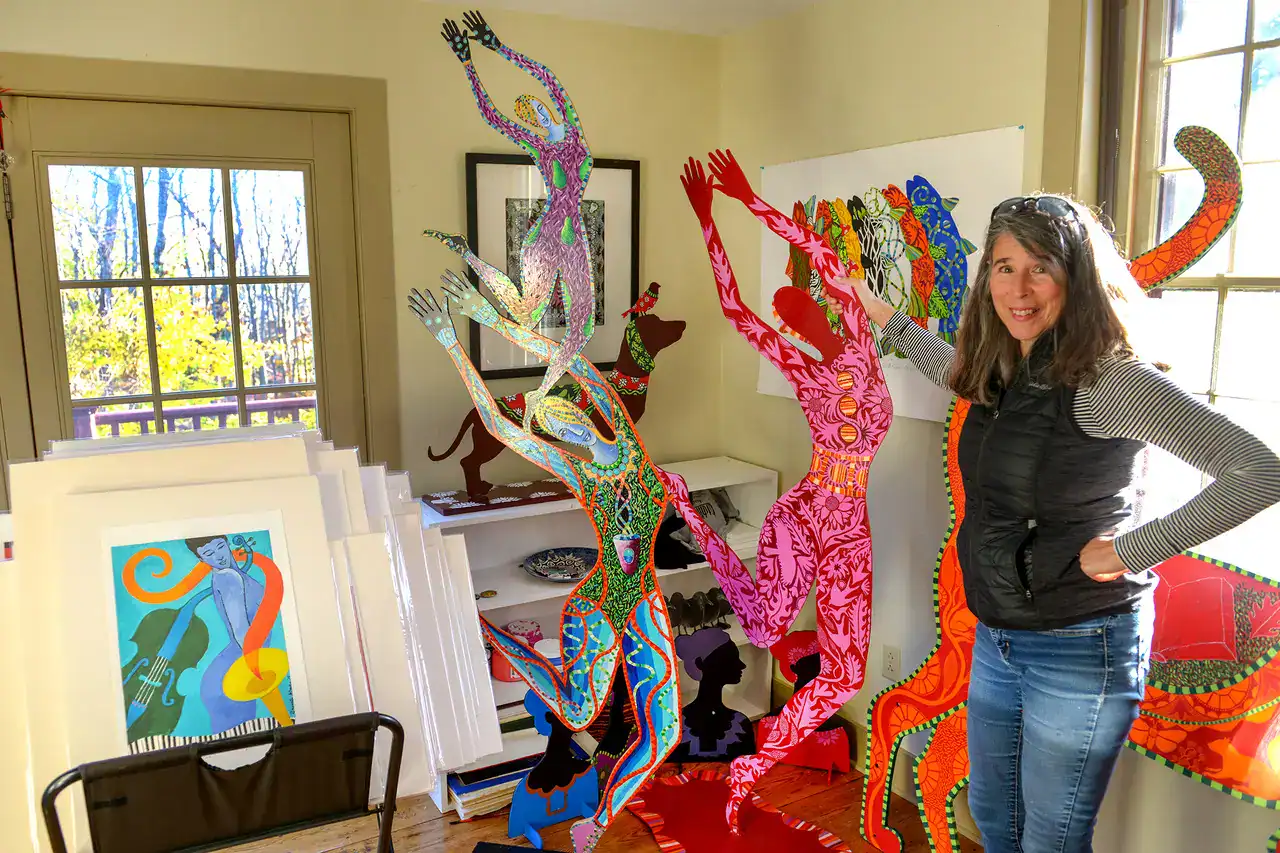
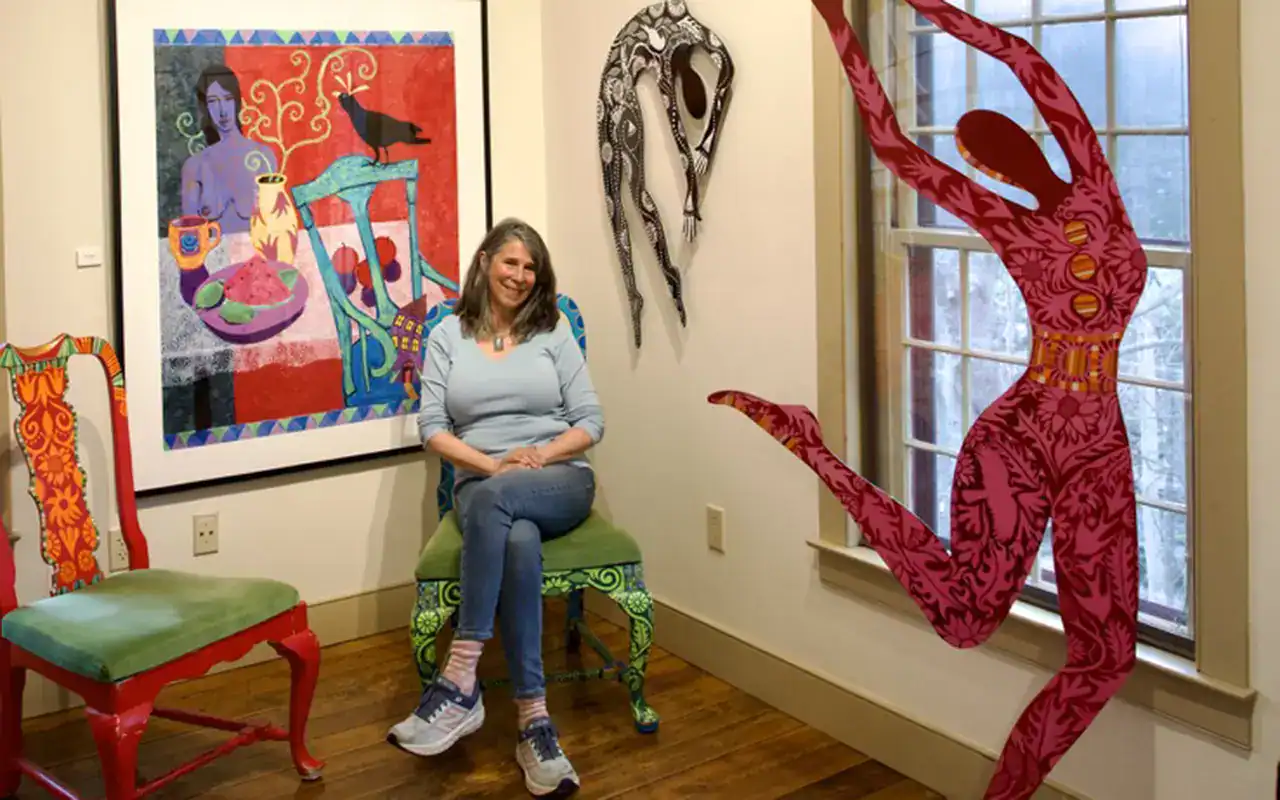
I caught up with multidisciplinary artist, sculptor, and teacher Danielle Mailer in her studio near Goshen, marked from the road by exuberant hanging sculptures, easy to spot as you drive by. An explosion of color and energy greets you at the barn door. Inside, every wall is alive with pieces: concepts and works old and new, beckoning the eye to roam. Works in progress silhouette against jars of pigment and a wall of family photos – a reminder that family is the cornerstone here. Mailer is a powerhouse, walking me through decades of work, each series more intricate and complex while continuing to sew a continual thread through the work. A new piece, fresh off the press, leans against the wall. We head upstairs to talk in her second studio, a more gallery-like space for open studios, where finished two-dimensional and sculptural works immerse you in her practice.
What prompted you to start painting?
Creativity wasn’t just encouraged in my big family; it was the highest form of currency. My mother was an artist who swept us all under her spell, so those art muscles started early. Making has always been part of me, something I must do. I feel I have no choice but to create. She studied with Hans Hofmann and was always painting large, abstract work; our home smelled of turpentine and paint, and I’m deeply influenced by my South American roots. My father was a writer and filmmaker, and recognizing my passion, he encouraged my artistic side enormously, taking me to museums, talking about art, and helping me push open those creative doors. I’m at my best when I’m making. I draw constantly on trains, while waiting – always creating.
You studied art at Bowdoin College, the New York Studio School, and School of Visual Arts. What lessons stayed with you regarding your drawing and painting?
I wanted to go to RISD, but my writer father insisted I also learn to write. I went to Bowdoin and took a more academic path, one I’m now grateful for. My mentors were deeply encouraging, and I experienced real freedom, painting large, Matisse-like canvases.
At the New York Studio School, the experience was quite different. We were pushed to paint like Cézanne, and I felt flattened by these restrictions. Even studying with George McNeil and Mercedes Matter, I still left discouraged, my desire to paint nearly gone.
So to earn some income, I worked as a waitress and began reinventing myself, heading to the School of Visual Arts to study graphic design and illustration. There, under the legendary Skip Sorvino, I honed my skills, landed commissions and book projects, and built a career as a graphic designer. That’s when my patterns arrived on the surface.
I can see that influence in your work. What drew you to this area and prompted the move from New York City?
By the early 1980s, I was married to juggler Michael Moschen and we had a young daughter. However, New York felt too harsh, with relentless grind, often stepping over derelicts, it was not easy for raising a child. I suggested we move upstate, and we discovered Cornwall. We lived there for about 10 years. I loved the rural pace, even though I was far from my family, and it gave me room to raise our daughter while keeping a finger on my artistic pulse. It was hard, during that all-consuming family time, to focus fully on my work, but I kept at it every day.
Eventually, I found my way to Goshen with my second husband, Peter McEachern, and we’ve shared this barn for 30 years. It’s home to Litchfield Performing Arts, which runs the Goshen Jazz Festival and Jazz Camp, where Peter is a teaching artist. It’s also where I’ve truly come into my own.
What motivates your practice today?
I have no choice; it is simply a constant desire to make and create. I cannot stop; it feeds my soul. When I am away from my studio for too long, I feel an imbalance, so it is not really an option for me. I have continually wanted to make work, and it is also a joy to have the privilege of doing something I love. It is not easy by any stretch, but the challenge is always there. I am always trying to catch the spirit of the work. My practice has now expanded to embrace large-scale and public works. I was also fortunate to receive a retrospective at the Mattituck Museum in 2009, with over 40 works.
Can you talk about your sculptural practice?
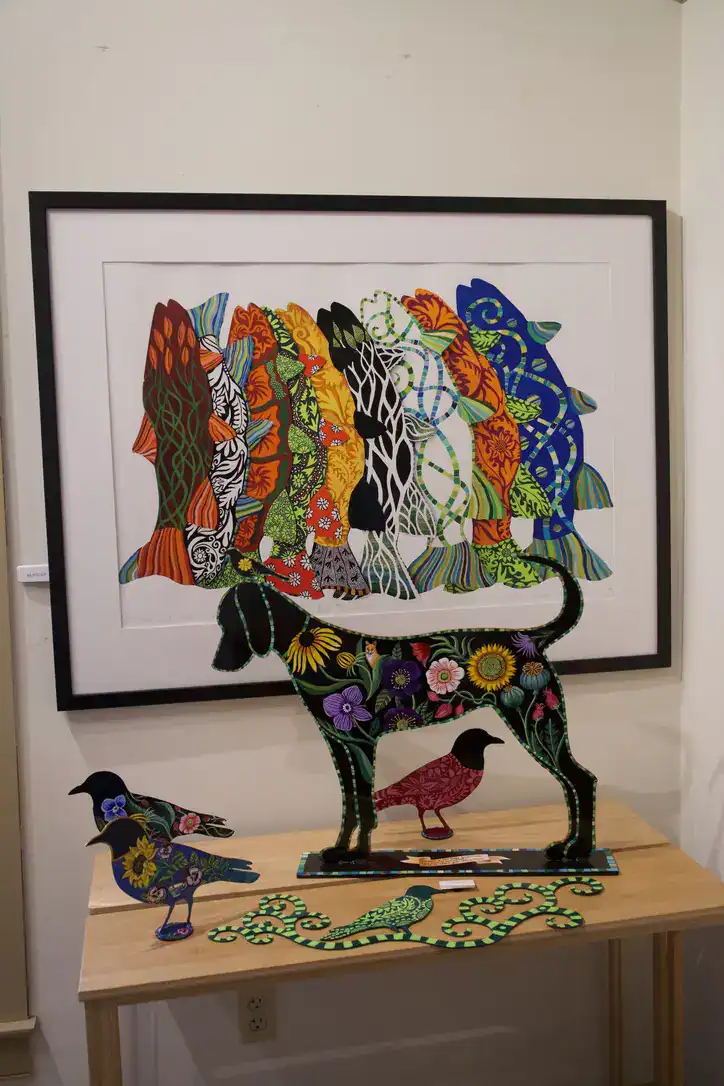
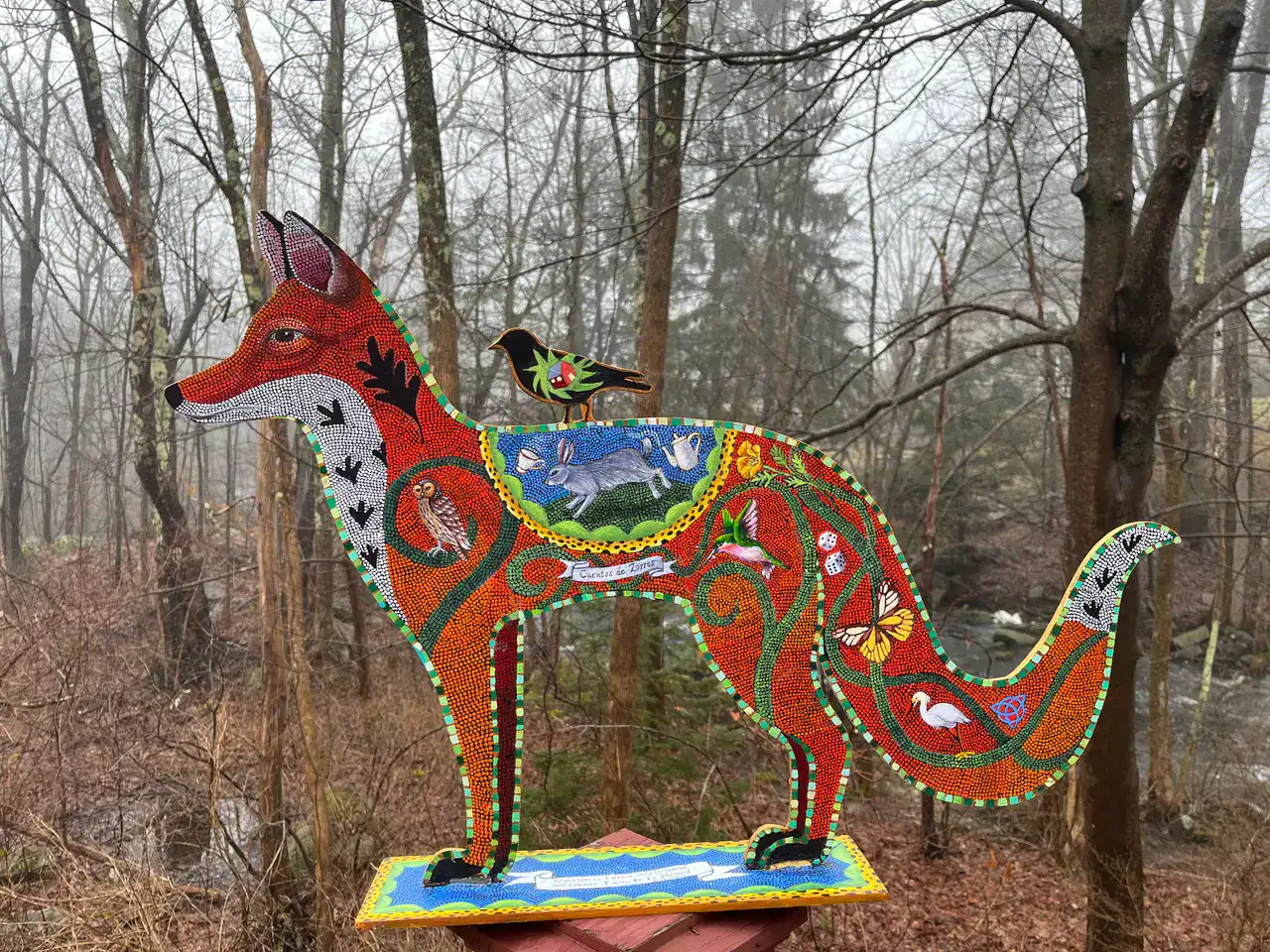
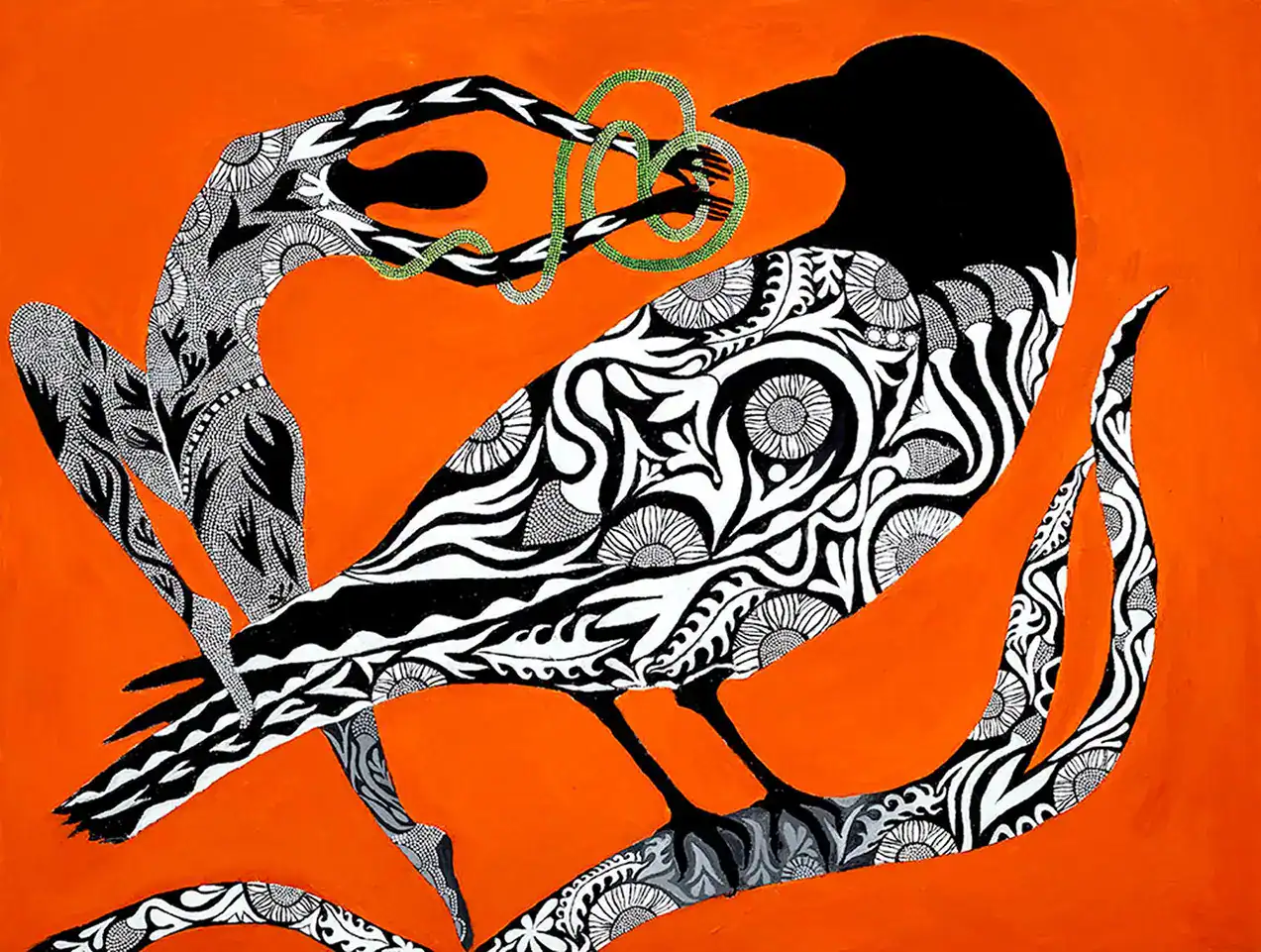
Eventually my figures stepped out of the paintings and became free-standing silhouettes, and after much experimentation I settled on metal as a substrate. We grew up with a menagerie of animals, my mother often rescued cats and dogs who shared our apartment with us. They were so comforting and embedded into our daily life, cats walking through our easels and paints. So, it felt natural that they started to literally walk through my studio and into my work. Crows often find their way into the work as well. A couple of crows come to our house for treats. They are amazing and highly intelligent birds arriving promptly each day.
I also grew up with crows. We called them rooks, and my father could call one in. How did you balance teaching with your work?
I’m a morning person. I often arrive at the studio around 6:30am, especially in spring when the light opens up, and work for a couple of hours before teaching, or I stay on and work straight through. That quiet time is essential; it grounds me and sets the tone for the day. Balancing the two was tough when I taught full time, so I’d take work to school and steal time between classes. Now that I’m part time, I can work here daily. The work also spills into our home, onto the furniture and walls.
I love the way you’re completely immersed in your work. What’s your approach to teaching, and what advice would you give an artist today?
I’ve taught throughout my career, starting at a Montessori school with young children, then at Indian Mountain School with middle schoolers, and now, in my final year, with seniors at Salisbury School, where I’ve worked for the past 10 years. Each setting has been its own journey, but I truly enjoy working with the boys. With every student, I want to reassure them that their self-expression isn’t being judged. I grade on effort where I believe in the energy students put into their work. I want art to feel genuinely joyful, something they can carry throughout their lives, and I want them to feel successful in what they make, encouraging confidence.
As for advice to artists: work with integrity, find the joy and the pleasure, learn to draw and hone your skills as a foundation. Open your eyes to what is around you. Believe in your own voice and run with it.
I also think of my late father, who always said with certainty: “If you thwart a plan to create, you are cheating the cosmos.” And my mother, echoing her mentor Hans Hofmann, would remind me that it all goes back to the figure. Draw from the model, draw from life, even if you choose an abstract path. If it’s a passion, show up. Don’t dilute your experience; go in with both feet.
Yes, to jumping in, so who were your influences, and if you could beg, borrow or steal a piece of work to live with, what would it be?
There are so many to choose from, but to narrow it down: Miriam Schapiro, William Morris, Frida Kahlo, Gustav Klimt, Henri Matisse, Paul Klee, Remedios Varo, Leonora Carrington (the British-born Mexican surrealist whose dreamlike, mythological worlds feel utterly alive), and also Carl Jung, who wrote and illustrated The Red Book, filled with extraordinary drawings. I find quilting fascinating too, all those patterns of found fabrics stitched together into something whole. And El Anatsui’s hanging pieces are simply fabulous.
As for a work to live with, it is so hard to choose. If I could have anything, I would take Remedios Varo’s Creación de las Aves (Creation of the Birds), 1957, a world unto itself. If that were out of reach, I could happily live with a Klimt.
I can see those artists through your work. How did you come to work in public art?
Entering a public art competition for a garage façade gave me my first taste of proposal-making. It took four months and was all-consuming. I didn’t get the commission, but it whetted my appetite and taught me the necessary skills. Then I spotted an empty wall on a Staples store in Torrington that seemed to be calling out for art, and I went for it. I approached the building’s owners, the mayor, the city planner, and the selectmen, working my way through the permissions process. About six months later, I got the green light, partnering with a sign company to bring the concept to life.
What began as a solo vision became a community project. I raised the funding myself through grants, and it was installed as Project Fishtails; a 180-foot-long mural on the side of Staples, facing the Naugatuck River.
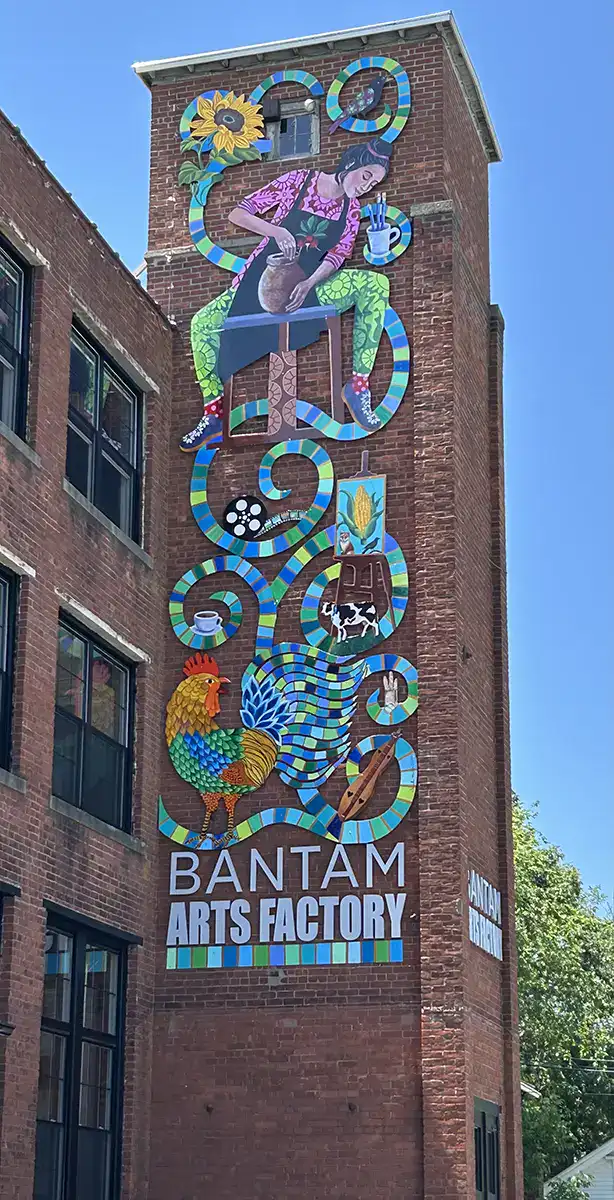
More mural work followed, leading to my second-largest piece: a 30-foot vertical installation in Bantam. That project opened the door to sculptural commissions, including a nine-foot dog and a five-foot cat for Our Companions, an animal sanctuary and rehabilitation center in Ashford, CT.
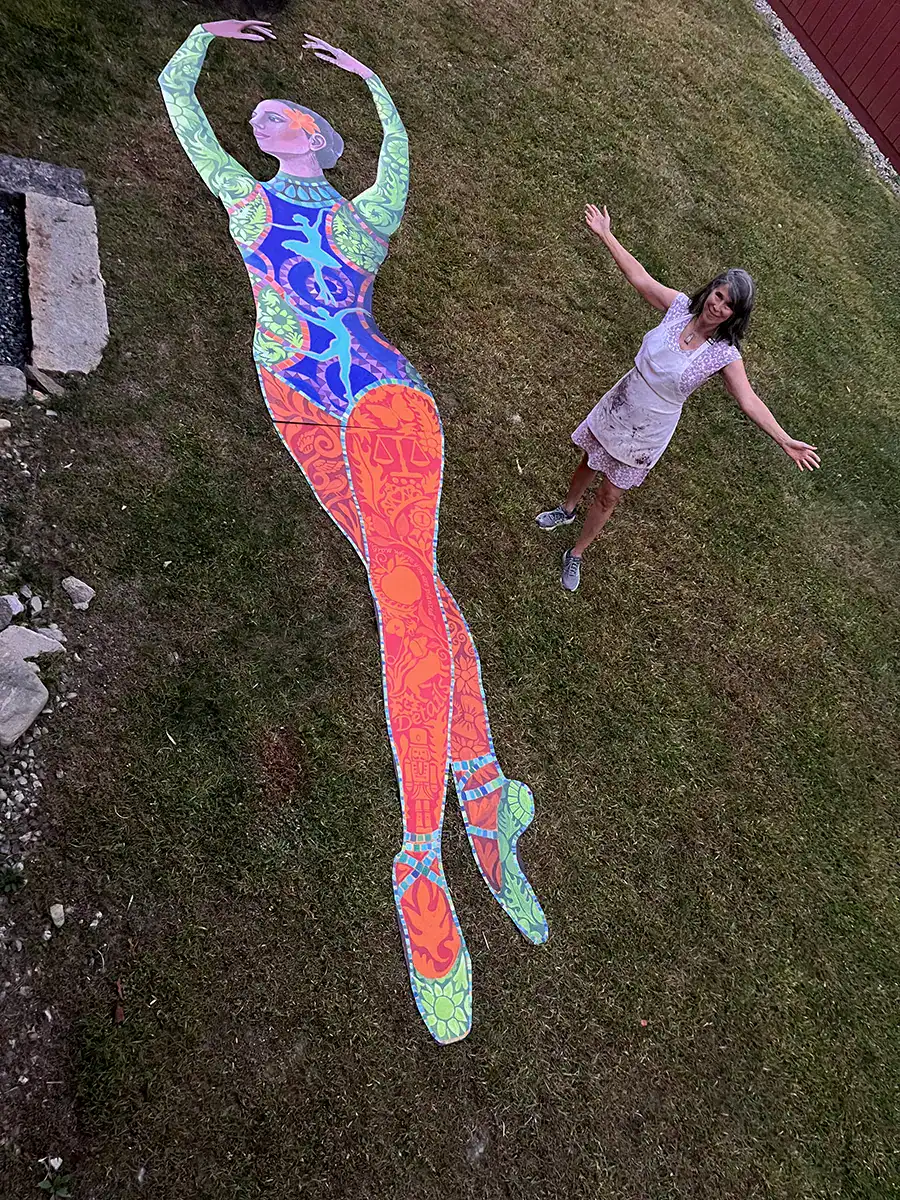
Most recently, I installed a ballerina, Dancing Muse, for the Nutmeg Conservatory Ballet. She was so large I could only see her fully by leaning over a balcony from above; scaling up from a small drawing can be formidable. Works at this scale typically take about two years from concept to completion, and it takes a team to build forms, paint and seal them, and install the pieces. Taking a concept from small to larger than life is thrilling. Collaboration is fulfilling, there’s something special about working alongside another creative mind.
I also worked on a collaborative project with a needlepoint artist through the Washington Art Association, which was a wonderful change of pace.
You’re prolific in both scale and ambition. Is there a project you’re most proud of and what is your dream project?
In my public work, the Bantam mural stands out. It’s more figurative, which made it the most challenging and it’s among my largest.
My dream project is a museum show. I have this fantasy of creating a full environment with standing cutouts, disco balls spinning, the whole space alive with movement and color. I’m going after it with enormous energy; it’s in conversation now, and I’m actively pitching ideas, with hopes for 2028. I also love the idea of setting a defined task each year, one focused project to pour into. That sense of intention keeps the work moving forward. •
Seek out Mailer’s permanent public works if you haven’t already passed them while driving through Connecticut’s Northwest Corner, often they tower overhead or greet you at an unexpected turn. Meanwhile, she has more projects up her sleeve, including costumes for Nutmeg Conservatory Ballet Theatre based on a short production titled El Colibrí, with concept sketches due in mid-May.
Here are a few upcoming opportunities to see her work in person:
May 23–24: Kent Community House Art and Design Exhibit, Kent, CT.
July 3–5: Berkshire Arts Festival, Great Barrington, MA.
September 19–Oct. 23: Falls Village Library solo show (opening reception September 19), Falls Village, CT .
To learn more, find Danielle Mailor on Instagram @daniellemailer, email her at danielle@daniellemailer.com, visit her website at daniellemailer.com, or visit Berta Walker Gallery at bertawalker.com.