“After retirement, I was just gonna sit back and knit, with a few animals,” Andrea Parent-Tibbetts laughed. Well, she does knit, and over 100 animals could be called a few, right? But she’s definitely not just sitting back, and those ‘few’ animals have led to a host of things happening with them at the family’s Clover Brooke Farm near Hyde Park, NY.
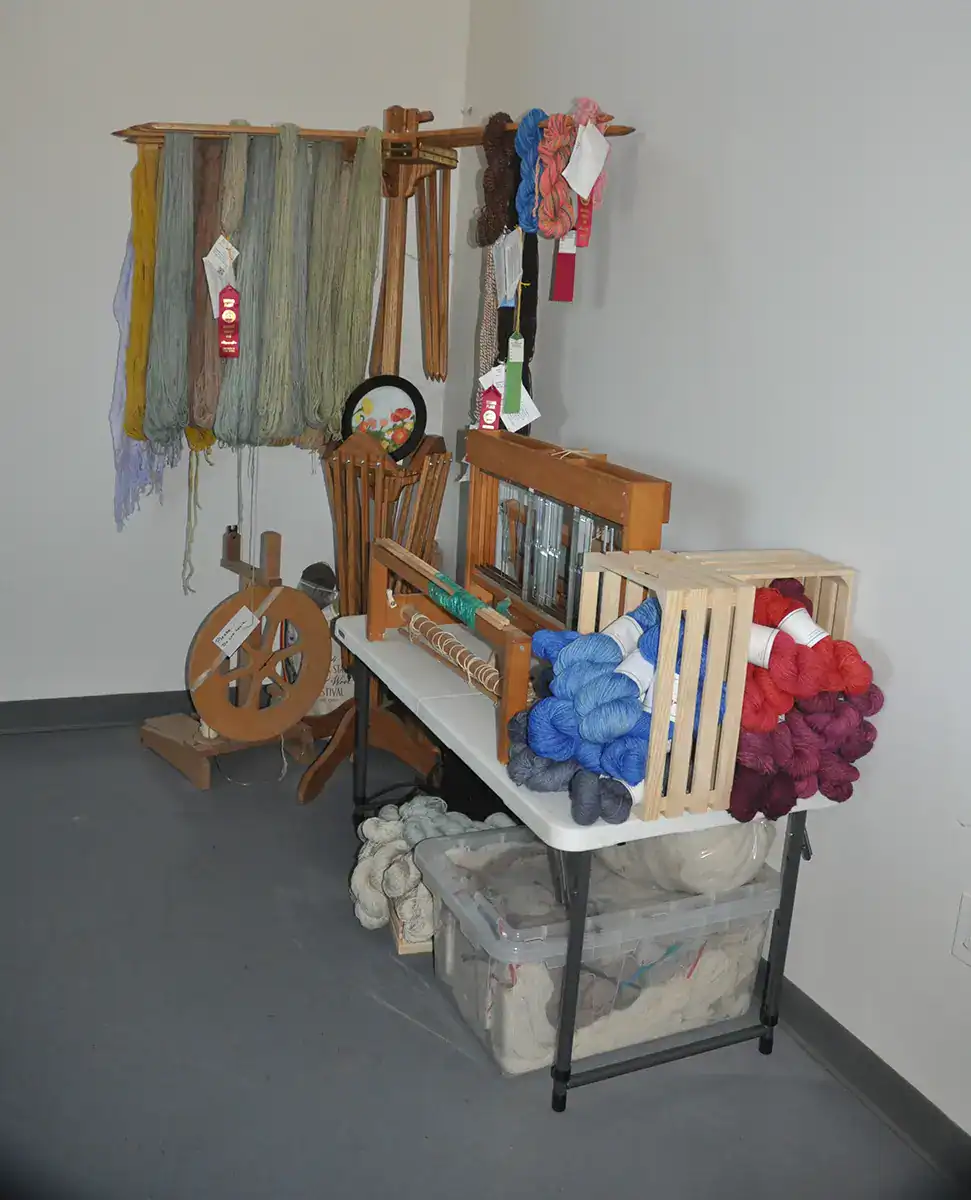
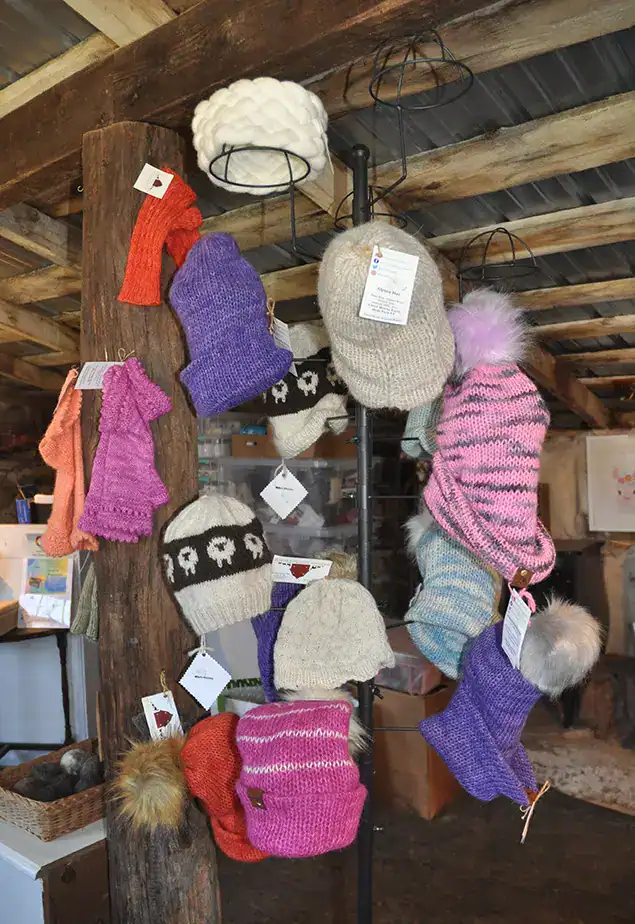
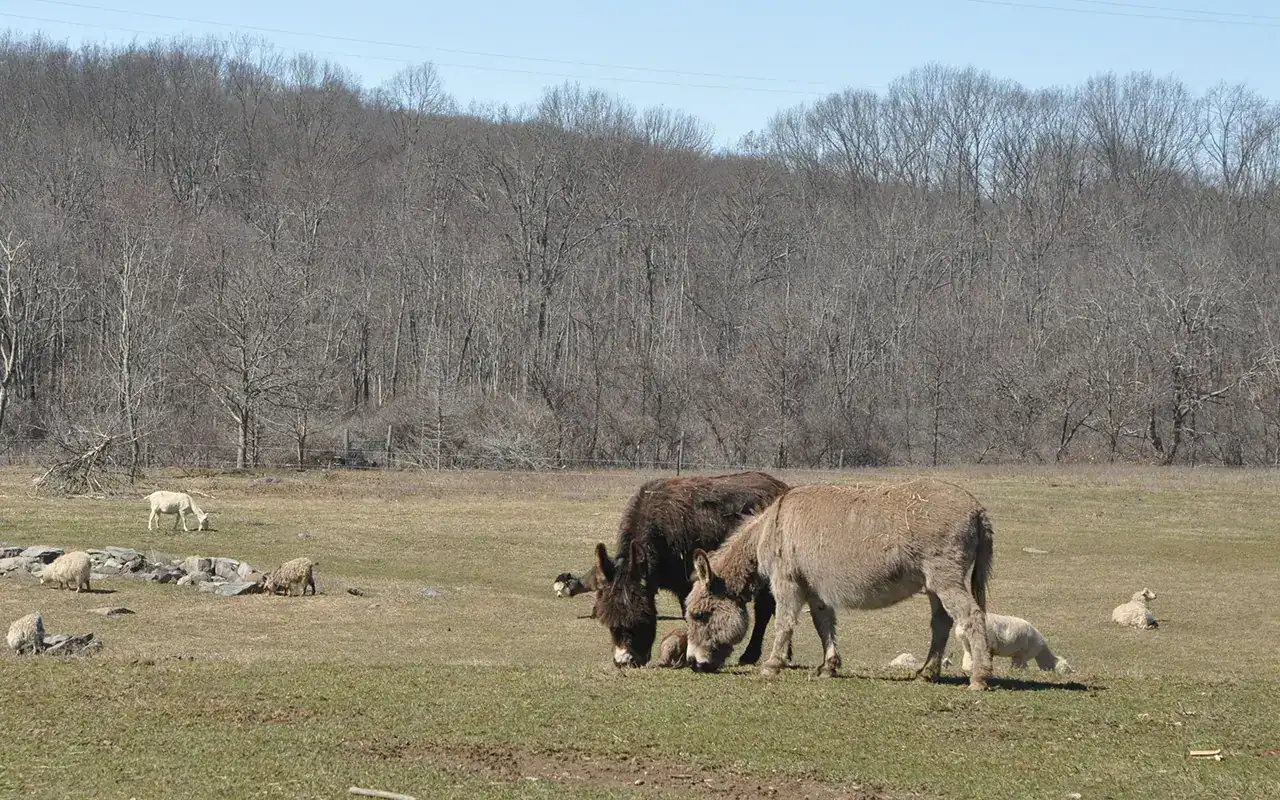
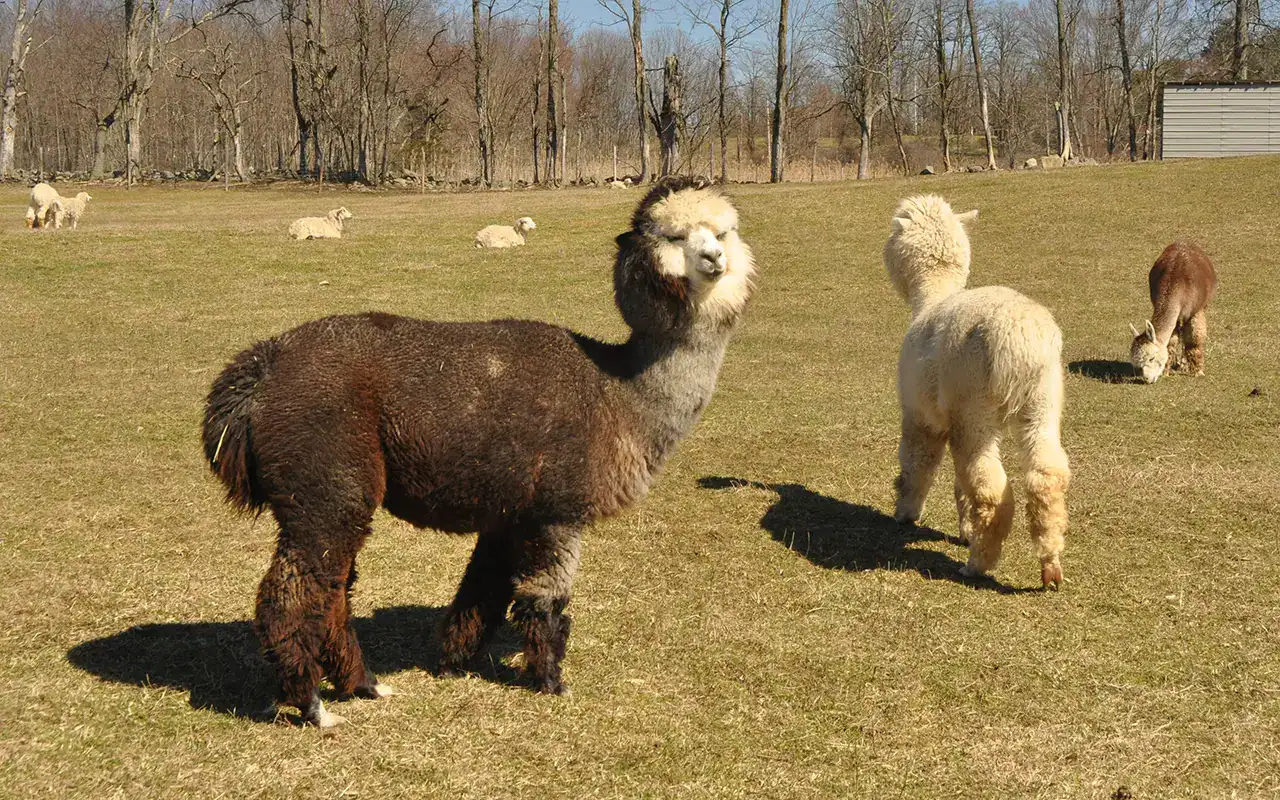
Llamas and alpacas share pastures with several types of sheep and goats, all chosen for their fiber coats, which go into her knitting. More than just providing the many varieties of wool, though, the animals earn their grass and hay by starring in hikes and yoga, and educating people about their history and care.
Education, fiber and hands-on therapy
“I liked the idea of developing and working on things with our own product, taking it from A to B – no, from A to Z,” Parent-Tibbetts said. With her 30 years of experience in school administration, “I was always focused on education. I had as much fiber as I ever wanted,” so it was only natural that she developed classes on working with it. Fiber art has really grown in the past decade, she explained, “It’s a nice outlet to learn and teach. There’s a lot of hands-on therapy.”
How it started and how it's going
The Clover Brooke name came about when daughter Brooke needed a farm name when she joined 4-H. She put her own and her first goat’s, Clover, together. It moved with the family when they purchased the 1850 former dairy farm in 2016. Today’s enterprise started as a hobby farm; they had dairy goats from 2008 to 2023. Along the way, wanting to do something different, they added llamas and alpacas, and then sheep, creating what Parent-Tibbetts now considers basically a fiber farm.
Their animals have always been pets, and the number of them kept growing. During COVID, she told her daughter Kathryn, “There are way too many goats. If you can find a way to make money with them, you can keep them.”
The younger Tibbetts came back with, “Offer goat walks,” and a new business began, which she structured and runs.
“The walks are amazing,” her mother said, “Goats with collars and leashes are like badly behaved dogs.”
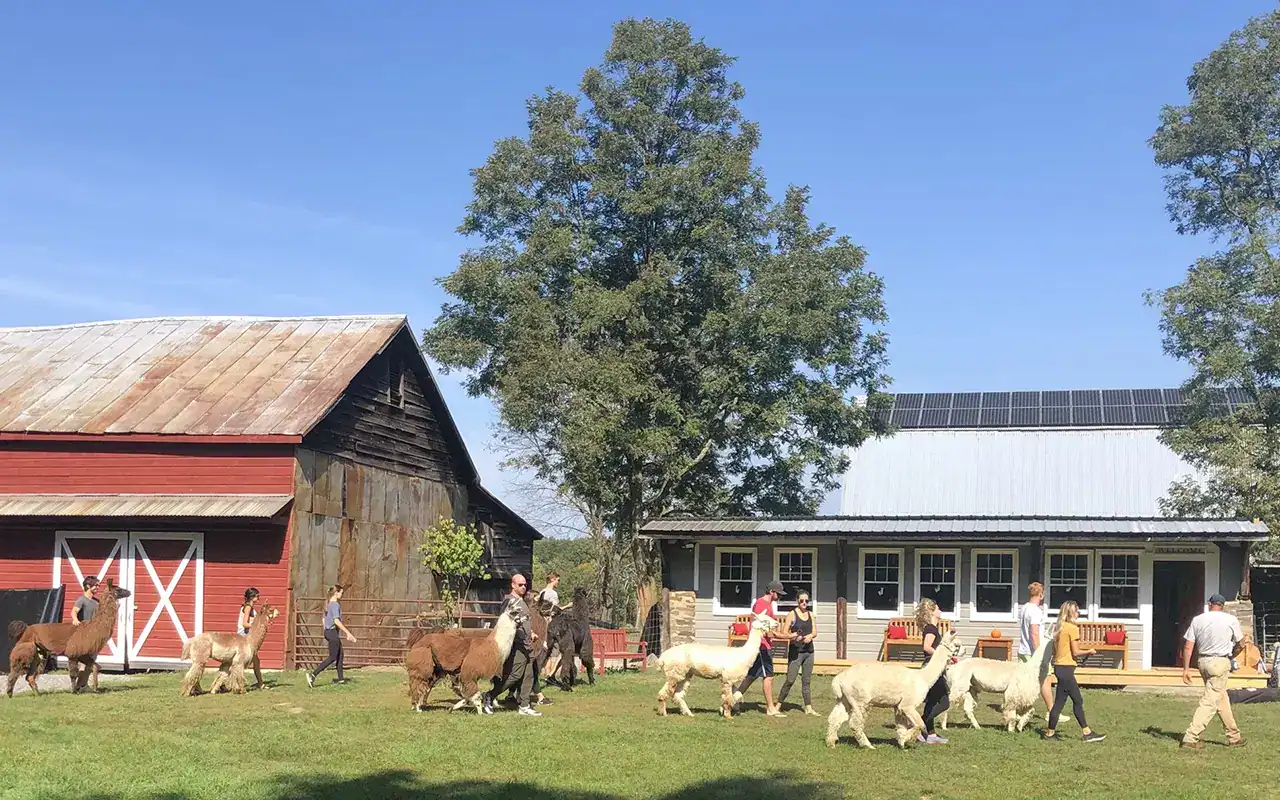
The llamas and alpacas were added to the walks, and then, “We inherited two miniature donkeys, so we do donkey walks, too.” They have always been hands-on with the animals, which makes them better behaved for their hikes and other interactions.
The fiber classes started in 2019, and moved into a renovated barn in 2024. More classes are slowly being added, along with bringing in guest artists. Education is foremost, both about the animals and with the classes.
Llamas and alpacas, the new guard dogs?
The llama and alpaca hikes are the most popular farm offerings, being unique, unusual, and “not traditional.” Parent-Tibbetts said, “They’re cute, fluffy, and large and have always been interesting. People like their personality.” She added that their competition for the hikes is “cow-cuddling,” done with Highland cows and not one of their offerings.
The major aim is to get people onto the farm and make them aware that what they eat and use, “doesn’t just show up in the grocery store. A lot goes into getting it there.”
“The real reason we got llamas was that we had dairy goats and were hesitant to get guardian dogs to protect them against predators. A friend said ‘how about llamas?’ We found a rescue and got them.”
Before taking on any animals, Parent-Tibbett considers: “What will their job be? They can’t be on the farm without a purpose.” For most, the primary use is contributing to the fiber business. The hikes with animals are an added attraction, to bring people to the farm.
Fiber quality
She very much values diversity in the fibers produced and said the sheep wool is a very important additive in developing skeins of yarn. Blending and expanding offerings depends upon markets. The yarns are colored by eco-dying, with plant-based materials. The children’s summer camp Color Chromatic teaches this.
For the hikes, safety is paramount, so there is a guide for each experience, instructing hikers on how to act around the animals. During the walk, they also give information on the animals and species.
The animals and their welfare
Among the collection are two miniature donkeys which were rehomed to Clover Brooke. “Mini donkeys can live 40 to 50 years. We got them in their teens; they’ll be in my will,” she laughed. Their job is to go on walks with people.
About 80% of the animals are rescued or rehomed, “People got them and then changed their mind,” she said, shaking her head.
Asked about favorites, Parent-Tibbetts said, “Llamas are my number one love. People like alpacas, but they really love goats.” Personalities are very different, she explained, “Sheep will run, but goats are curious.”
“Advocacy for my animals is key,” she vowed, saying that the Internet too often leads people to say the worst, especially about llamas spitting. “If acclimated and handled correctly, they won’t.” She has seen postings showing people unfortunately teasing the animals to the point where they do spit.
“People are surprised by how personable they are. They enjoy being stroked and walked quietly beside,” she defended her animals. “People usually leave with a new appreciation of llamas, alpacas, and the farm.” The animals, she added, seem to really enjoy their limited time with people.
Asked about having any special moments with the animals, she responded, “What I find special among some of them is the crossover with maternal care to other species. When a guard animal of another species beds down to take care of them, it’s an extra level of protection.”
She recalled having baby goats and having trouble getting past the guard llama to care for them.
A family farm that continues to grow and evolve
She says it is important for people to know they are a family farm, “Our experiences are small. We’re focused on mental health, with small group settings.”
Youth development is also a main focus. More and more schools are coming to the farm from New York City, looking for a day experience. They work with an education program for students, bringing them for one day out of the city.
“We have a lot of irons in the fire,” she stated. “Most important to me, we have ‘women power’ to manage things.”
Parent-Tibbetts considers the farm a part of agri-tourism. They are not a 501(c)(3), and are looking into scholarships for the camps, which cost below the average.
Acres of open pastures were overgrown when they bought the farm. Regenerative use clearing helped amend the soil and now the animals grazing, especially moving the goat ‘ground crew’ around, helps keep invasive growth down. “We wanted to bring back the land to be truly useful.”
Llamas and alpacas are ruminants, members of the camelid family, with llamas usually being larger by 100 or so pounds. Parent-Tibbetts can tell individuals apart by hairlines and nose shapes. One issue they face is that veterinarians are not familiar with the species, so many who raise them must rely on each other when one is ill. “Llamas are very stoic and won’t show pain, so you have to pick up on nuances.”
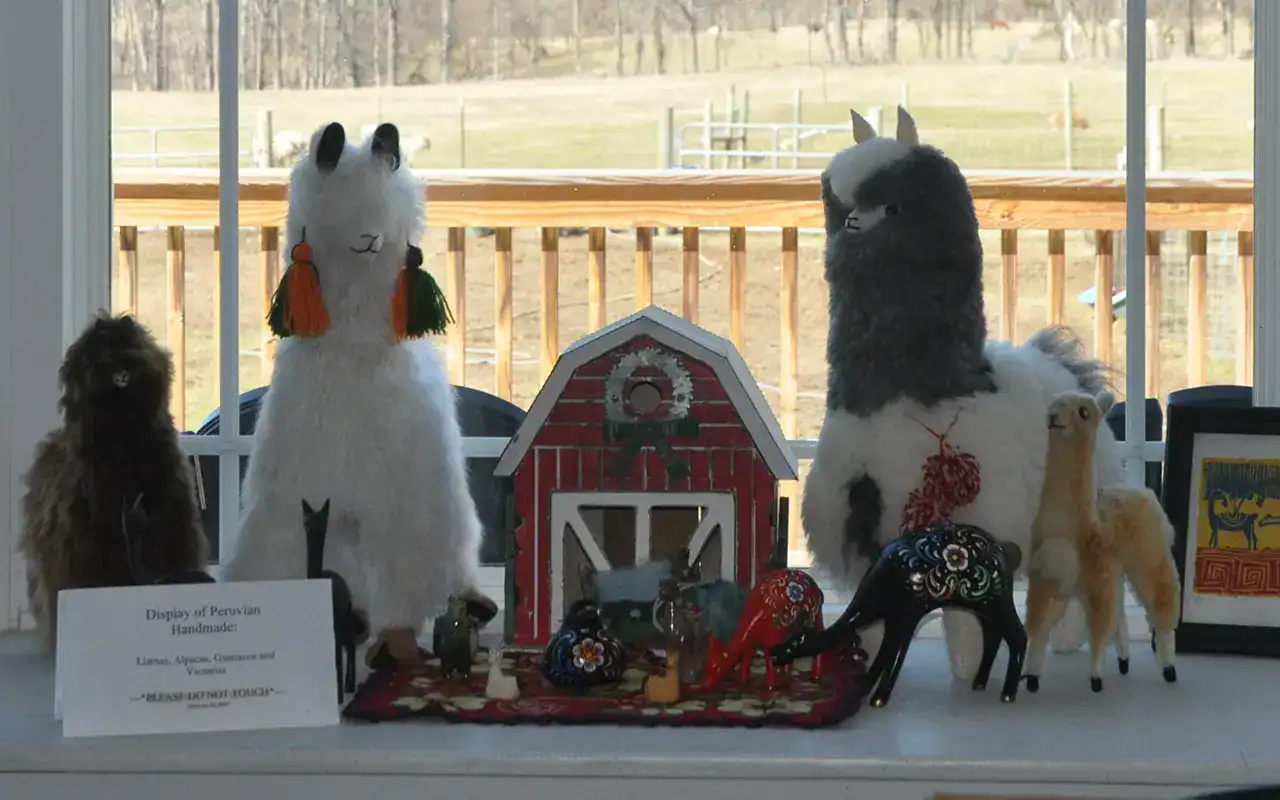
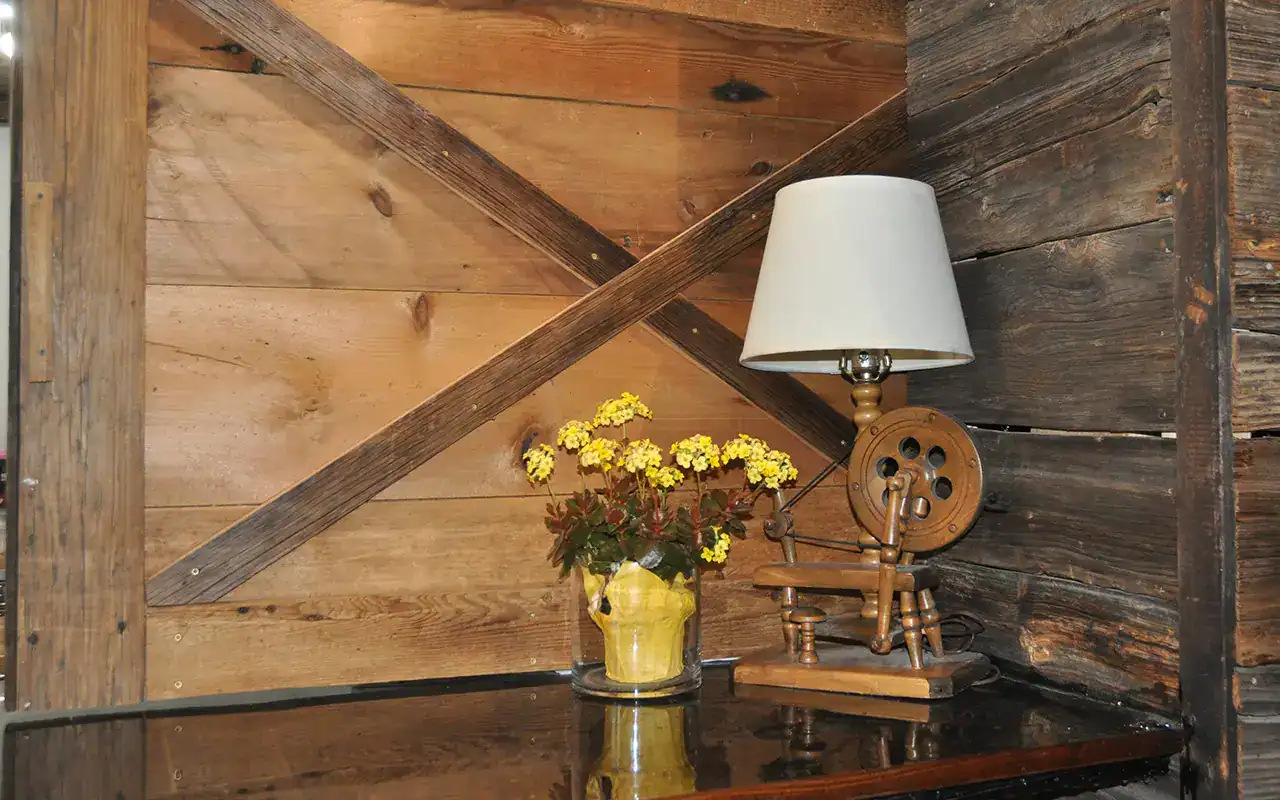
The renovated barn has a comfortable sitting area, kitchen, and counter and an open room with a large work table and windows overlooking the pastures. Weavings on the wall and models of native animals decorate the space, souvenirs of a fiber tour to Peru which she described as, “impressive. Their weaving is unbelievable.”
The Clover Brooke website shows more about their many offerings. Among those are farm tours for children and adults, focusing on education on the significance and history of their animals, how people and animals co-exist, and the best ways to interact with animals.
“Llamatse” yoga, Fearless Farmer, and so much more
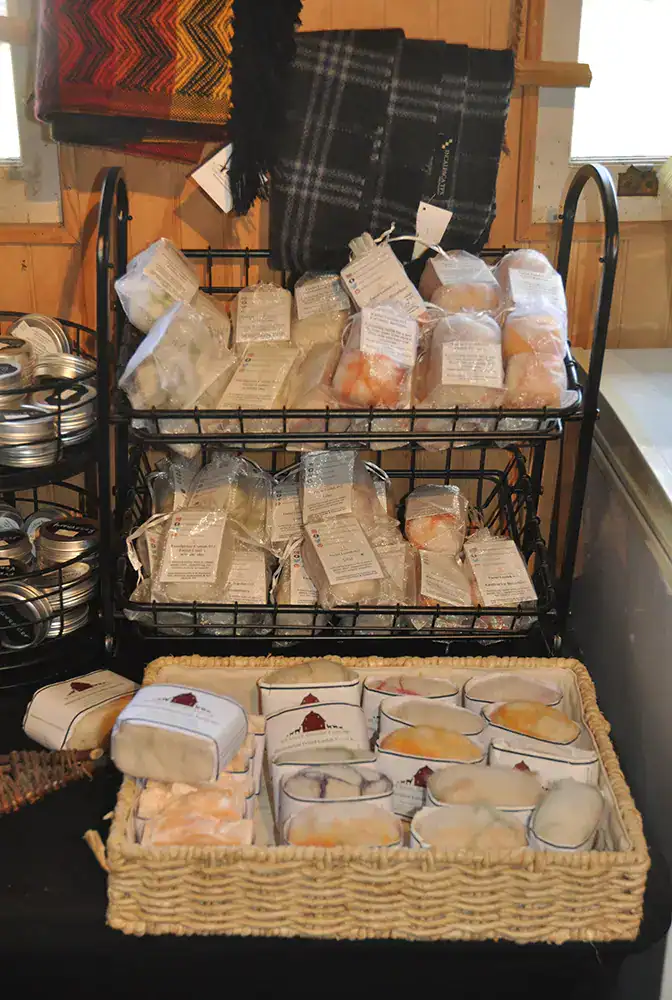
Yoga practitioners who want something beyond going through the moves with goats or puppies can sign up for “llamatse” yoga. Classes for weaving, soap and lotion making, and needle felting are also available.
Fearless Farmer children’s camps teach farming in connection with ecosystems and the environment, the importance and care of the different farm animals, and creative eco-crafts such as dye making with natural plant colors.
The upcoming Tea Time and Llama and Alpacas on May 23 will benefit John Jay FFA and 4-H Spitters Youth Clubs, both of which focus on agriculture.
The website also reveals an Airbnb, beer brewing, loofah and fiber bowl making, and more. As Parent-Tibbetts said, there are indeed a lot of irons in the fire.
And, just in case there’s not enough going on at this farm, a “short way down the road” is a new space being turned into the Hudson Valley Equine Center. Along with boarding horses, they plan to offer ground-based therapy, with no actual riding. Veterans will get first consideration for that. She explained they are making connections, networking, and holding meetings to see how they can best support organizations and individuals. A meeting with Congressman Pat Ryan showed him the importance of the center to veterans and to all those needing the therapy. Their instructor is a veteran and former high school teacher who has dealt with PTSD; “She used her horses as a therapy tool and learned a lot on how to use them for others.”
“People come here and leave with a new appreciation; they recognize the time and effort that goes into the farm. And, they enjoy their time with the animals chosen,” Parent-Tibbetts mused. “It’s about people coming who have something in their life and need quiet time. What we take for granted, they don’t have. They can re-center, have it be restorative, and find mindfulness.”
As we finished talking, she headed across the road to re-center with two neighbors already having a mailbox conversation, saying, “This is what I like so much about living in the country.” Sit back and knit? Just a few animals? Maybe someday, but not yet at Clover Brooke Farm. •
You can visit Clover Brooke Farm at 175 Ruskey Ln, Hyde Park, NY, or find out more online at cloverbrookefarm.com.