
Main Street News
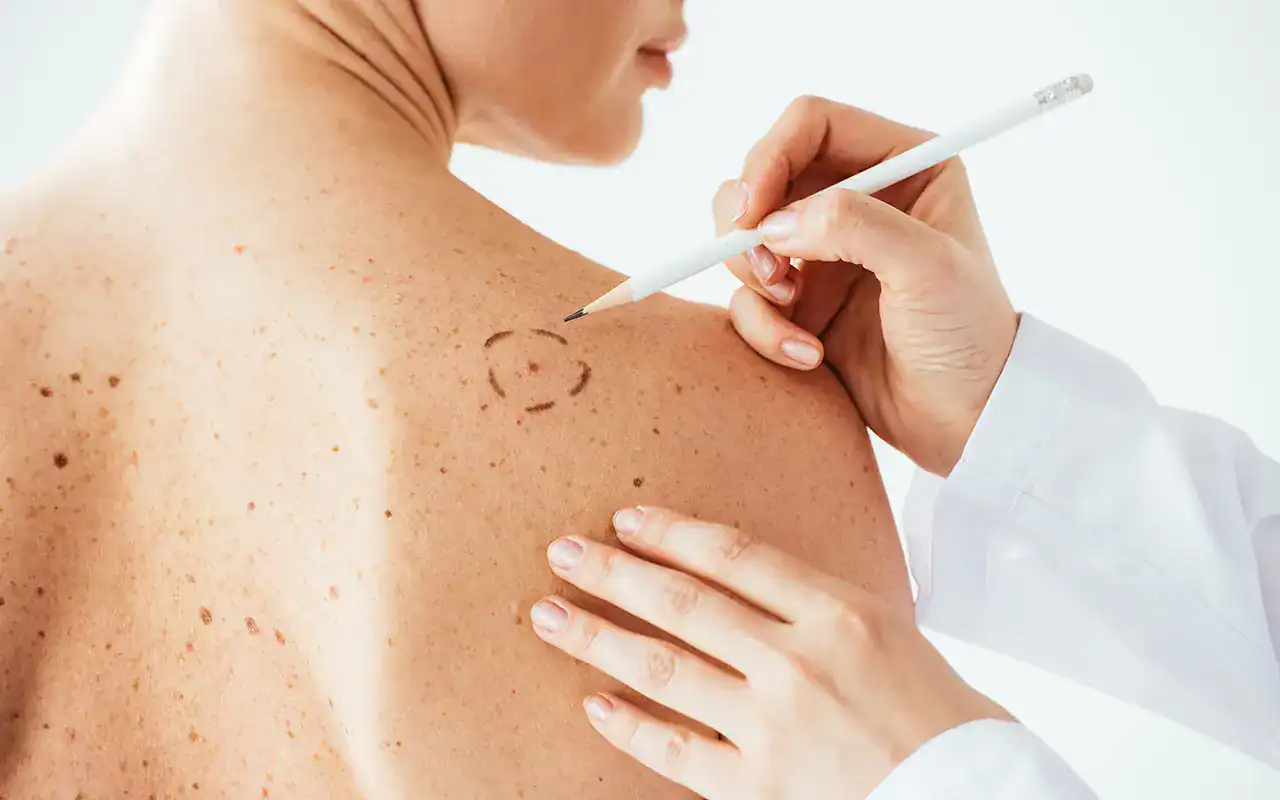
Get Educated: May is Melanoma and Skin Cancer Awareness Month
After a long, dark, frigid winter, most of us are looking forward to plenty of warm days with lots of sunshine. Many are longing to return to our favorite summertime pursuits—from hiking, biking, and kayaking to cooling off by splashing around at nearby lakes and beaches.
Many of us are simply starved of the opportunity to be outdoors without the need for bulky coats, plush sweaters, and thick, fur-lined boots. We want to don our short-sleeve tees, shorts, and flip flops while welcoming that easy, carefree feeling of the sun’s rays warming our skin.
Although that all sounds so appealing, let’s be sure to remember that May is Melanoma and Skin Cancer Awareness Month. This heightened time of awareness and education highlights the many ways we can prevent skin cancer, get early detections, and practice overall sun safety. This month also emphasizes the practice of using self-exams and the importance of visiting the dermatologist to identify any new, changing, or unusual spots.
Facts & Stats
According to Skin Cancer Foundation, which empowers people to take a proactive approach to daily sun protection, and the early detection and treatment of skin cancer, 1 in 5 Americans will develop skin cancer by age 70. The American Cancer Society cites that every year, more than 5 million cases are diagnosed in the United States, making skin cancer America’s most common cancer.
The American Association for Cancer Research points to the various types of skin cancer. The category includes basal cell skin cancer, squamous cell skin cancer, and melanoma. Skin cancer, including basal cell and squamous cell carcinoma, is often caused by UV exposure, but is largely preventable, making awareness critical for early detection and treatment.
Basal cell carcinoma and squamous cell carcinoma, which are nonmelanoma skin cancers, are the most common types of skin cancer. Nonmelanoma skin cancers rarely spread to other parts of the body. Melanoma is an aggressive form of skin cancer, which is more likely to invade nearby tissues and spread to other parts of the body. For those who have had more than five sunburns, the risk for melanoma doubles.
Tanning Beds
It’s also important to note that tanning beds are not a safer alternative to getting some sun while being in the great outdoors. The American Academy of Dermatology Association stated that there’s no such thing as a safe tanning bed, tanning booth, or sun lamp. In fact, the U.S. Food and Drug Administration (FDA) requires warning labels on all indoor tanning equipment.
Indoor tanning can boost the risk of developing squamous cell carcinoma, by 58% and basal cell carcinoma, by 24%. Using tanning beds before age 20 can increase the chance of developing melanoma by 47%; the risk increases with each use. If you use or have used an indoor tanning device in the past, be sure to schedule an appointment to see a board-certified dermatologist, who can check your skin for signs of skin cancer.
With all this education and awareness, there are some important dates to remember this month. Melanoma Monday, held on the first Monday in May, lands on May 4. That day is dedicated to raising awareness about the deadliest form of skin cancer. There’s also Don’t Fry Day, which is observed on the Friday before Memorial Day, so May 22 this year. It encourages sun safety awareness before the summer season kicks in.
Prevention, Early Detection, and Screenings
The American Academy of Dermatology advises people to use a broad-spectrum sunscreen, SPF 15 or higher. It should be applied 15 minutes before going outside and reapplied every two hours or right after swimming and/or sweating. Don’t forget to apply sunscreen behind the ears, on the back of the neck, on the scalp, and on the tops of the feet and behind the knees. Also, apply a lip balm with SPF.
The organization also stresses the importance of covering up. Be sure to wear sun-protective clothing, wide brimmed hats, and UV-blocking sunglasses. Seek out the shade. Avoid the peak hours of sunshine, which falls between 10 a.m. and 4 p.m. It’s also a good idea to check the daily forecast for the UV Index—a 3 or higher requires active skin protection.
Finally, know your ABCDEs. The American Academy of Dermatology asks people to check their skin regularly. “Use the ABCDE guide for finding melanoma: Asymmetry, Border irregularity, Color variation, Diameter (larger than a pencil eraser), and Evolving or changing size/shape/color.
Remember that some medications can boost sun sensitivity, so check with your healthcare provider. Also, keep infants under 6 months old out of direct sunlight. Use shade and protective clothing rather than sunscreen.
Monthly self-exams are advised for everyone. For most adults the Melanoma Research Alliance recommends a professional full-body skin cancer check once a year by a board-certified dermatologist. Individuals at higher risk—those with a personal/family history of skin cancer, numerous moles, or fair skin, should consider screenings every 6 months.
A skin cancer diagnosis often starts with the exam. Healthcare professionals may remove some skin to test it for cancer. Defined as a biopsy, the Mayo Clinic explains that a sample of tissue is sent to the lab for testing. Tests can show whether the sample contains cancer cells.
Some people with skin cancer may need other tests to find out whether the cancer has spread. This is called cancer staging. The stage of the cancer tells the healthcare team about its size and whether it has spread. The Mayo Clinic states that not everyone with skin cancer needs cancer staging since most skin cancers don’t spread.
It’s Time for Self-Tanners
For those who like the look of a tan, opt for a self-tanner. It won’t expose your skin to harmful UV rays; it also can’t protect skin from harmful UV rays, so be sure to continue to practice safe sun time.
Need assistance finding a self-tanner? InStyle identified the best products for 2026, tested by its staff. According to this beauty and style source, the Best Overall self-tanner is St. Tropez Classic Bronzing Self Tan Mousse , which provided the most realistic, long-lasting tan. For a Tan in Under 2 Hours, it recommends Coco & Eve Sunny Honey Bali Bronzing Self Tanner Mousse, which develops quickly.
This summer, remember to play it safe and have a healthy, happy summer season.