
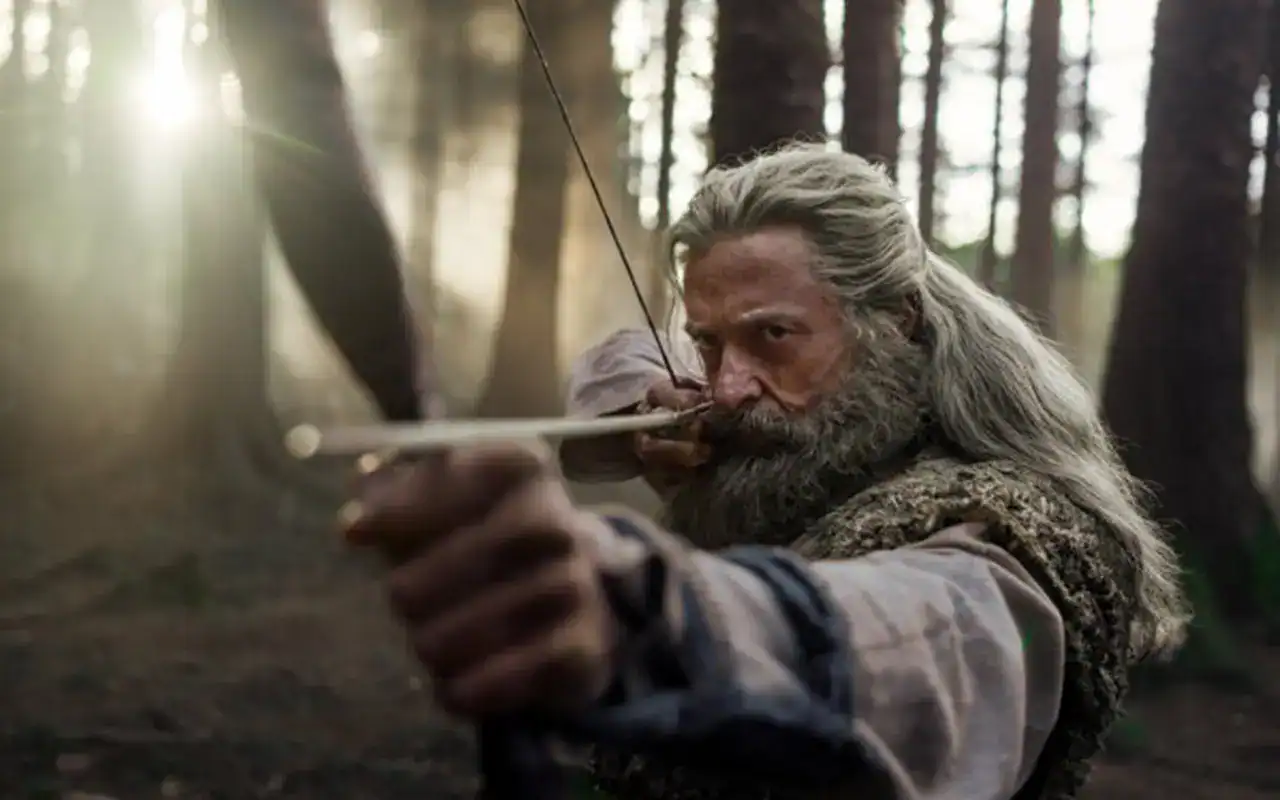
Robin Hood, Robin Hood
Riding through the glen
Robin Hood, Robin Hood
With his band of men
Feared by the bad, loved by the good
Robin Hood, Robin Hood, Robin Hood
Admittedly, one must be “of a certain age” to recall the haunting refrain that graced our TV screens from 1955 to 1959. “The Legend of Robin Hood” told weekly tales of the courageous denizen of Sherwood Forest who stole from the rich to give to the poor, battled the evil Sheriff of Nottingham, laughed and joked with Little John and Friar Tuck and generally created a totally unrealistic view of “Merrie Olde England” back (way far back) in the day.
Enter “The Death of Robin Hood,” and all the childhood glee is washed away with the first tide off the rugged English coast as Michael Sarnoski, the brilliant writer/director of this fable continues the emotional cinematic gymnastics he created in his earlier work, the thoroughly engrossing film “Pig.”
Make no mistake, becoming immersed in this 13th Century tale of brutality, reconciliation and hoped for redemption is not your typical summer fare. No car chases. No gun fights. No gratuitous love scenes. No flying superheroes who always appear at the right moment to save the town or the girl or the secret sauce that has been squirted on your popcorn.
This is a challenging film … which is why it is so magical and so engrossing.
The first third of the film is dark – both in Sarnoski’s use of light and color and in the violence that likely was standard fare in those chaotic times. With no attempt at subtlety, Robin Hood is presented as a violent character, devoid of ethical or moral instincts. Enter his long term “wing man” Little John (Bill Skarsgard) who is looking to avenge the killing of his beloved wife. The solo killing spree becomes a duet. During that revenge spree, an aging Robin is seriously injured and Little John, with knowledge of a prioress with alleged healing powers, carries, rows and drags Robin to deposit him at the door of the island priory. The rest of the film abruptly changes color, light and tone as Robin, calling himself “Randolph” to avoid being recognized as the monster he has been, struggles to become human within the peaceful, supportive surroundings.
And, the cast?
We have seen Hugh Jackman in three films over the past 18 months and this presentation is as far removed from “Song Sung Blue” and “The Sheep Detectives” as can be imagined. He is brilliant. In close ups (which abound in the latter part of the film) his chiseled features and impressive flowing hair and beard eloquently tell the story of a man nearing the end of his tumultuous life. The intensity of his performance, his pure reflection of the struggles that mark his healing and the ultimate revelation of his character are, in themselves, an acting master class reason to see this film.
As the prioress who heals, comes to love and ultimately allows Robin/Randolph to take his leave, Jodie Comer is magnetic. Her personal struggles are well hidden behind her care for the sick, the lame, the orphaned, the hopeless. Sister Brigid and Randolph carefully bring Little John’s orphaned daughter Margaret (Faith Delaney) back to life and the child becomes the essential element that allows Robin Hood to become human. As he realizes the impact of that transition, he deals with a would-be assassin played by Noah Jupe, previously of “Hamnet” fame, with counsel and caring as opposed to his former habit of brutally dealing with challengers.
The legends surrounding Robin Hood are not new. They have, for centuries, been the standard fare of oral histories, poems, songs and cautionary tales. The notion of a vagabond and his “band of merry men” who took the ill-gotten gains of the rich and shared them with the poor are as integral a part of the folklore of England as the sword Excalibur and the Knights of the Round Table. His storied career was captured in a 17th Century narrative poem, “Robin Hoode His Death” that survived through oral history, countless revisions and additions. This closing stanza from that evolutionary work summarizes the various writers’ intent:
With Friar Tuck and Little John they had a roguish look
They did the deeds that others wouldn’t dare
Recaptured all the money that the evil sheriff took
And rescued many a lady fair
Storytellers wanted to have a hero’s life to share with succeeding generations. “The Death of Robin Hood” takes that premise and makes Robin Hood all too human … and the result is thoroughly engaging, challenging and very much worth the time spent in the dark with friends experiencing the adventure.