
Main Street News
On Screen: BERNSTEIN’S WALL
Douglas Triola’s “Bernstein’s Wall” is finally in theatrical release. Originally presented in 2021, the film made the circuit of festivals around the world, picking up awards, getting favorable reviews and attracting a following that seemed to gravitate toward the musical genius’s embodiment of art as the dynamic behind social change.
The film is more than that. Much more.
Imagine assembling a list of the historical figures with whom you’d like to spend an evening, sitting around, having a glass, simply talking. Make sure that Leonard Bernstein is on that list, then check the calendar and make sure you become immersed in this beautifully fashioned documentary while it appears on a theatre screen near you. This is an uncanny, albeit one-sided conversation with one of the greatest creative minds of the last hundred years.
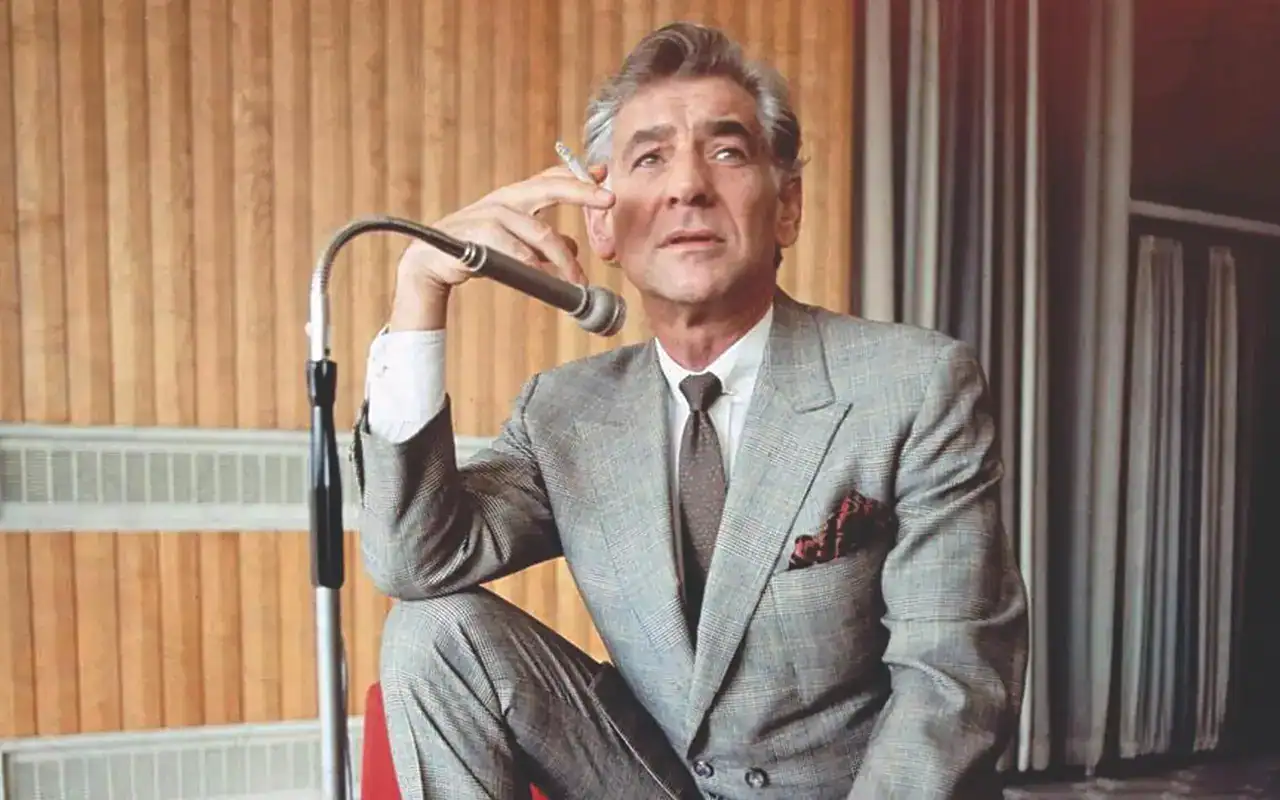
It’s fortunate that Bernstein was no stranger to the media. The film takes great advantage of the many interviews he did throughout his career, cutting them together with archival footage of concerts, home movies, still images and news clips. On camera, usually smoking, he is candid about the struggles of the creative mind – he affirms that an artist must have the courage to be alone – and passionate about his social beliefs. He welcomes Louis Armstrong to a Philharmonic concert, leads an anti-Viet Nam War rally in New York City and talks candidly about his relationship with the Kennedys, including his performing at the dedication of the Kennedy Center in Washington, DC at Jackie Kennedy Onasis’ invitation.
With such a high public profile and an obvious appetite for the adulation that attended it, his response to Tom Wofe’s article in New York Magazine, “Radical Chic: That Party at Lenny’s” satirizing the introduction of the Black Panther movement to New York celebrity society, Bernstein’s reaction is very human. Surfacing tapes from the Nixon White House belittling the premier of “Mass” at the Kennedy Center provides ample support to the notion of his being targeted as … in the current, common derogatory slang would have it … a “libtard.”
The challenges and triumphs of Bernstein’s private life became the focus of Bradley Cooper’s 2023 film on Netflix, “Maestro,” in which Cooper starred with Carey Mulligan as his wife, actor Felicia Montealegre. Set as counterpoint to his triumphs as conductor, performer, composer, the Cooper film plays their family life – they had three children – against Bernstein’s sexual proclivities and how the two dealt with the obvious challenges. “Bernstein’s Wall” acknowledges the tension, but gives much more emphasis to the working of a creative genius and social firebrand who used his global fame and celebrity to fight for human rights, an end to war and combatting disease. When Felicia died of cancer in 1978, his devastation was obvious.
Younger generations will likely resonate with the genius of “West Side Story” in both of its feature film iterations as well as its success on Broadway and perpetual appearance in regional theatre, where an older generation will fondly recall “Young People’s Concerts” which graced the CBS network airways for years and introduced generations to the beauty, complexity and appreciation of classical music. We see the magic of those programs (awarded 11 EMMYS) in his candid delivery. Bernstein spent years as Music Director the New York Philharmonic, producing literally hundreds of albums and winning countless awards along the way.
Bernstein was, for most of his creative life, closely associated with Tanglewood, the summer home of the Boston Symphony Orchestra. From studying conducting from founder Koussevitsky to returning summer after summer to conduct and teach conducting, his imprint on the cultural life of that institution brackets the film.
And, then there’s the title.
Calling the piece “Bernstein’s Wall” may seem a curiosity, but the story arc of his career is effectively bracketed at the Berlin Wall. From a concert in 1961 when the world was enmeshed in the Cold War to the 1989 Christmas Day concert in what had been East Berlin with an orchestra and chorus assembled from both sides of the recently opened wall performing Beethoven’s Ninth Symphony with its triumphant chorus singing the “Ode to Joy,” the imagination, the insight, the sensitivity, the creative genius that was Leonard Bernstein is on full display.
“Bernstein’s Wall” is a truly wonderful way to spend an hour and 45 minutes in rapt conversation with Leonard Bernstein.