Featured Artist
A Tangle of Thread: Stacy Bogdonoff
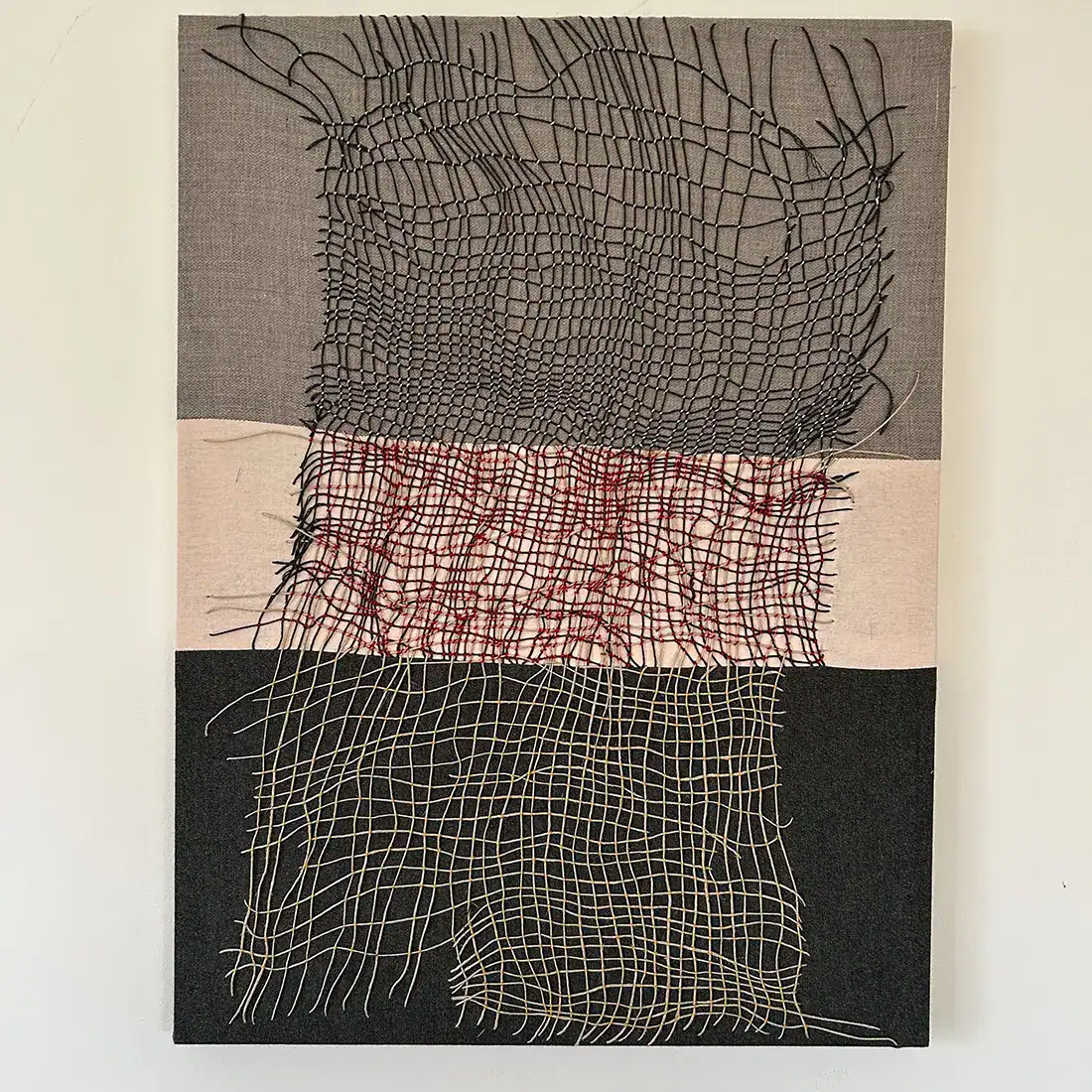
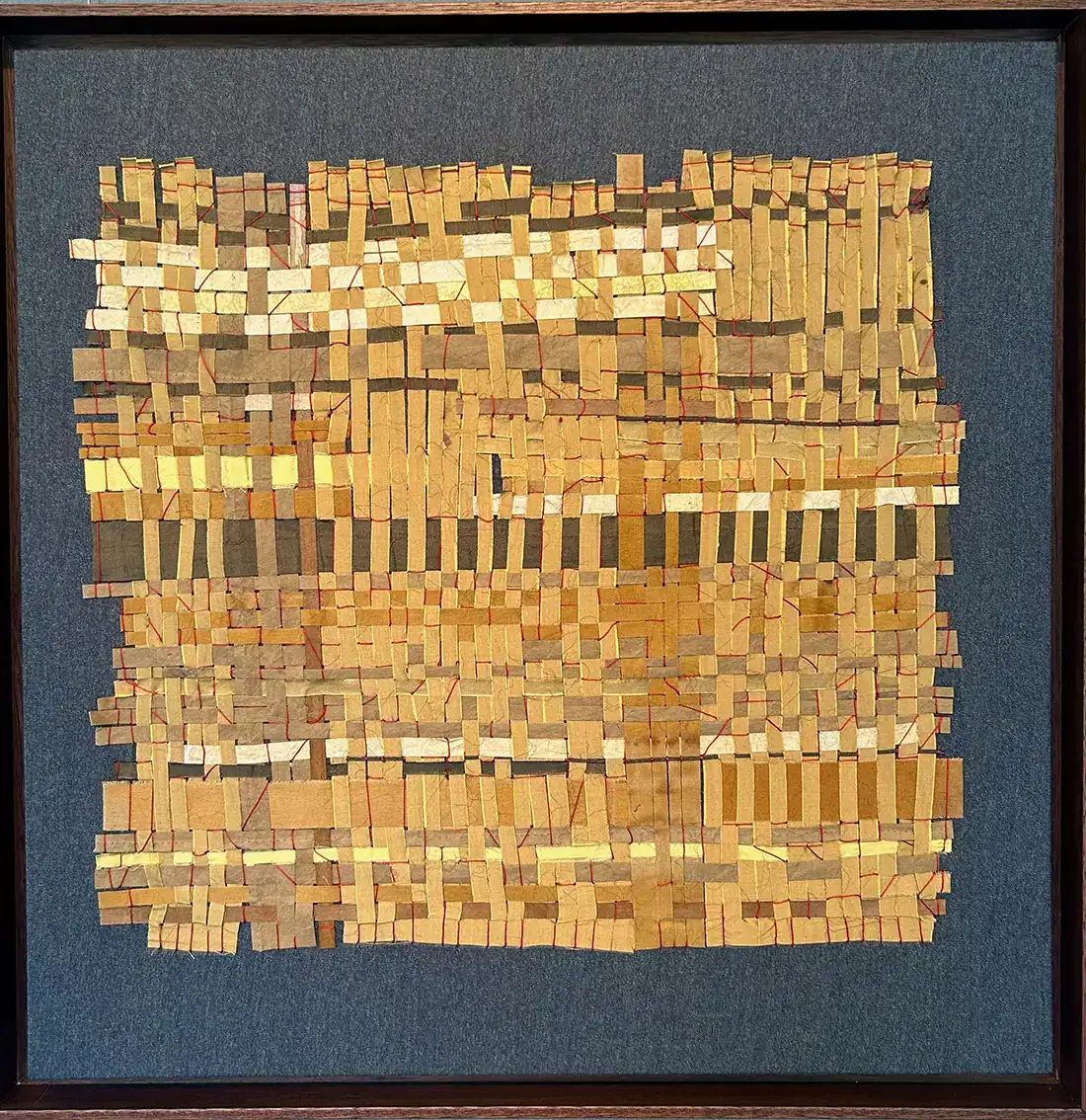
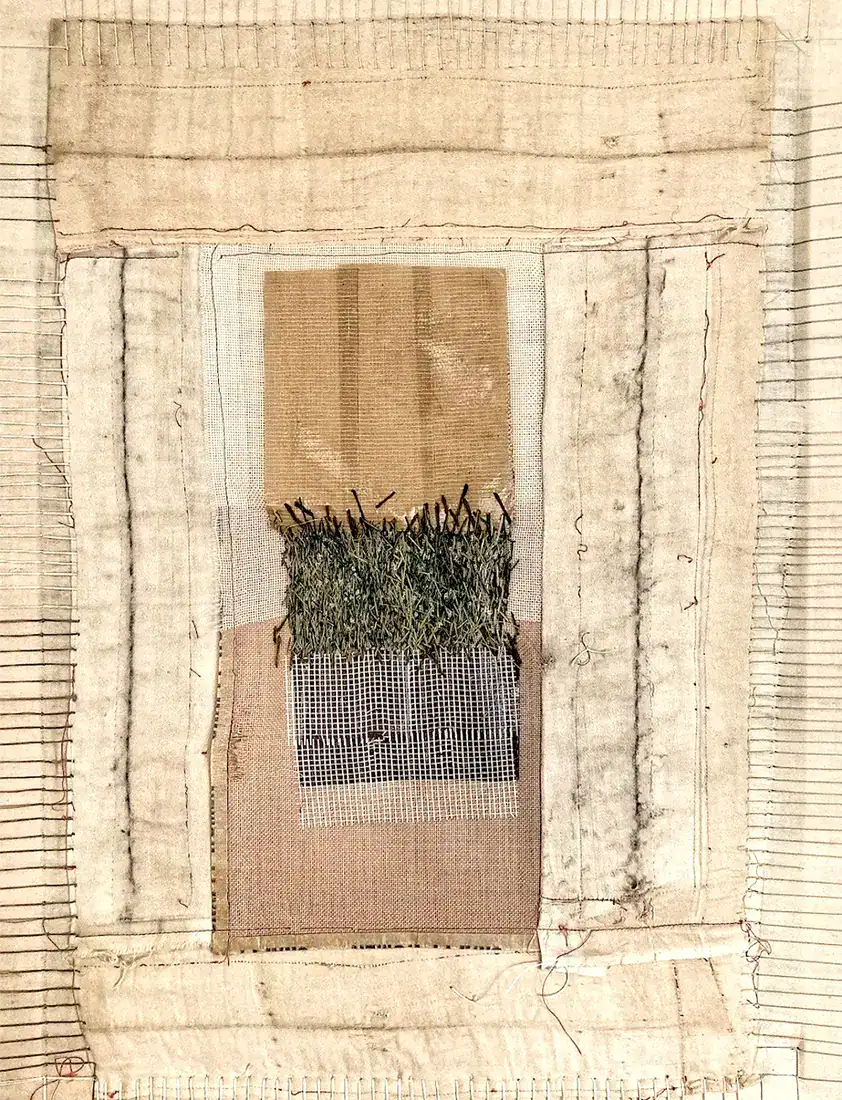
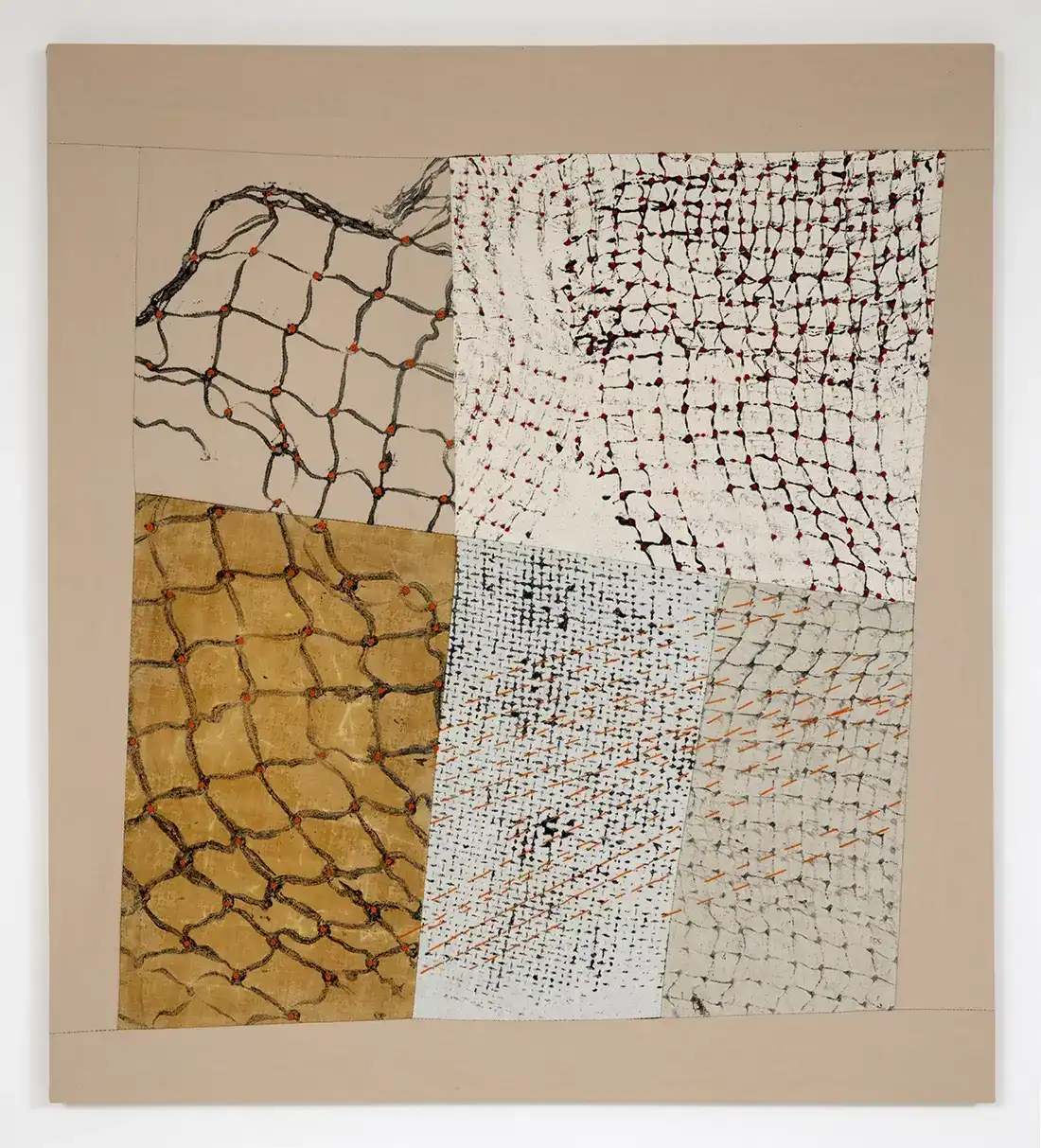
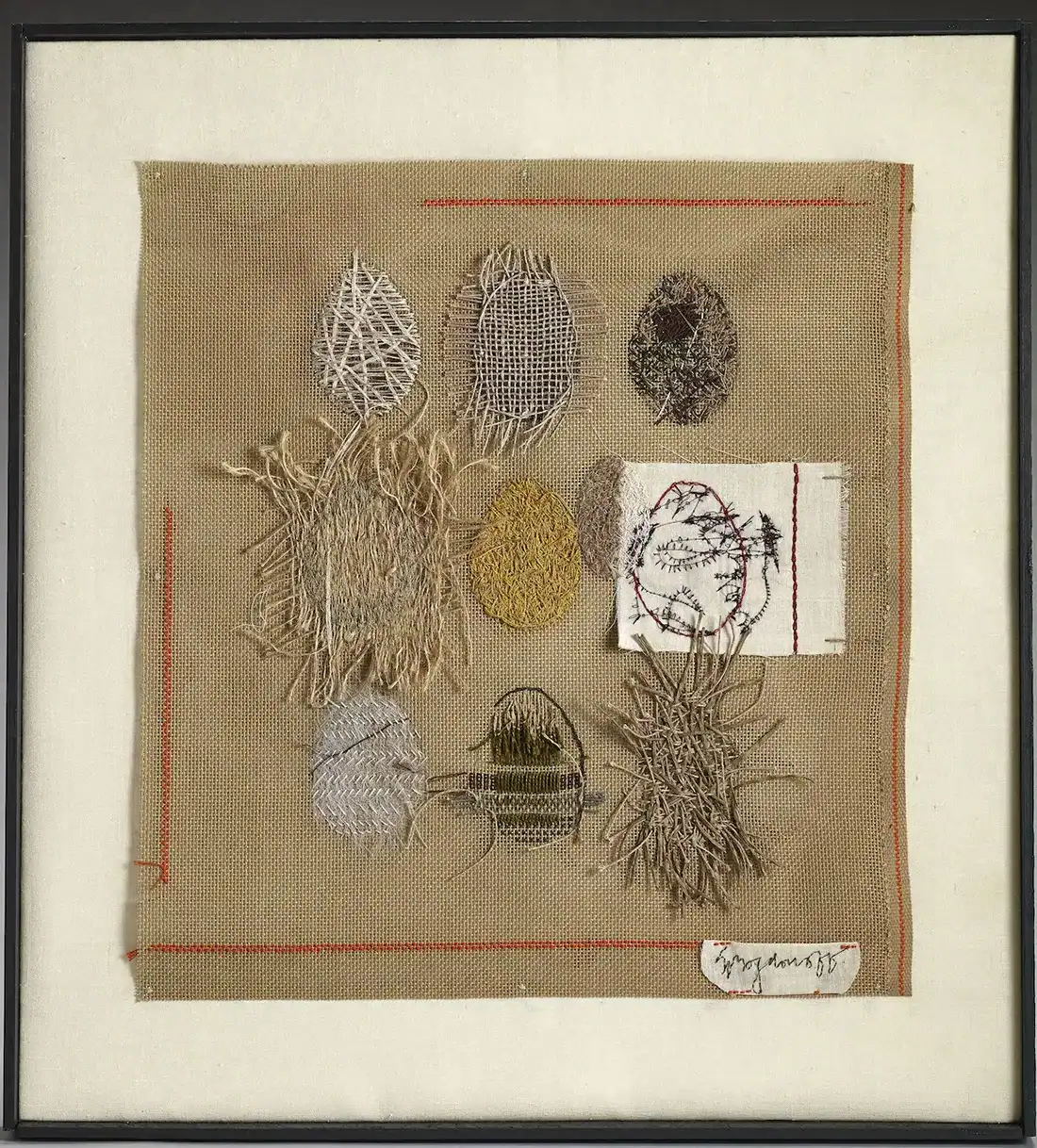
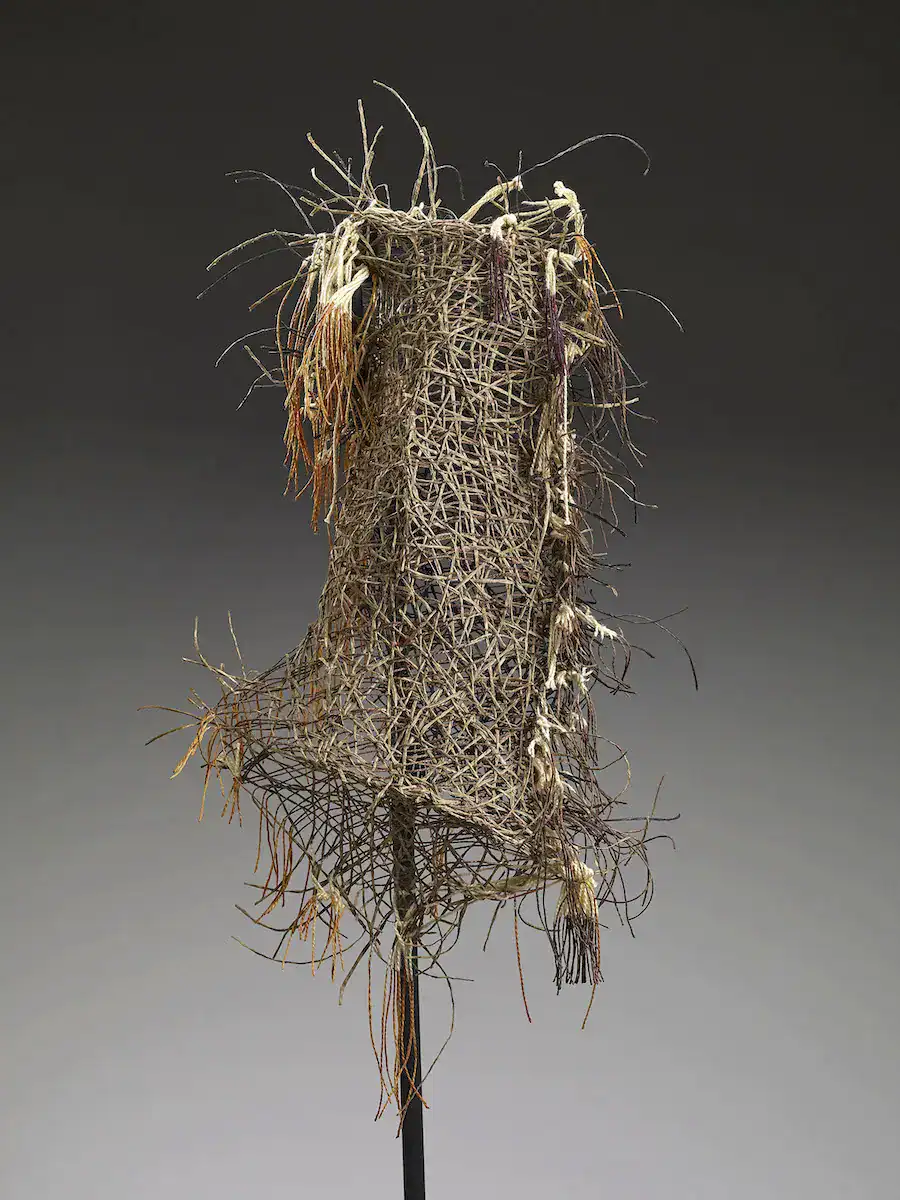
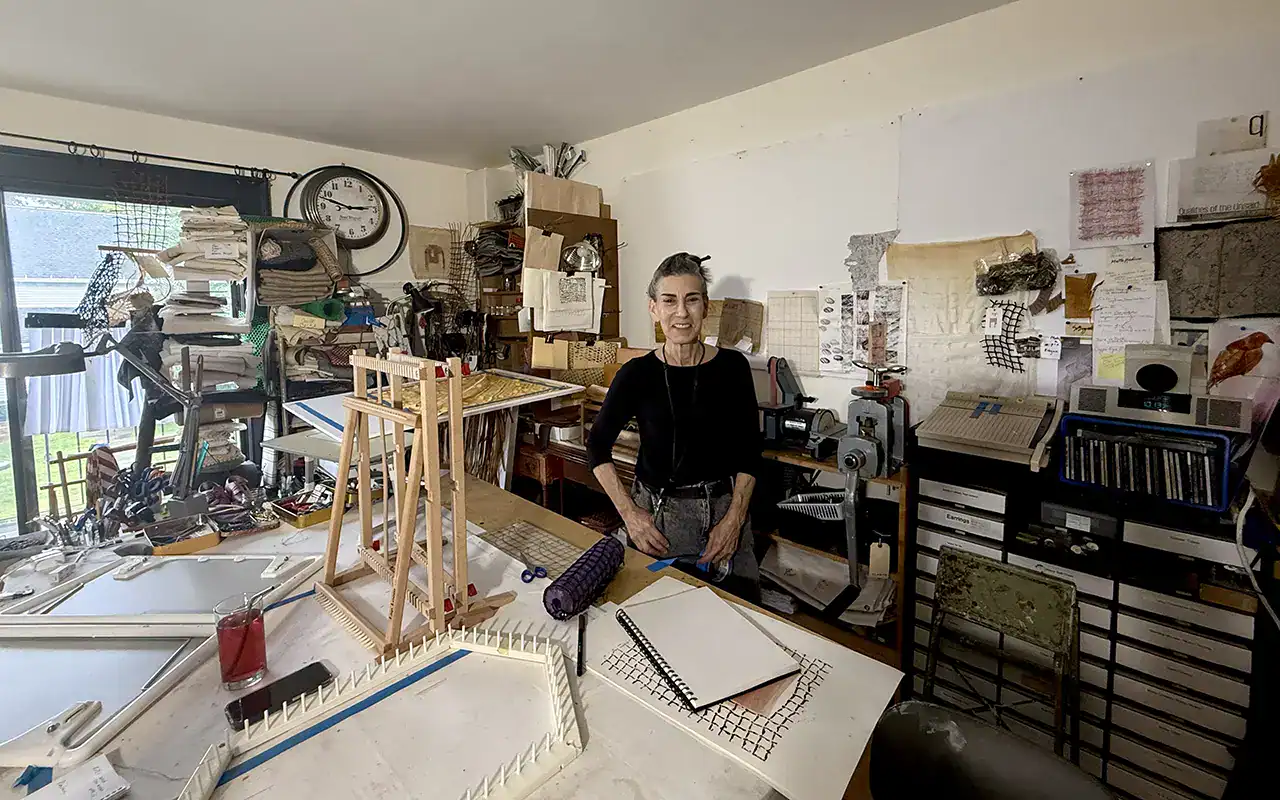
Stacy Bogdonoff’s studio is an Aladdin’s cave of found objects, jewels, fabric, and thread, each in its place, waiting to be bought into another life through one of her pieces. Bogdonoff is a mixed-media artist, pulling together paper, fabric, print making, stitching, and painting into an art collage. Threads are left unfinished, like sentences allowing the work to wander further into another piece. The connection throughout her work discusses place, home, and past, bought into being in a contemporary sustainable practice. The unraveled hem of a fine muslin petticoat shows the stain of time, which has become a line through the work. The marks of life in the materiality engage with each other despite coming from obscure beginnings. Delicate stitching holds everything in place, weavings printed and sewn work side by side, and the holes left on pages of book all give a deep sense of age and narrative throughout her work, stories retold in the thread.
What are your earliest memories of making art?
I was always that arts-and-crafts kid. Jerry Saltz once asked on Instagram, “How did you know when you were an artist?” The answer came to me immediately; I realized it when I enjoyed making book report covers more than writing book reports. I often veered towards the creative aspect of each project. In Girl Scouts and youth groups, I gravitated straight to the bulletin boards and the craft projects.
My mom was very present, and she did a lot of needlework, sewing, weaving, embroidery, macramé, and Bargello, which is a herringbone, V-shaped repetitive embroidery stitch that was popular in the 1970s. Toward the end of my time in high school she opened a needlecraft store; her work was beautiful and careful, and she taught for years. She set me up with an embroidery hoop and cross-stitch before I was ten, so working with needles and fiber comes second nature to me.
It’s interesting how much of that gets set in childhood. You started your career as a painter working with photography, can you expand on that?
I went to Syracuse University for a BFA. Back then there wasn’t the kind of interdisciplinary “material exploration” major that schools offer now, so you had to choose: illustration, weaving, sculpture, or silkscreen. I chose painting and photography, focused on two-dimensional work. I didn’t stick with it afterward, but I’ve always been a maker, even while I was building a career elsewhere and earning a living.
Those were the days of rolling your own film onto a spool, developing it in a darkroom, and printing in trays that smelled wonderful and were probably toxic. I loved it, but I didn’t keep it up. When I found time and space I got into jewelry and metalworking instead, which I could do without a big studio. I’ve just always loved making things with my hands and figuring out how to get from an idea to a finished object.
You had a long career as a chef before returning to art full-time. Can you tell us about your journey?
I waitressed to support myself as an artist right out of college and ended up subbing in a restaurant kitchen because kitchens are chaotic and they need extra hands. The chef told me I was good at working with food and should investigate it seriously, so I enrolled at the Culinary Institute of America up in Hyde Park, NY, an 18-month program. I kept my loft in the city, worked in a restaurant on the weekends, and rode the Metro-North up along the Hudson every Sunday to finish the program.
After a few years working in restaurants, in 1980 I opened what’s best described as a gourmet prepared-food shop and catering company on Third Avenue between 78th and 79th Streets, on the Upper East Side of Manhattan, which is almost unimaginable now. We ran it as a retail storefront for fifteen years, then shifted to catering only for another 10, as what people now call a “commissary kitchen” since you’re no longer open to walk-in customers. Giving up the retail side was honestly a relief. Retail on the avenue became prohibitively expensive, and you find yourself arguing with people over a quarter pound of chicken salad.
I eventually sold my share of the business, and as I was under a non-compete clause, I was out of food entirely. But I still wanted to work, so believe it or not, I went into childhood literacy education. I started by volunteering in the city one day a week, tutoring elementary school kids in reading. One day a week became two, then more, and the director of the program suggested I should take it seriously. So I went back to college, where I was the oldest person in my class, and earned a master’s in childhood literacy. I spent close to a decade working with K-through-5 kids who had language-based learning differences, what we’d now call dyslexia, helping some of them learn to read and find placement in schools built for that kind of learner. It was a hugely energetic and satisfying time.
What a fantastic shift. So what motivates your practice now?
It’s a visceral thing. You’re drawn to certain materials and processes for no fully explainable reason. I never loved painting, the drag of the brush on canvas. What I love is the feel and sound of a needle popping through taut linen. I love the slow pace of stitching, I love the texture of fiber – I always have. My mother sewed; I collected vintage clothing for years. I love a bound buttonhole, a covered button, a 1940s suit lined in crêpe with a cuff fully tacked down. I love a quilt back, a torn hem, the tangle of thread when you’re lucky enough, taking apart an old pair of pants, to have it pull free in just one motion.
Visually, I’ve always loved buildings in New York where old signage has been scrubbed off and old houses with water stains on the ceiling, creaky floors, and layers of wallpaper in the closets. I’ve been a flea market person forever. I love the endpapers of books and the little holes left where they’re bound. It’s material and process and surface that I’ve always been drawn to. I call myself a mixed-media artist because really paper is but a step away from fiber, and fiber a step away from paper. Many Japanese washi papers are made from mulberry plants. … they’re all one and the same.
Similarly: seeing and feeling, and following a thread, pun intended. There is a tangibility of working with my hands. When something speaks to me – the dust that comes off of a torn sheet or a black-on-black printing process – I know that’s a concept I could work with. I have been a maker all my life. My palette is muted, pulling from the subtlety of aged objects, which are often loaded with another narrative.
LA: Yes, found objects always have a narrative, which is their appeal, and threading that into our work is a huge part of the process. What brought you to this area in Kent?
Nothing art related at all. While I was at the Culinary Institute, jobs were posted on index cards on a bulletin board. One said, “Cooks needed, weekend work, an hour away.” Five of us piled into a van and ended up cooking at Club Getaway in Kent, CT, back in ’78 or ’79, a kind of poor man’s Club Med for singles. We’d arrive on Friday night, cook a huge salad buffet on Saturday for busloads of guests, do a barbecue Saturday night (and party with the guests after the barbecue, of course), and then get up and do brunch on Sunday before driving back to the CIA. A couple of years later, a customer at my store mentioned they were renting a house in Kent, CT, and I realized I knew exactly where that was. My partner and I toured a few towns and ended up renting in Warren, Washington, Sherman, and Milton for four years. Eventually we bought a home in 1987. I’ve owned property in this area for almost 40 years now and bought my current house about 10 years ago. I’ve never not loved it here. My brother and sister both followed me up, even though we have no family history in this area at all.
Who are your artistic inspirations, and if you could steal or beg a piece of work to live with what would it be?
El Anatsui’s work stops me in my tracks, I remember first seeing his work maybe 12 or 14 years ago and being floored. Ruth Asawa’s recent retrospective at MOMA was extraordinary too. Going further back, there’s a trio of weavers I return to constantly: Lenore Tawney, Olga de Amaral, and Anni Albers. And there’s Gerhard Richter. Truthfully, I’m not precious about sticking only to fiber artists. I love Gerhard Richter because his smudged, layered surfaces feel fibrous to me, almost like pixels before pixels existed, like a faded poster, and of course Olga de Amaral’s gold weavings are gorgeous.
I also follow younger artists. Emily Krause, still in her thirties, is a painter who rolls and folds her canvases to get repetitive, scraped-looking imagery. I saw a show of hers downtown this past year. Kenny Nguyen works with strips of silk binding tape, the kind a seamstress would use in tailoring. He lays the strips out, paints them, lets them shift slightly, and then stitches them down to canvas so they wave a bit off the surface. I’ve watched him emerge from a small alleyway gallery in Chelsea to having work in the lobby of the New York Times building. Teri Figliuzzi is a friend who works with plants through photographic methods; I love her work. And Caroline Burton is a painter who makes print-like paintings that are dark and monochromatic and reference crocheted blankets.
Funny about stealing a piece of art! I thought immediately of the recent art heist at the Louvre. But honestly one of Olga de Amaral’s gold-painted weavings. Or a piece by El Anatsui. I’d just need the room, and I promise to keep the light off it.
Do you have a project you’re most proud of?
My recent two-person show at Judy Black was a real goal realized. What I want now is to keep putting work into small shows, ideally solo or two-person, so people can see a complete body of work together in one place, where the full narrative comes through. I sold four or five pieces from that show, and two have since gone on to group shows, one this past August in Bridgeport, CT, and one in Chelsea, NY.
What do you have coming up?
I’ve come to think in one-year chunks: what do I want to achieve this year? Currently I have two upcoming shows. In December, I have a large wall of my own at the Kent Art Association, and I have been invited by the Norfolk Library in Norfolk, CT, to show my work in April.
The new body of work has a through-line back to the Judy Black show. It’ll be two-dimensional, a handleable scale, and I’m sticking with the same palette – linens, drop cloth, canvas, sepia, and shellac. I sold my two most recent woven pieces and found I missed them, so I’m making another, a little differently this time. Each series is like a line of cars, not identical, but clearly related – a small departure, not a leap.
I love being alone in my studio. I was the oldest of four, and I ran a business with 50 employees for 25 years. I’ve had enough decisions by committee to last a lifetime. Now I want to walk into my studio, put on a podcast, and get on with my own day.
What’s the best piece of advice you’ve been given that you could share?
Make the art you want to see and trust yourself. If 100 people walk past my work and 95 don’t say a word, I don’t care. What keeps me going is the five who stop and tell me they love it. The artists I admire most keep their eye on that, not on the crowd. Beyond that, it’s less a single piece of advice than something friends and fellow artists repeat to each other constantly: just keep working. You win some, you lose some – just keep working. Keep exploring and find new ways to express yourself.
I don’t want to sound saccharine, but I feel genuinely lucky, at this point in life, to have the resources to do this: time, enough money, space, and engagement. I don’t love the words “passionate” or “inspired”. I think they’re overused, especially applied to women. I prefer “engaged”. My mind is constantly engaged … I’m thinking about a piece of linen with a crease down the middle, or I’m thinking about the ghost print I get when I print a crumbled paint-soaked piece of paper. That bent wire I just picked-up off the sidewalk? I think about that. I have an ongoing conversation, in my head and with my hands, all the time, and it’s something I’m very grateful for.
I don’t keep a proper sketchbook, but I have endless ‘to do’ lists, and I’m forever jotting down snippets of ideas throughout the day. When I finish a piece, I write a short story to accompany it and tie it to its title. The art and the story are small and detailed, and I share with the viewer what I was thinking about and feeling while I created the art.
As I walk away, I think of all the stories that Bogdonoff has gathered in her studio, where the paper came from, the linens sourced through a vintage Vera Wang dress, picked up for its luminous fabric, and the paper left on the tin tiles, each narrating another story – each found object cared for and given a new lease on life through her work. Nothing is more valuable than its neighbor, a seed as precious as a gem stone. So, when walking through a thrift shop or on a trail, do not discard the objects; think about how they can live on in a new guise. •
You can see more of Bogdonoff’s work at The Kent Art Association show in December 2026 and at the Norfolk Library show April 4 -29, 2027. In the meantime, visit her website: stacybogdonoff.com. Email: sbogdonoff@gmail.com. Find her on Instagram: @stacybogdonoffshop.