
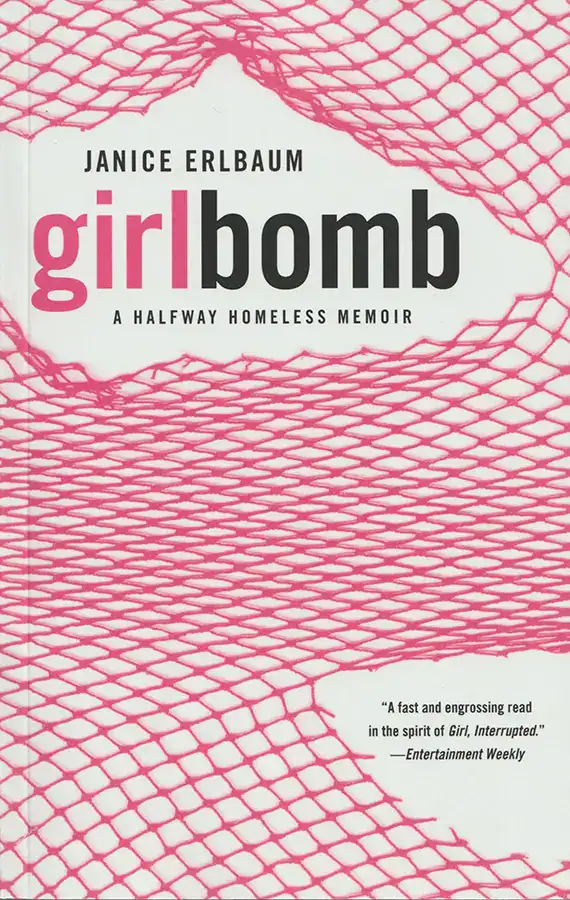
Long before conversations about childhood trauma and youth mental health went mainstream, Janice Erlbaum penned a book about her personal experiences as a homeless teen during the 1980s in New York City.
Her book, Girlbomb: A Halfway Homeless Memoir is now celebrating its 20th anniversary. In recent years, it’s experienced a resurgence of interest due to its unflinching portrayal of homelessness and the struggles associated with mental health.
In 2006, Girlbomb gained notoriety for its raw honesty, storytelling, and rare, female-centered account of youth homelessness, addiction, and the complicated bonds of friendship and first love. Erlbaum’s voice, wry, triumphant, and unmistakably Gen X, helped define the memoir as a coming-of-age story and a cultural time capsule.
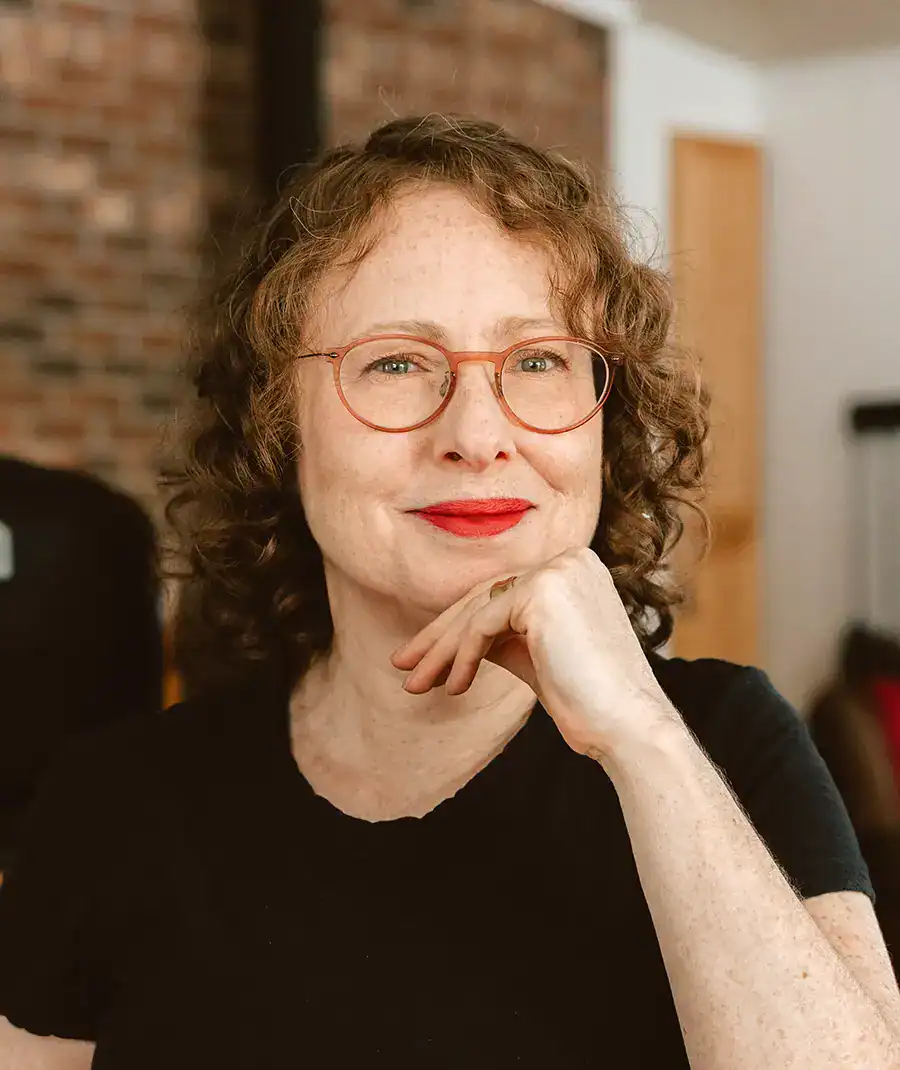 Upcoming book reading
On September 5, Erlbaum, who resides in Millerton, will mark the milestone of her first book (four other books followed) with a reading at Black Rabbit Farms, the first dispensary to open in the town. The free event will be held from 7:30 to 9pm and is open to the public.
Entertainment Weekly called the book “a fast and engrossing read in the spirit of Girl, Interrupted.” The New York Times Book Review stated, “How satisfying to watch Erlbaum survive adolescence and produce a smart, engaging book.”
“With the anniversary, I want people to talk about support for homeless teenagers and where it comes from. Covenant House – the Catholic faith-based shelter where I lived in 1985, has been the largest provider of beds for unhoused teens in the US since the 1980s. Local, state, and federal governments are not doing their share,” said Erlbaum.
Erlbaum is embracing this moment. “It feels like my baby is growing up. I never had kids, and that was intentional. But the three-year process of gestating, growing, and delivering this memoir made me feel like I’d created new life. At least, I’d created a new life for myself,” she added.
Beyond Girlbomb, Erlbaum has authored several other books and is working on another. Erlbaum’s work has been featured on MTV and in Harper’s Bazaar and Vanity Fair. She also volunteered with at-risk youth via Girls Education and Mentoring Services, which provides services for survivors of commercial sexual exploitation of children, and Girls Write Now, a nationally award-winning nonprofit, media incubator, and multi-generational community.
Flashback: The story
Born and raised in New York City, Erlbaum fled an abusive home when she was only 15 years old. That’s when she entered New York City’s shelter system. While attending high school at Bayard Rustin High School and starring in school musicals, she simultaneously struggled to navigate all the chaos and instability of living in a shelter.
 After sharing the “moving out” story with a few friends, the teen didn’t receive any guidance or offers of help. So, her leap into homelessness happened in a flash. “One day, I led a seemingly regular life, and the next day I was a homeless teen,” said Erlbaum.
She admitted that the night she left her home in Crown Heights, Brooklyn, an epicenter of New York City’s crack epidemic, her decision was split-second and reckless. “I didn’t even pack a bag. My body knew before my brain did; my feet walked me out the door, and I followed. I did not understand the level of danger I was exposing myself to by leaving home, but I understood the danger of staying.”
Rather than spending one night on the cold, gritty streets of 1980s New York, Erlbaum took shelter at Covenant House in Times Square for two months before moving into a group home on the Upper West Side.
During the 1980s, New York City was notoriously dangerous. Growing up there required constant vigilance. Being out late at night on the streets and the subways put her at risk of being mugged, beaten, or sexually assaulted. Even one night spent sleeping on the streets greatly increases a teenager’s chances of experiencing long-term homelessness.
“I didn’t understand the distinction between being housed and being home until later in life. Even after I had my own apartment, it took years for me to stop sabotaging myself and my safety. The road to stability starts with a stable place to live, but durable emotional stability needs to come from within or, in my case, from literally 35 years of therapy.”
Turning the page
Luckily, Erlbaum managed to remain in school while living at the shelter and group home. “I was very fortunate to have been given a lot of special treatment, and I was able to remain at my high school. I had teachers who cared, looked out for me, and encouraged my writing and acting,” said Erlbaum.
During this time, the teen was still in touch with her mother. She eventually moved back in as soon as her mother barred the abusive ex-husband from their home.
Erlbaum later went on to Hunter College to study writing, and then to New York University for her graduate degree. Erlbaum’s resume includes stints at New York Press and Pseudo.com. She also participated in slam poetry at the Nuyorican Poets Café and did “alternative” stand-up comedy on the Lower East Side.
Erlbaum said her life didn’t turn around until she obtained an inheritance left by her maternal grandmother. “When I was 18, my mother suggested that she break into the trust early and give me the money so that I could get an apartment near her place in Prospect Heights, Brooklyn,” she explained.
Once she had a stable place to live, she started talk therapy with a woman she credits with saving her life. “Within a year of seeing my first therapist, Judith, twice a week, my understanding and compassion for myself began to overtake all the shame and self-hatred I’d learned. I managed to begin breaking out of the patterns I’d developed while in crisis, and everything in my life radically improved,” said Erlbaum.
In 2005, she married Bill, whom she met at Sweet Caroline’s (which has since then closed its doors) when he attended a stand-up comedy show she hosted. Erlbaum has spent more than two decades in this healthy, happy relationship.
“I wasn’t able to write Girlbomb until I was in a stable relationship. I’d started a career as a writer in my early 20s at NYPress, but I hadn’t been able to write a book, because I’d been too busy chasing romantic partners. Once I had the stability and support from Bill, I found that I could finally tackle the story I’d been wanting to tell for so long,” she explained.
Birthing books
“When I finally found stability in myself, I knew I needed to take this story out of me and not carry it with me,” said Erlbaum. In 2004, she wrote Girlbomb: A Halfway Homeless Memoir about being a vulnerable teen, making terrible decisions, and the price she had to pay to learn to forgive herself.
“It was important for me to reconcile for that time of my life and see how I contributed to my own problems. Everyone wants homeless kids to be blameless and perfect. I did things I am not proud of just to survive,” said Erlbaum.
In 2008, she wrote her second memoir, Have You Found Her, followed by three novels, I, Liar; Lucky Little Things; and Let Me Fix That For You.
The story for Have You Found Her unraveled when Erlbaum was writing Girlbomb and decided she needed to revisit Covenant House. “I had big ideas about ‘giving back,’ but my unconscious motives were selfish. I was trying to repair some of my own wounds. It was surreal to be in the old environment; it was so similar to the way it’d been 20 years before,” she said.
Dangerously naïve, she was blinded by White Savior Syndrome. “I wound up becoming over-involved with a 19-year-old shelter resident, with devastating results. She had Munchausen’s Syndrome, which caused her to induce the symptoms of late-stage AIDS so she could stay hospitalized for months.”
The revival
Erlbaum decided to celebrate Girlbomb’s anniversary because of a recent resurgence of interest from readers. “There are not a lot of books in this genre,” she said. Several readers have told the author that they found the book because someone in their life personally recommended or purchased it for them. “Some people say, ‘I read this book every few years,’ which is the highest compliment I can imagine,” said Erlbaum.
“I think the story continues to resonate, in part, because the root causes of my ‘halfway homelessness’, issues, including domestic violence, parental neglect, and a deficient social safety net, have not gone away since the 1980s. There are always going to be parents who choose their partner over their kids, and kids who feel the need to make it on their own,” said Erlbaum. She wants people to understand that most homeless teenagers are not “runaways” but “throwaways” who are rejected by their families and told to fend for themselves.
“Even those of us who left home ‘voluntarily,’ did so because we had no better choice. It takes a lot to leave home as a teenager. We weren’t spoiled brats who couldn’t handle a little discipline. Being unhoused involves hunger, fear, discomfort, and an adult level of self-reliance. Those kids panhandling in the park are dealing with overwhelming odds against them,” she said.
Moving up: The Hudson Valley
Erlbaum was drawn to the Hudson Valley region after visiting a longtime friend, Douglas Broughton, who is now the owner of Black Rabbit Dispensary on Main Street in Millerton, NY.
In 2019, after spending her entire life in New York City, Erlbaum suddenly felt the need for space, peace, and nature. “I knew that moving from the Financial District to a dirt road would be a tough adjustment, so I wanted to be near a friend who knew what he was doing, and Broughton was in Amenia. That led me to Millerton,” said Erlbaum.
A few months ago, Erlbaum and Broughton decided to collaborate on a strain of cannabis named “Girlbomb,” which was fitting since cannabis is a recurring theme throughout the book. To celebrate the launch, Erlbaum will perform a reading from Girlbomb. Purchasers of the new strain will get a free signed copy of the book.
What’s next?
Erlbaum has been blogging “old-school-style” on her website, Girlbomb.com, and she’s also been posting excerpts from her diaries, written between the ages of 25 and 30 years old. That time marks the writer’s first attempt at confronting the psychological legacy of her childhood.
At press time, she was busy at work on another memoir, Not Writing About My Dead Mother. “Beyond that, I hope to continue to teach, mentor, and volunteer, especially with young writers,” she concluded. •
For more information and to learn more about Janice Erlbaum’s work, visit JaniceErlbaum.com.