
This Month’s Featured Article
BEYOND THE SCREEN
When I reflect on the 1980s, I remember people being hooked on video games. My siblings and I took turns playing Pac-Man and Donkey Kong in our basement via our Atari home consoles. Beyond these faves, other games of the decade included Tetris and Final Fantasy. This era introduced beloved characters, innovative gameplay, and enduring franchises that shaped the future of gaming.
That was the last time I devoted any time or considerable thought to the topic of gaming. I don’t have much knowledge about this leisurely pursuit or its history, but I became curious when I tuned into “Hidden Levels # 5: Press B to Touch Glass” on 99% Invisible – a podcast that explores unnoticed design, architecture, and the hidden stories behind everyday things.
An evolution
Although I had no interest in video games, every podcast topic presented by radio producer Roman Mars manages to capture my interest, so I listened in. During the episode, Mars spotlighted the evolution of nature in video games – a subject I never wondered or thought about.
Apparently, through the years, depictions of nature – trees, landscape, and flora – in video games have evolved from a simple backdrop-style rendering to what is now an essential portal for some people, specifically those like Cassie Anne, who is featured in the “Hidden Levels” episode and uses gaming to connect her with the outdoors is limited due to allergies.
Anne is a prominent Minecraft influencer. Due to severe, unexplained allergies to the sun and grass, she must spend much of her life indoors and has found solace in the endless terrain of the Minecraft game. For Anne, Minecraft became an escape and a vehicle for exploring diverse biomes and connecting to all the aspects she loved about nature. I became intrigued by her story.
Tools for enhancing mental health
Later that week, I stumbled upon an article on the BBC about a video game called MindLight, which is set in a haunted house filled with shrieking monsters that stalk the player’s avatar. While navigating the game, the player dons an EEG headset that measures brain activity and directly controls a light situated on top of the avatar’s head. As the player becomes calmer, the light shines brighter, reinforcing relaxation and easing the situation.
If the player/child can maintain a relaxed state during an attack of the shrieking villain, the monster suddenly morphs into a cute, cuddly kitten that follows the avatar around the haunted house. If the child becomes too frightened, a message pops up that offers advice on how to regain some calm before proceeding in the game.
Both snippets of video game information made me wonder if there’s much more to the art of video games, so I began exploring the topic.
Back to nature
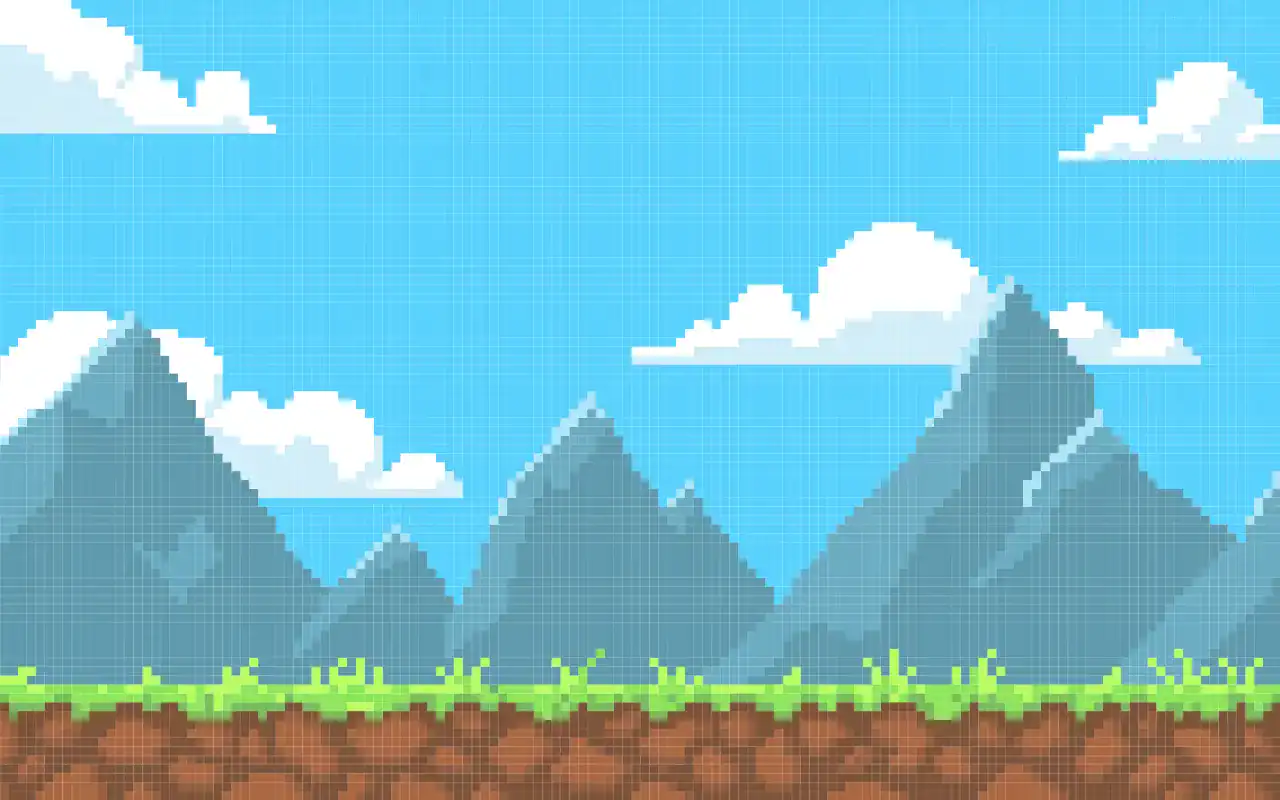
99% Invisible cites that the ability of games to create this kind of connection to the natural world is the product of decades of technological advancement. Nature scenes have shifted from the simple, gridded 2D backgrounds of early titles like The Legend of Zelda to today’s hyper-detailed “open world” games.
“These immersive environments, like the dynamic ecosystems found in Breath of the Wild, are made possible by two key innovations.
The first is procedural generation, where rules are fed to a computer to algorithmically create seemingly infinite, non-repeating landscapes, giving games like Minecraft their unparalleled scale. The second is the relentless pursuit of photorealism. Professionals use high-tech scanning to capture real-world objects and feed them into powerful game engines that simulate light and physics with breathtaking fidelity.”
99% Invisible continued, “It’s clear that nature has a profound influence on games. But it’s also true that the very technology perfected to create virtual entertainment is now being used to solve real-world problems. The same game engines and procedural generation techniques are employed to create immersive 3D simulations of real cities or coastlines (known as ‘digital twins’), which are in turn used to visualize the impact of sea-level rise, plan for a world of increasing wildfires, and aid in urban development. This utility demonstrates the powerful real-world applications of virtual design.”
Eco-gaming
It’s also important to note that researchers estimate that the energy consumption required to develop and play visually demanding games generates around 50 million tons of CO2 annually.
Despite this immense environmental footprint, the games themselves are improving ecological awareness; they are capable of teaching players about sustainability – for example resource management in Minecraft – and dramatically boosting public interest in wildlife.
At its best, video game nature serves a dual purpose: offering a vital connection for those unable to “touch grass,” while improving the real-world tools for protecting the planet. The digital nature experience may not be an exact replacement, but it can foster a level of engagement and care that translates back into the world beyond the screen.
In recent years, the nature scenes found in games such as Minecraft have become quite advanced. There’s also evidence that virtual worlds are shaping real-world environmental improvement.
Boosting ecological awareness
Oxygen Conservation was founded with the aim of tackling the climate crisis and biodiversity collapse. Its website highlights the topic of simulation games and their unique potential to foster environmental awareness. The organization scales conservation across the United Kingdom.
Again, the impact of eco-gaming extends well beyond the virtual world. These games provide incredible potential to inspire real-world environmental action by raising awareness and fostering a sense of responsibility. They provide a safe space for players to experiment with sustainable practices and witness the consequences of their actions, which can translate into behavioral changes in their daily lives.
The Oxygen Conservation site says, “Imagine Eco Tycoon: Building the Nature-Based Economy,” a game where players take on the role of environmentalists or conservationists. They’re tasked with designing sustainable land use change, restoring degraded landscapes, and building a regenerative nature-based economy. The game could simulate the dynamics of ecosystem recovery, showcasing the interplay between human activity, wildlife, and natural processes.
In Eco Tycoon: Building the Nature-Based Economy, players begin with a landscape that is damaged by industrial activity, intensive agriculture, or traditional sporting exploitations like grouse moors – a moor where grouse live or are hunted in the UK.
Their mission: to restore the ecosystem while building the systems, processes, and sustainable infrastructure required to develop a regenerative society. The game would incorporate real-world environmental principles and challenges, providing a realistic simulation of landscape recovery.”
Restoration and conservation
In one scenario, players might be tasked with restoring a virtual wetland degraded by industrial runoff. They would need to clean the water, reintroduce native plant species, and create habitats for wildlife. This process would involve careful planning and resource allocation, teaching players about the complexities of wetland restoration.
Players could use drones and other technologies to monitor the health of the ecosystem, simulating modern conservation techniques. As the wetland recovers, players would see an increase in biodiversity and improvements in water quality, reinforcing the positive impacts of their efforts. It’s a win!
Back to Minecraft: a new version of the game aims to teach students about coastal erosion, flood resilience, and climate adaptation, and shows how children can use computer games to learn about complex situations.
Inspiring the next generation
Eco-gaming has the potential to inspire the next generation. Young players are highly impressionable and can develop a lifelong commitment to sustainability through engaging and educational gameplay. Games like Eco Tycoon: Building the Nature-Based Economy can serve as gateways to deeper environmental education, encouraging players to pursue careers in conservation, ecology, and sustainable development.
With continued innovation and collaboration, virtual worlds can become powerful platforms for environmental advocacy and education, inspiring a new group of environmental stewards and fostering a deeper connection to the natural world.
Real world applications
Beyond nature and helping kids with anxiety, there’s yet another interesting connection between video games and the medical field, specifically surgery.
Studies show that surgeons who are also gamers make fewer errors, are faster, and achieve higher overall scores in robotic and laparoscopic training. Beyond hand-eye coordination, gaming can improve dexterity, and visuospatial ability, which leads to better performance in surgical simulations. Video game-based training can be a useful tool to help medical students and surgeons acquire these technical skills more quickly.
An article in the Journal of Pediatric Surgery Open, referenced a study about the impact of video gaming on robotic surgical simulator performance. According to the article, study participants with previous gaming history had 33% higher overall robotic performance scores. There was no difference in performance between surgical trainees and attending physicians with high volume laparoscopic surgery experience (average of 77 laparoscopic procedures).
I’m glad I got a glimpse behind-the-scenes of video games and their real-world applications. It is also a reminder to be curious rather than judgmental regardless of the topic – a reminder to strive to keep an open mind. •