Main Street Business
ELEVATING YOUR HOME WITH ELEVARE
We recently caught up with the principal of Elevare, a company that specializes in roofing, masonry, siding, and painting. They work all over the United States, with a focus on the Northeast, where their customers range from homeowners and second homeowners to national historic sites and everyone in between.
What does Elevare do?
We do the same things in two different markets: exterior building envelope restoration, predominantly on homes. The bedrock of our work is in the historic market, and we also work in the non-historic market. On the other side of these disciplines, we design and consult, which primarily consists of engineering and drawings, effectively “design build,” meaning we specify, draw, and build our own designs. This mostly happens when and where there is a specific need for structural engineering.
What specifically do you do within the exterior building envelope?
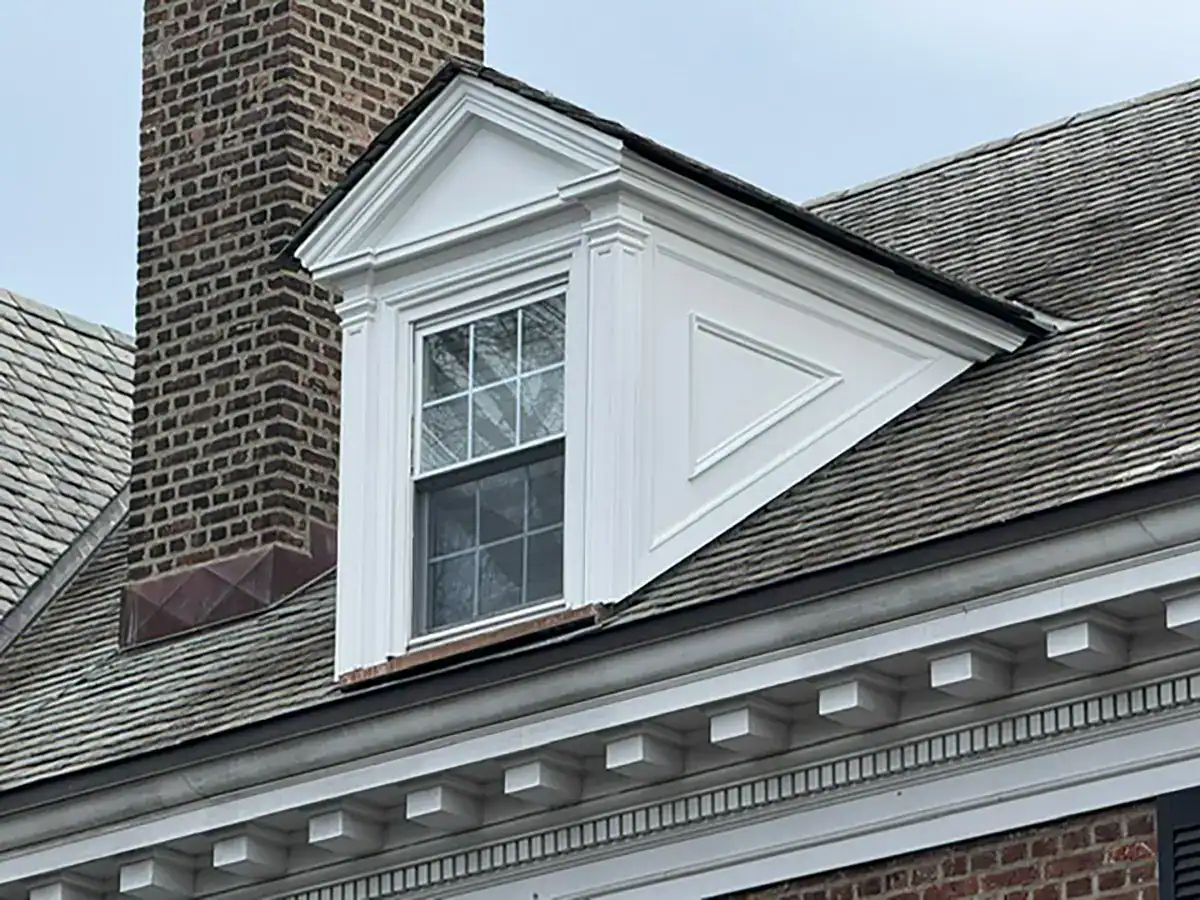
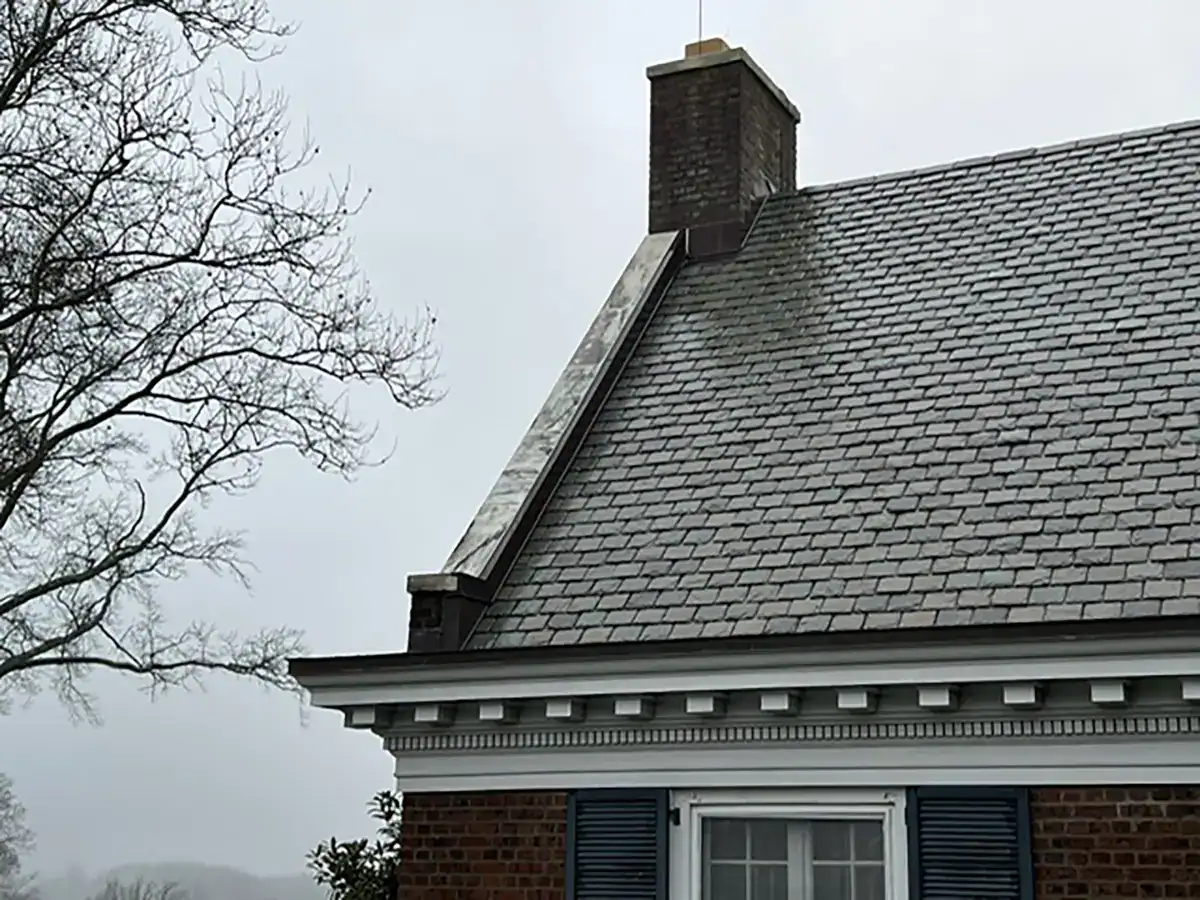
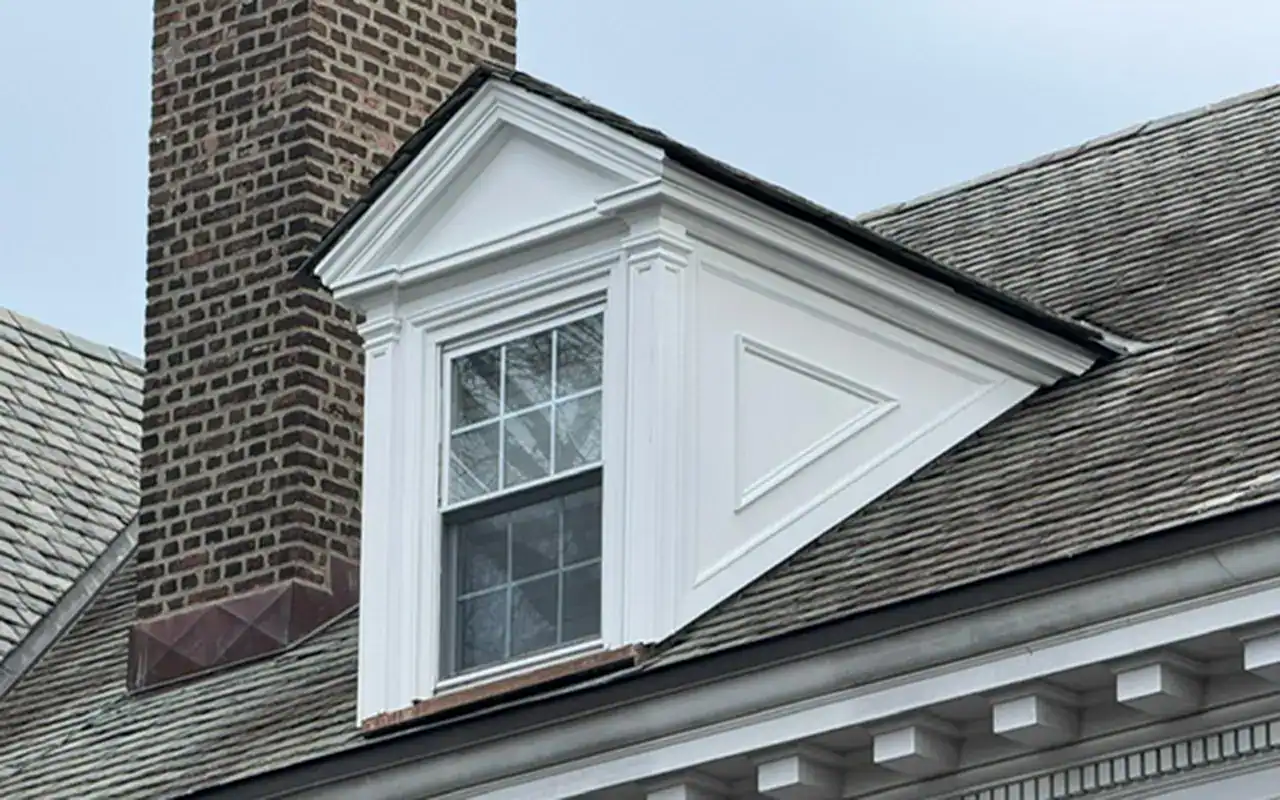
The entire exterior building envelope typically starts with the roof, to ensure we protect the structure. Chimney restorations are also commonly part of this first phase of “top down” restoration, which includes roofing and masonry. Next, we create vertical facade elevations of the envelope on the home or building. Masonry facades are most common, but we also work with stucco, brick, stone, or traditional wood siding and trim. After the structural work comes the finishing, be it paint or wood.
Between the roofing and the side walls of the home, you work in many different disciplines. Are there any of these areas, or artisan trades, that you’re most known for?
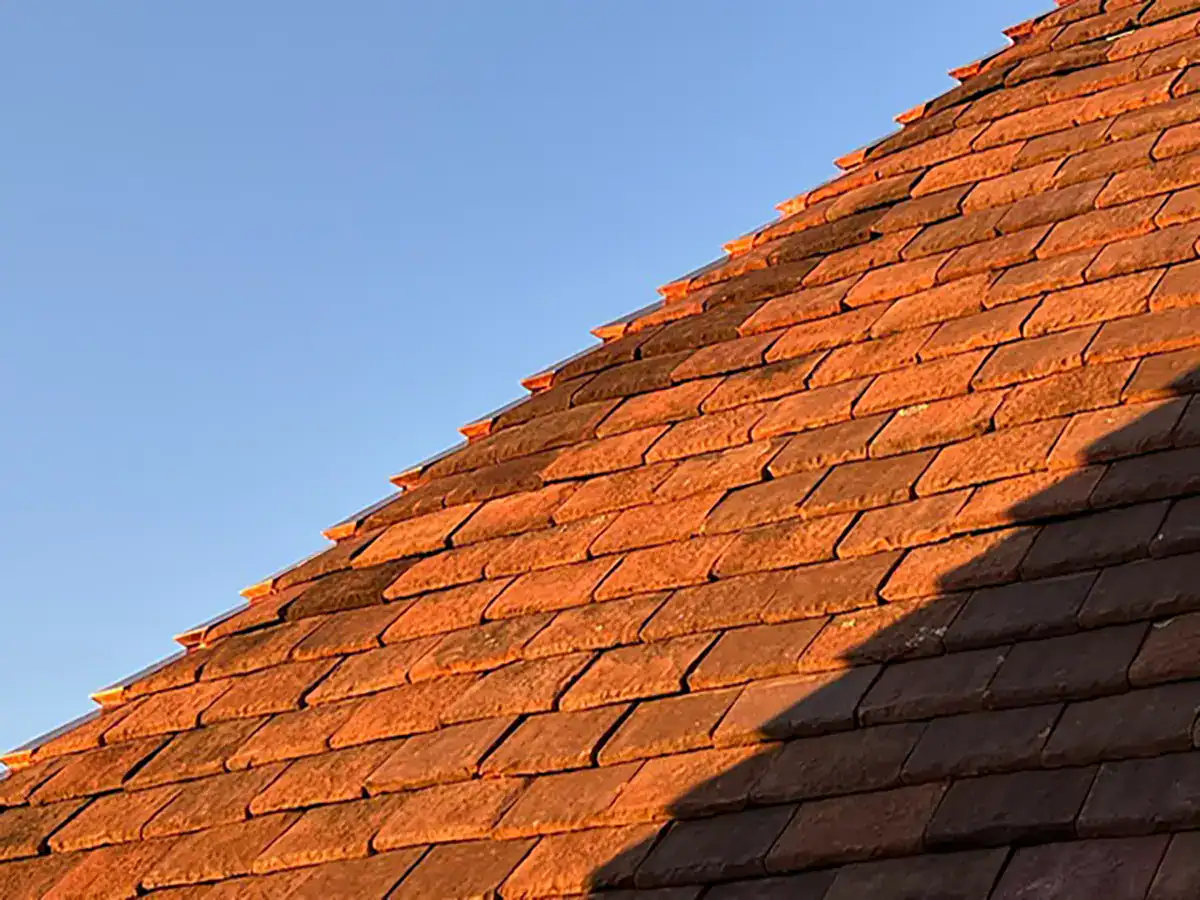
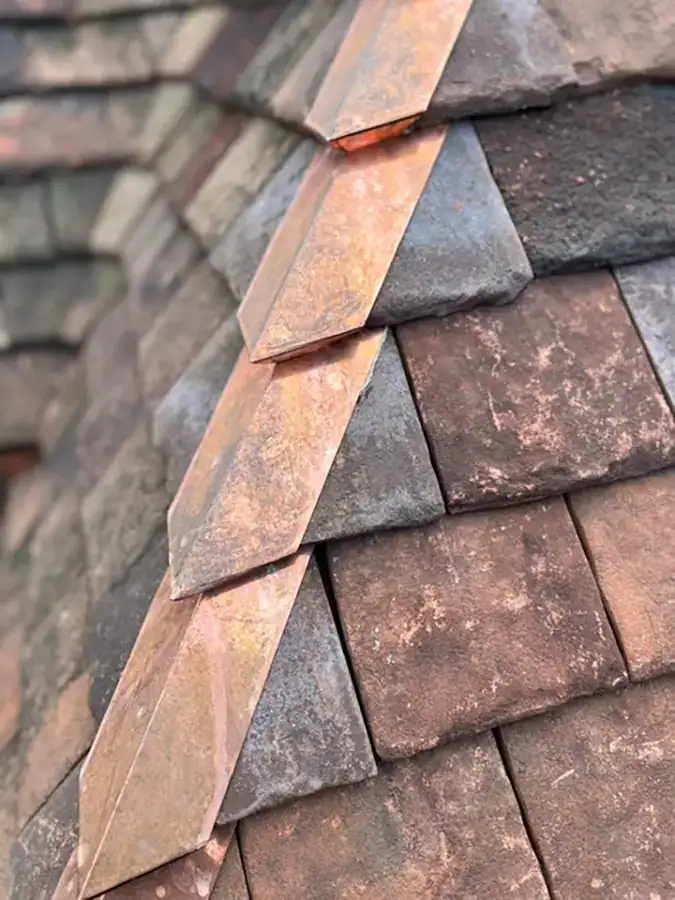
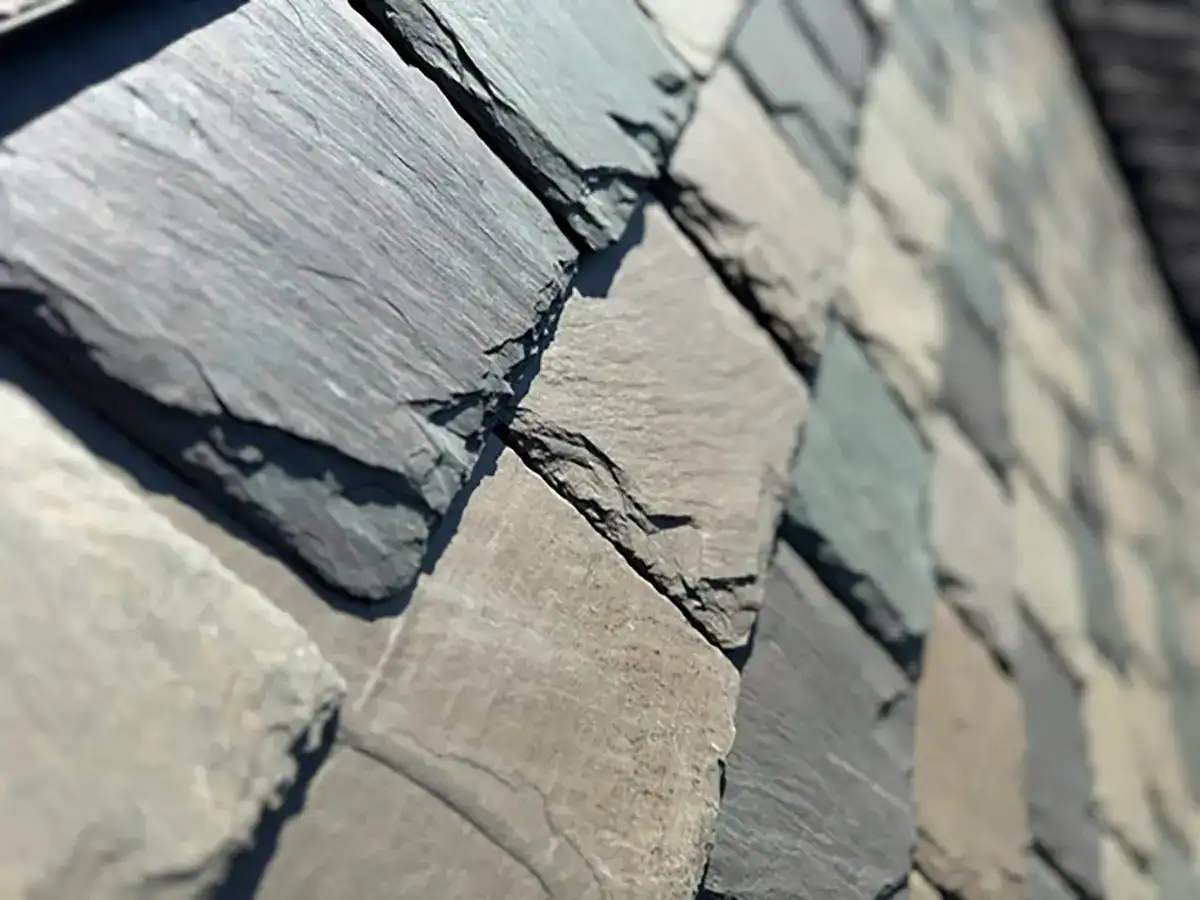
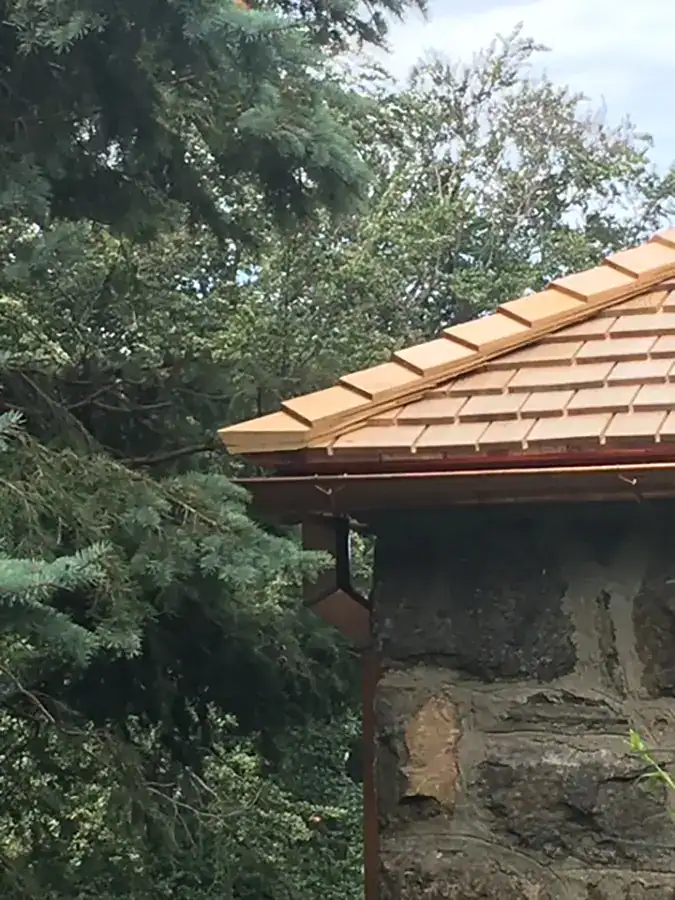
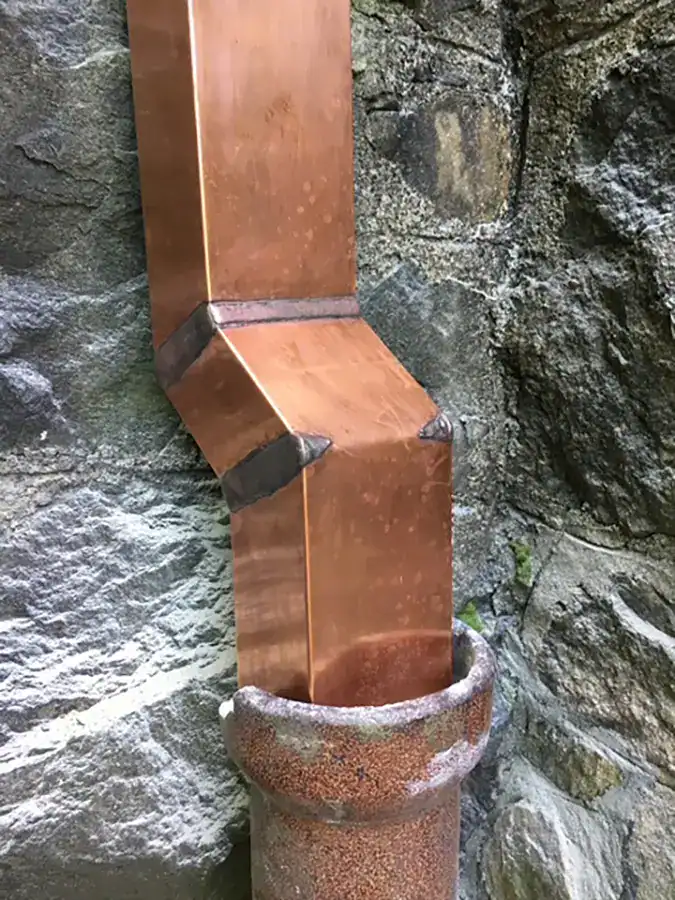
Our scope is broad, but we spend the majority of our time in relatively narrow areas within the specific crafts. On the roofing side, in the area of historic restoration and preservation, we have discipline-specific artisan specialists that spend their time working on slate roofs, clay tile roofs, wood shingle roofs, copper roofs, coppersmith flashing work, and copper gutter and leader drainage systems – the bespoke artisanal areas of roofing and copperwork sector relative to roofing. Our roofing artisans spend 80% of their time within these disciplines. The other 20% of their time is spent on traditional roofing disciplines on typical homes, including asphalt shingle roofs and flat roofing. The flat roofing tends to be in the area of highly complex, bespoke type-flat roofing. For example, we have worked on a lot of Frank Loyd Wright homes, most of which have highly complex flat roofs.
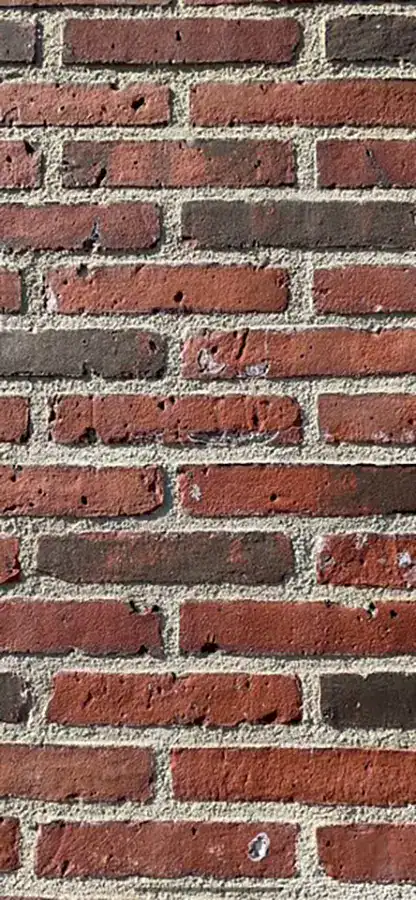
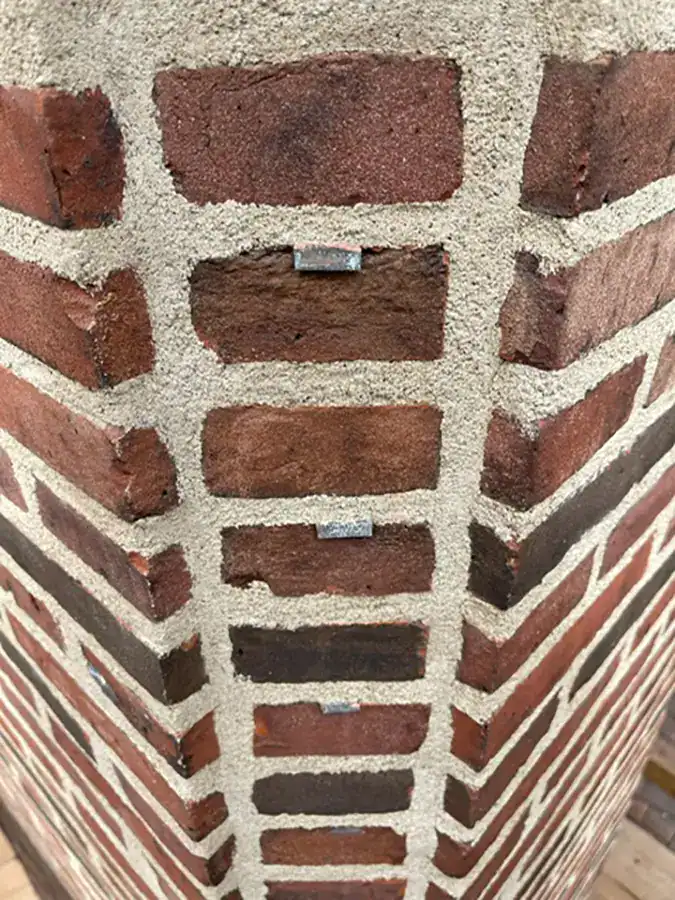
The facade side of our work focuses on masonry and wood facades. The majority of our facade masonry work is traditional, but we also work with stucco, brick, stone and limestone, terra-cotta, and natural quarry stone as well as wood siding, and we do integral structural restoration.
It sounds like you have a completely integrated company as it relates to each discipline and material type both for facades and roofing.
Yes. We are 100% vertically integrated in-house. We can perform all of these artisan trade disciplines as well as generate the design and/or engineering (drawings) in-house.
Is it common for one organization to be able to execute all of these disciplines at this high level?
There are ajust a few companies in the US working at the highest level of historic restoration and preservation. We are also among the very few who do what I would refer to as ancillary specialty works, including steel design, fabrication and installation – starting with structural steel and finishing, for example, with ornate railing systems.
How did you master all of these artisan crafts at a high level?
In three ways. First is lineage. This trade is where my people come from and who they are. Secondly, obsession. Effectively making a decision to do so, and then relentlessly repeating the same decision over and over again the right way – daily and linearly. Thirdly, training this into my people and our culture. It is quite simple at the end of the day: it’s just a decision that gets made over and over again and thus executed repeatedly. Being obsessed and applying these principles achieves these high-end results.
It sounds like it would take a long time to achieve this level of experience and expertise. Can you elaborate on the time dedication required?
It is not quick, but it’s not hard if you’re obsessed. Given the broad spectrum of the artisan trade crafts mentioned, it takes decades to achieve mastery.
In my case, I knew that I wanted to do this when I was 14 years old, so I dropped out of high school just as I turned 17 to pursue this career. I sought out a world-class operator/artisan and asked for a job. I was obsessed, so I paid attention and asked a lot of questions while simultaneously doing extensive ongoing research outside of work. Then I relentlessly practiced the skills that I was learning to the tune of working six days a week and many or most Sundays. It was a lot of long days, 70- to 80-hour work weeks were common and consistent. On top of which, I spent all waking hours thinking about the same and nothing else. I looked at it from the perspective that if it takes the obsessed individual 10 years to learn a single artisan trade at the highest level, then at the pace I was going, I could achieve this in five years.
Between specialty roofing, copperwork, masonry, steel, and structural design, I accomplished my level of expertise over a period of 37 years. I was and am looking to perform these artisan disciplines at the highest level in the world, so there was and still is no other way, particularly if the judges of how good you are at these levels are your peers in each discipline who are operating at the same level.
It sounds like who you were
learning things from played an integral part in your education
and experience?
Yes. My method early was working under the highest-level operators/craftsmen. Then I quickly went into business in my late teens, but most of my career and education came from experts who worked at the highest level. I would pay to learn or bring someone into our fold and pay them so I could learn internally as I worked beside them. This still goes on today, particularly as things evolve. Since I went on my own in the very early 1990s, I needed to learn through education and bring artisan types in to train or work inside my organization so that I could control outcomes. I’ve predominantly been taught by Europeans, as the holy grail of all trades in historic restoration and preservation originates in Europe. Our structures were built by European artisans in this country. Additionally the artisan education and trade in many parts of Europe are at a higher level than in the United States, in particular with regard to slate roofing, terra cotta clay tile roofing, copperwork, and masonry.
Do you procure materials from Europe?
95% of the mortar that we use comes from the Saint-Astier lime quarry in France. They’ve been quarrying hydraulic lime mortar in Saint-Astier for 2,000 years. 5% or less of the time we use Portland cement-based mortar and concrete from the US. Usually a condition on the project determines this choice.
What would you say is the most important thing in highly specialized exterior building restoration?
Relentless education and repetition. We also always use the “first principles” approach: there is no other way to do it at this level. This approach attracts the right people and repels the wrong ones. It is very difficult and demanding to create artisans and hire them this way, which is also why someone who doesn’t subscribe to this culture won’t last in the industry at this level, and that becomes evident to both them and me right away. The right people are bought into this “first principles” culture, just like I was.
Is there a lot of travel involved with this niche work?
Yes. We work all over the US but predominantly in the Northeast, where the gold standard of these types of structures is located. It’s also where I live. Traveling and doing so nimbly is a large part of our work, and we are well-versed in it.
Where is the farthest place that you’ve worked?
Palm Beach is the farthest south that we have worked.
Where are some of the areas in the Northeast where you spend a lot of time?
We spend a lot of time working in Tuxedo Park, NY. We also spend time in the Berkshires in Massachusetts as well as in Long Island and Columbia, Dutchess, and Westchester counties in New York. Our work often takes us to Fairfield county in Connecticut, Bergen County in New Jersey, and Newport, Rhode Island. This said, we like to travel, so we will go anywhere to work.
Is there a particular teaching method that you use or that has been pivotal for you?
Yes, the story of “Bruce And The Spider.” It teaches fortitude and relentlessness. I’ve had allegedly terminal metabolic cancer three times, and that approach is what I used. I use this approach for everything. This said, it must be preceded by obsession and relentlessness.
I’d imagine you have worked on a vast spectrum of projects for important people and important structures?
Yes. We’ve worked on federal projects, for example the Franklin D. Roosevelt Presidential Library and Museum and Visitors Center. I’ve provided services on the structures of two United States presidents, both former and acting. We’ve also worked on structures designed by linear prolific global architects such as Philip Johnson, Frank Lloyd Wright, Bruce Price, and Walker & Gillette.
Is there anything that you would advise a young version of yourself today?
Yes, it’s what I tell my kids: People will spend $250,000+ on college, but they are reluctant to pay for a higher level of difficulty by seeking out niche education. In other words, it’s “hard to find” and “difficult to get” someone to teach you niche disciplines at high levels. I recommend to my children and young people to find the top, say, three people in the world that dominate what they want to learn and do. Then approach them over and over, and tell them you want to work for them and learn from them until one of them hires you, which may end up with you paying them to work for them, like paying for college. In my opinion, this is the best and quickest way to learn at the highest levels.
What type of client is not the right client for you?
The client that is not looking for this level of work. Doing things really right as this level comes at a high cost and takes time. Our processes take longer, and most of the materials we employ are more costly.
Everyone in our company has over 20 years working with our group, most over 25 years. This said, we are extremely competitive when apples are compared to apples. If it is apples and oranges, then as mentioned, the methods, processes, and materials are more costly.
Do you have a favorite quote?
Yes. “My job is work – fate is God’s job.” •
To learn more about Elevare and their services call (800) 316-ROOF or (518) 500-2110. You can also visit them online at elevareexteriors.com.