Main Street Business
HOW TO GROW A SEED COMPANY
With Spring just around the corner, Christine was able to catch up with Doug Muller of Hudson Valley Seed Co to talk all things plants and seeds.
How did Hudson Valley Seed get started?
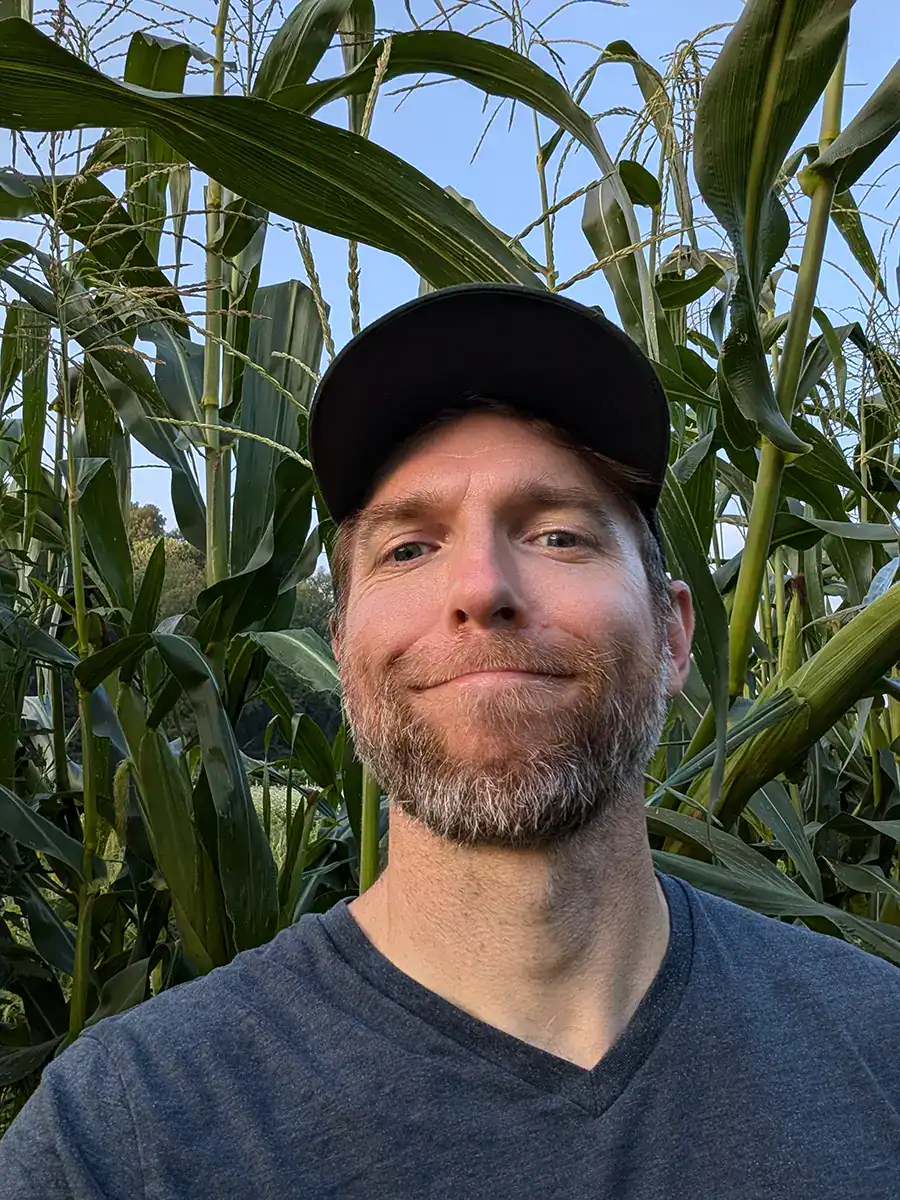 The Hudson Valley Seed Company has its roots in the public library of Gardiner, NY, where my co-founder, K Greene, was working. K had always been a plant person and started the country’s first seed library program at a public library there in 2004. By 2008, the seed library was online, and people reached out wanting to buy seeds to support the program. K and I realized that there was a demand for buying and saving organic, heirloom seeds, and in 2009, our seed company began in the drawer of an oak dresser.
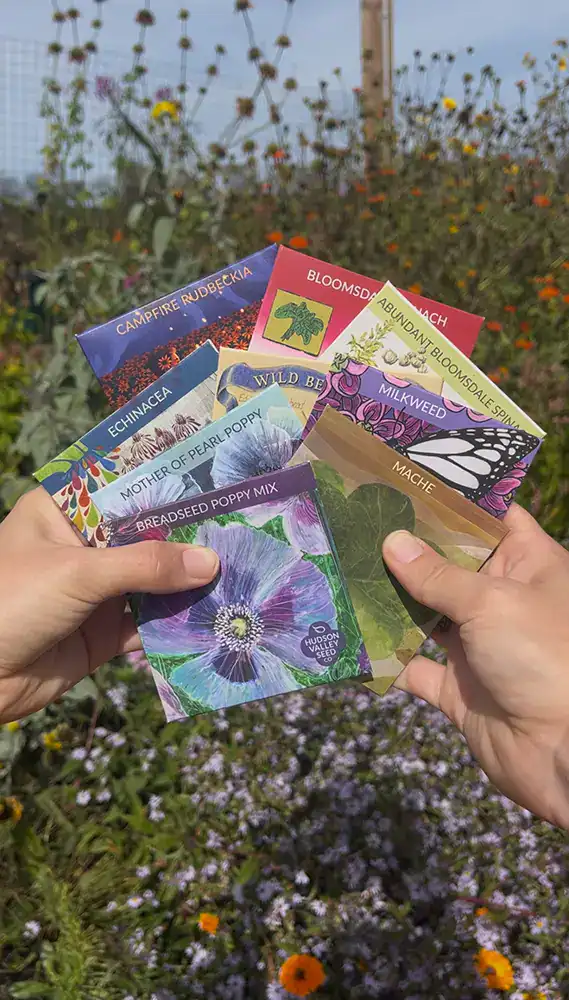
We asked fourteen artist friends to design fourteen seed packs to tell the stories of our first seeds – the beginning of our art pack line, which now comprises over 200 varieties. Our business expanded gradually into a renovated summer camp concession stand, then to a trailer, a renovated boarding house, a rented storefront – and to our current location, a 107-acre former airstrip on Route 209 in Accord, NY.
Other garden products were selectively added to seeds, beginning with Japanese hand tools. We started hiring part-time help with three people on our regular payroll in 2011 and now, 15 years later, we have around 30 employees.
How do you decide on seed varieties?
We have a trial garden where we test the viability of seed varieties for our climate. We have a new marigold this year. We grew five to eight varieties and introduced one or two of them to our line. At the same time, we retire unpopular ones.
How many types of seeds do you sell?
Typical of most seed companies, we have around 800 to 1,000 products. We use data to identify weak spots in our product line and respond to customer requests and the market.
Are there trends in the seed business?
Definitely. During the pandemic, vegetables were the driver as people dreamed of growing their own food. Our business exploded from 2020 to 2022, with everyone wanting to grow carrots and have an outside activity.
Now there is an interest in native wild flowers as gardeners discover they are less finicky than vegetables and important to local ecology. Both the individual varieties and the native mixes are popular.
Where do your dahlias come from? They aren’t native.
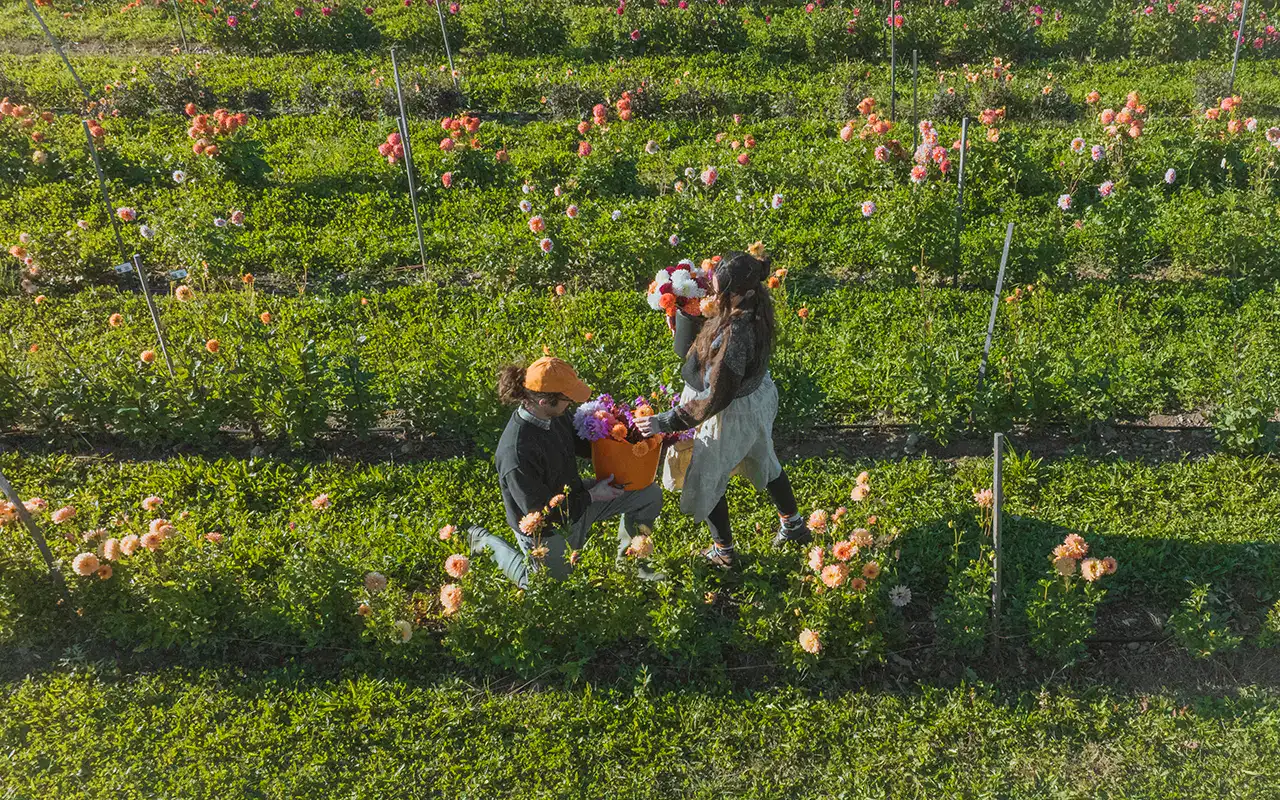
We grow them in our fields from replanted tubers with some from other local organic farms. Dahlias aren’t grown from seed but are propagated vegetatively from tubers’ eyes because the seeds produce unpredictable offspring. Last year we started all-you-can-pick dahlias from August through October and charged by the bunch or bucket.
How do you reach your customers?
We started with a website and then a catalogue. During COVID, print became too expensive and unnecessary. Now we reach gardeners through our website and social media. E-commerce accounts for about 70% of our business. Our wholesale business with botanical gardens, museum shops, and farmers accounts for another 20% to 25%.
We continue to do the big gardening shows in person, which gives us face time with our customers. This year we’ll go to the Philadelphia flower show, one in Hartford, CT, and one in the capital region in Troy, NY. We do no print advertising.
Last year we opened our own store at 11 Airport Road in Accord to sell directly to customers. We are open year-round every day except for Tuesdays and Wednesdays. From April to October customers can select plants from our greenhouses, and come August they can cut dahlias.
Where are your customers from? Why do they buy your seeds?
Our customers are primarily, 60% to 70%, from the Northeast. But we sell all over the country including to farmers when we have something they can’t get anywhere else. Last year the traditional supply chain was out, and we sold over $2,000 worth of Jimmy Nardello sweet pepper seeds to a large-scale pepper farmer in Florida. For certain heirloom seeds, we may be the only supplier.
When you buy seeds, you are buying a promise. We are very open about what we do, and our customers trust us. It’s a combination of packaging, organic practices, on-farm production, and breadth of local and regional varieties that customers can’t find elsewhere. We don’t cut corners, and we have great customer service.
What are some of your most popular seeds?
Basil, native wild flowers, zinnias, and tomatoes, including Cesare’s Canestrino de Lucca tomatoes – they are delicious.
Has your vision of the business changed?
It definitely has. Hudson Valley Seed is still very much about heirloom seeds and local vegetables, but our focus has become broader. Now our mission is to supply products that allow our customers to experience joy in their gardens and to encourage ecological awareness. By leaning into plant performance and quality, we can help our customers be successful in their gardening efforts. Our selection of seeds focuses on varieties that do well in our relatively short growing season.
Do you grow all your own seeds?
To have a full catalogue of seeds, it would be impossible to do all the production ourselves. We grow 30% to 40% of our seeds. Another 10% to 20% come from small-scale, specialized suppliers, and the rest are from reputable traditional seed companies. In the spring we grow our own vegetable starts available in our green houses. Recently, we added fruit trees from Full Circus Farm in Pine Plains, NY. This year we’ll be selling 300 to 400 trees.
What are your current strategic business issues?
During COVID our business exploded with crisis gardening, and now our business is at a plateau while our expenses are rising. Health insurance premiums for our team are up 20%, for example, and utilities are up too. As AI has taken over search during the past year, organic traffic to our site has dropped, and we have to pay for traffic we used to get for free. For example, before if you googled “how to plant tomatoes” you would see us in your search results. Now AI will answer a question with paid ads along the side, capturing most of the traffic and reducing organic traffic to actual content-forward websites – this is something happening worldwide at this point.
How did you learn about business? What mistakes have you made?
I gradually learned about business – I was a comparative literature major in college. K and I started out with an honorable but somewhat unrealistic desire to do good. The first year I didn’t know what a P&L was, not to mention margins, employee handbooks – all the structural aspects of sustaining a business. We benefited from consultants such as Brian Zweig who showed us what a budget looks like and helped us apply for grants. I educated myself on the Internet and learned from other business owners.
An example of major misjudgment occurred during the first year of COVID when we were awash in cash. We hired an expensive fancy architect to design a new building for our headquarters project, and the expensive result was a cool structure that would have cost way more than we could afford. We learned not to get complacent when you’re at the top of a wave, since business ebbs and flows and is always changing.
How do you and your partner share responsibilities?
K is still 50% owner but has become the full time director of seed and engagement of the Hudson Valley Farm Hub, because he wanted to return to educational preservation and non-profit work. He is still involved in high-level decision making, but I run our business on a day-to-day basis.
What’s next for Hudson Valley Seeds?
We are planning a second phase of development to bring everything together in one place. Right now, our people are scattered across four locations plus remote workers. We are consolidating in one warehouse with office space at the same site. The plans are ready, and we’re just working on the financing. And we are adding another greenhouse and always working on our website. •
To learn more about Hudson Valley Seed Co, visit their website at hudsonvalleyseed.com.