
Main Street News
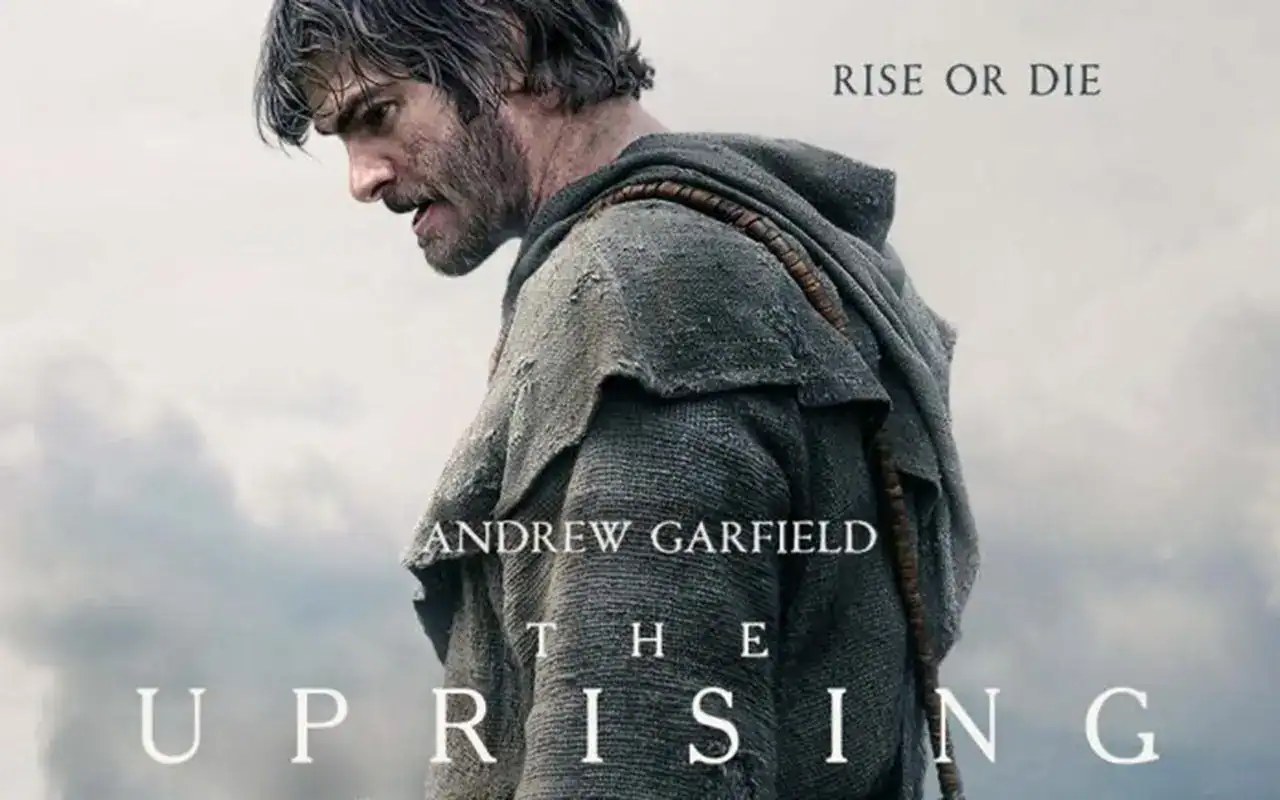
On Screen: The Uprising
Controversy, conflict, corruption and a contemporary application that is frightening. There, we’ve summed up Paul Greengrass’ rendering of the 1381 Peasants’ Revolt that rattled England to its rotten ruling core and ushered in decades of lawlessness. The film can be rented on the major platforms (Netflix, Apple TV+, etc.) and will likely be offered as part of the subscription package for Peacock in the weeks ahead, so if you didn’t make it to the local cinema (or even if you did) this should be a “must see.”
Now, an editorial sidebar, for which we beg your indulgence and forgiveness since it would incur a rental fee. It would be an interesting idea to have every presumed voter in our up-coming mid-term elections to watch “The Uprising” before entering the polls or mailing in their ballot. Not feasible … but intriguing.
Now, onto the review.
Andrew Garfield, who is identified only as “the Ploughman” throughout the film, has lost his wife and children to the plague, literally scratches out a meager existence from the land and reaches the end of his emotional rope when confronted by a demand to pay crushing taxes levied by the corrupt King’s Council … the Cabinet, if you would.
The encounter that ensues, punctuated by sexually abusive behavior by the soldiers guarding the tax collector eventuates into the Peasant’s Revolt with Ploughman a reluctant leader along with John Ball (Jamie Bell) as the defrocked priest freed from prison by the rebellious mob and Wat Tyler (Cosmo Jarvis) an army veteran who has returned from endless battles to embrace the anger and despair of the common people. Ball and Tyler are historical characters. The Ploughman is that created fictional character who is the device used to consolidate and move the story along.
In short, ignited by that encounter, the mob grows in size (there were over 5000 extras involved in the filming) marching toward London to present their plight to King Richard II, played with painful uncertainty by Woody Norman. The only sane voice around the boy-king is his mother, Joan of Kent, played with steely elegance by Katherine Waterston, brilliant acting daughter of the Cornwall, CT Waterston family. For the members of the King’s Council, the peasants are sub-human, a tireless nuisance to be eradicated so that their pursuit of individual wealth can continue unabated. Is it getting warm in here, or is it just me?
It is the duplicity of the deeply insecure king that not only feeds the plundering of London, the beheading of his Council but retribution that leads to the slaughter of most of the peasants.
No, “The Uprising” is not a musical (although the peasants do sing as they march on London) and the violence is presented in near documentary style by Greengrass’ use of hand-held cameras to intimately portray the brutality. As a result, settling in with a bowl of popcorn fresh from the microwave and a giant drink for a 2 hour walk through historic memory lane is likely not for every audience.
But …
The parallels with life in contemporary political America are striking. The corruption, the grifting, the anger, the deep frustration, the violence, the wrenching search for answers and resolution ring loud and clear.
Is the answer to take to the streets and riot in mindless carnage? Of course not. What seemed the only answer for peasants in the 14th Century is not the answer for 21st Century society. The lessons in “The Uprising” bear reflection, however. And so, with fair warning given, we encourage you to find time for a screening of this morality tale.
A marketing blunder by the US distributors tried to link the Ploughman to the origin of the Robin Hood legend. The dramatic coda of the film, however, invites the audience to wonder what might be next … both then and now.