This Month’s Featured Article
“We just want to help people,” rescue squads say about potential insurance reimbursement cuts
As of this writing, the government shutdown has just ended. One contentious impasse involved potential reductions to Medicare and Medicaid. Another issue is depletion of health insurance availability.
Much has been said about the fear of small, rural hospitals having to close as a result of these changes. A less-mentioned effect is, “Not only that, but you won’t have an ambulance to take you to wherever the nearest open one is.”
Chatham and Greenport Rescue Squads in New York and Southern Berkshire in Great Barrington, MA, agree about what cuts could mean to them, and the service they provide you: It’s not good.
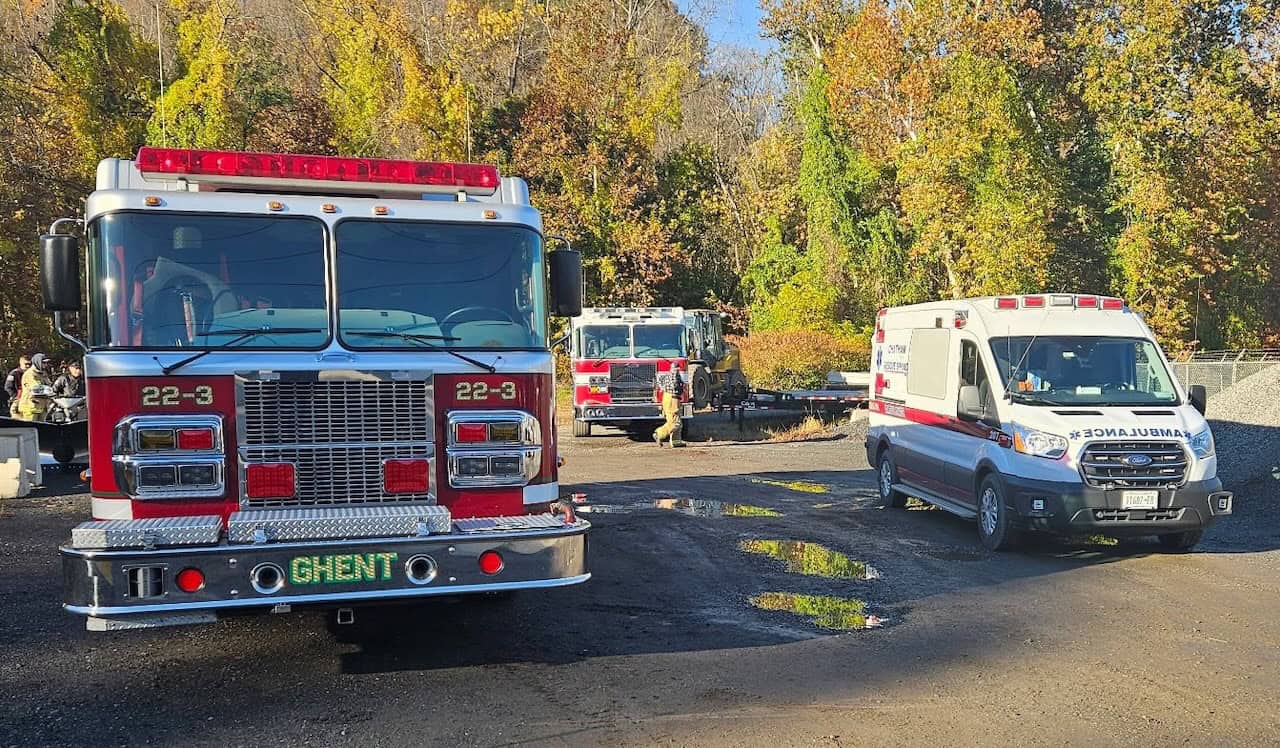
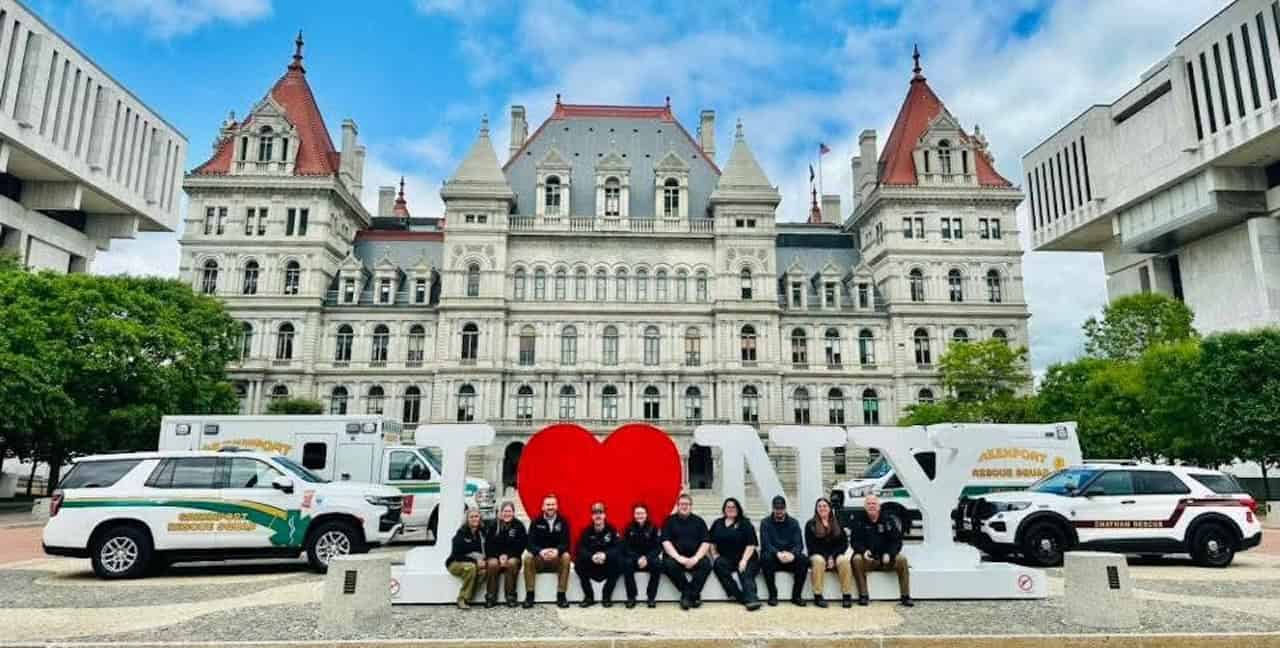
Columbia County’s rescue squads: Chatham and Greenport
Chatham has already received a letter from the company used to bill patients, passing on that they have been told that the federal government will not process Medicare/Medicaid claims during the shutdown. Operations manager Esperanza Sanchez said, “We already expect a funding gap for October. We’re gonna see a small bit of what the bigger problem is gonna be very soon.”
Reimbursements have already seen processing delays; board of directors president Elijah Falkner predicted, “Three months later, we’re gonna feel the effects of this issue.”
Medicare, they both reflected, serves the most underprivileged members of society. Sanchez said, “Not having that funding is detrimental. We can’t raise rates because they can’t pay now.”
Falkner finished with, “It’s sad what we’re doing to our most vulnerable populations.”
Aidan O’Connor, executive director of Greenport Rescue Squad and president, board member, and paramedic with Greene County Paramedics, added his concerns: “I’m certainly worried about EMS, but hoping we can work together and work through it all.”
With potential changes ahead, he said, “GRS is doing everything possible to make us healthy as an organization for the next two to three years. I feel there will be some of the most painful EMS experiences, due to rising costs and reimbursements being stagnant.” Private insurance is already negotiating to reimburse less, with Medicare giving only a fraction of costs.
Cuts will be difficult to analyze, he feels, because, “We just don’t know how many people will fall off Medicaid and join the uninsured. Sometimes those people who are the higher users of the system require more care. If we see too many coming off, that’s the biggest fear. We have a big bucket now of uninsured, and they are the hardest to collect on.”
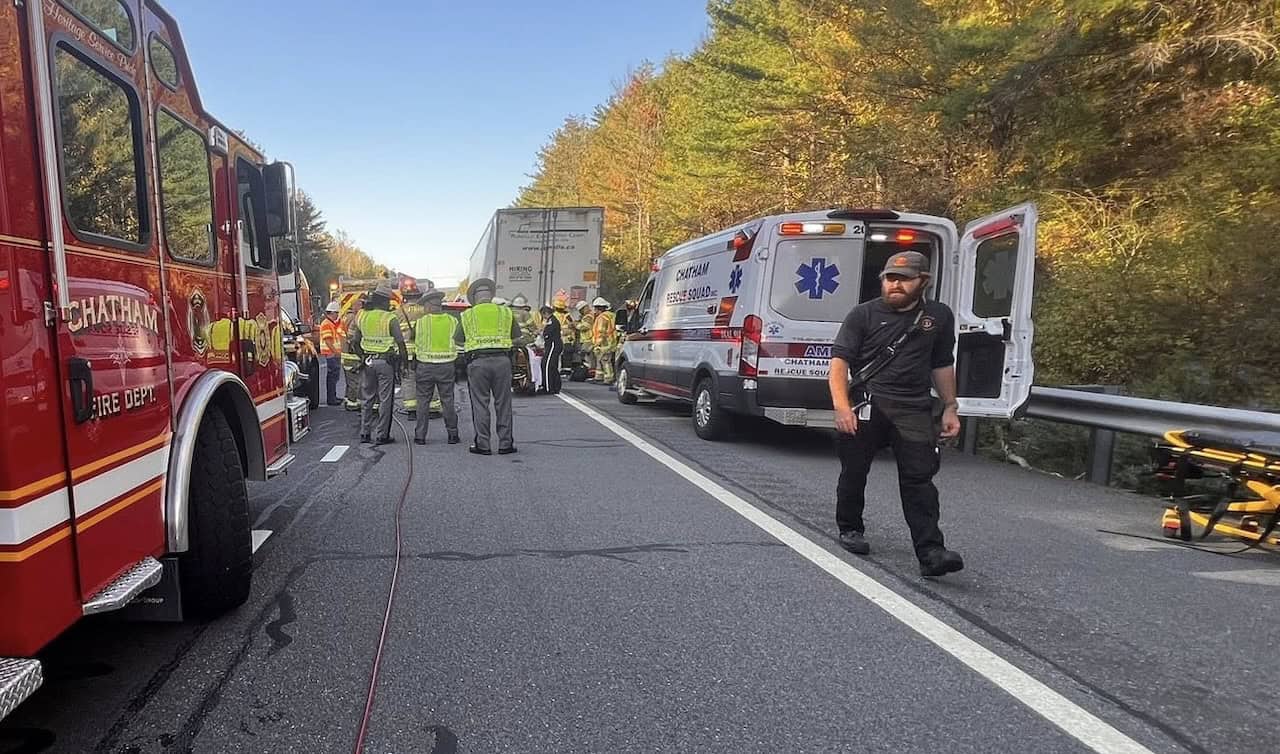
Berkshire County’s rescue squad: Southern Berkshire EMS
Southern Berkshire EMS chief of operations Kevin Wall noted that, “Medicaid reimburses at the lowest rate of all insurers. Any cuts to the already low reimbursements would be of great concern to not only EMS agencies but also hospitals.”
The three rescue squads have been around through many changes.
Southern Berkshire formed as a volunteer agency in 1968, transitioning to paramedic and primarily career EMS, with some volunteers remaining, in 2014. Besides Great Barrington, they serve the communities of Alford, Egremont, Monterey, and Sheffield, MA.
As to the possibility of increased out-of-service times in their district if local Fairview Hospital were to close, Wall offered, “Yes, delays would be significant as the next closest facility is Berkshire Medical Center in Pittsfield, 35-40 minutes farther from our service area. This would also increase wait times, as BMC is already experiencing longer wait times currently.”
The importance of volunteers
Greenport and Chatham both began as part of the local volunteer fire departments, in the mid-1930s.
In Greenport, that was when firefighters had to take an injured fellow fireman to the hospital when no ambulance came. They were the first in Columbia County to transition to career staff and are the busiest in the county, handling over 6,000 calls annually – an estimated total of 6,500 for 2025. Their district includes the city of Hudson and its surroundings, including much of the center of the county. They primarily transport to Columbia Memorial Hospital in Hudson.
In the 1970s, after much discussion, Chatham Rescue’s increasing call numbers led to adding non-fire department members and (gasp!) women. They operate from two stations, with four vehicles to cover the northeastern corner of the county, staffed by career paramedics and EMTs, augmented by a few remaining volunteers. The 300 calls a year back in the ‘70s has swelled to, as of mid-October, 2,334 for 2025. About 20% of their patients go to CMH, others to Albany or Pittsfield facilities, depending upon the severity of their condition and location of the incident.
Sanchez feels that CMH is in the most danger from cuts, “Due to a lot of factors, this will affect the smaller, local ones the most. It’s a trickling effect; hospitals have a hard time collecting because people can’t pay without Medicare. That means the ambulance is also not getting paid to take them to the hospital with the capabilities to care for what they need.”
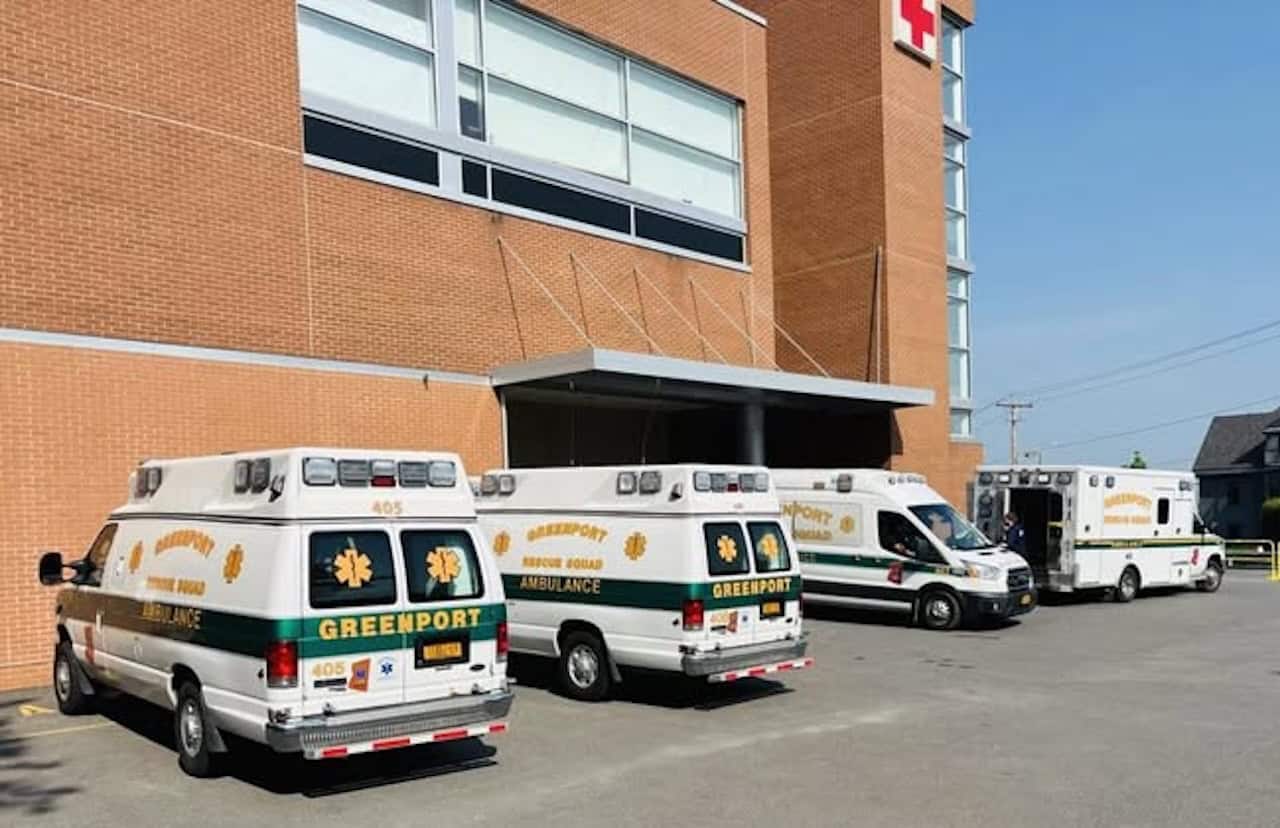
Rescue squad funding
Medicare and Medicaid payments make up about half, or for 2025, $923,000 of their $1.8 million budget, which is predicted to rise to $2.1 million for 2026. Private insurance, self-pay, and monies from towns served make up the rest of the squad income.
Cuts would definitely have adverse effects. Sanchez noted, “We’re not in the business of saying ‘no’ to people, but with reduced income we would have to consider reducing staffing. This would not be good for the entire district.”
Falkner added that, “It would affect local taxpayers. We would have to increase the amounts we get from the towns.”
Greenport’s annual budget is $3.5 million, with about $2.8 to $2.9 million of that from billing, 87% of which is through Medicare/Medicaid. Monies from their municipalities served and the Columbia County EMS system make up the difference.
Potential cuts, staff, and rigs
O’Connor sees ACA cuts as being a massive hit to EMS, and notes they are bracing for that to impact in a negative way as they look to 2026 and 2027. GRS is already being very thoughtful about raising money through donations and looking at ways to reduce total costs by collaborating with other nonprofits. Recent grants allowed them to purchase $120,000 in new equipment.
Four ambulance districts in Columbia County are still locally operated. One has been part of a larger for-profit organization for many years. All are staffed with career paramedics and EMTs. An intricate, effective mutual aid system moves rigs and crews to provide coverage when any of the squads depletes their own resources. In other words, if you live in the Community Rescue Squad district (Copake, Hillsdale, and Ancram areas), don’t be surprised when you call for an ambulance, that one from Chatham or Valatie shows up.
The challenges facing EMS
EMS is already in a tough spot. Decreasing volunteerism has forced squads to employ career staff, meaning payroll, perks, and bookkeeping. Pay must be competitive, but needs to be within budget constraints; many of the staff work for multiple agencies to make ends meet. Squads must also make ends meet, which they do by billing patients, which means income from insurance, Medicare, and Medicaid. Another income source is payment from towns served, which means annual negotiations at which town officials must balance their need for coverage against potential tax raises.
For many squads, Greenport among them, transporting patients from and to extended care facilities is a considerable percentage of their call volume. Any insurance cuts will certainly adversely affect payments for these.
The cost of doing business
Vehicle prices keep going up, and this will only increase with the new tariff levies. An ambulance costs $100,000 or more, and that’s before any equipment is added. In 2024, information from Chatham Rescue’s Advanced Life Support Coordinator Dylan Garbarino noted, “Technology doesn’t come cheap,” as he listed a Stryker stretcher costing $17,000, a LifePac 15 cardiac monitor at $45,000 (with the latest version coming in at $60,000), Stryker stair chairs used for getting patients out of tight spaces or down stairs $25,000 each, and child restraints to safely secure the small ones to the stretcher at $17,000. And so on, all of it multiplied by the number of ambulances each squad operates.
Technology does not come cheap … but neither do lives.
Most Columbia County squads depend upon the local hospital, Columbia Memorial Health, a part of the Albany Medical system, as a primary destination. Their closing completely would be “catastrophic to the EMS system,” O’Connor emphasized.
Recently, CMH announced plans to apply for redesignation as a critical care hospital. This would include drastically cutting beds and closing the ICU department, while adding operating rooms and specialty care.
Squads are concerned that this will force them to make more transports to hospitals further away from their districts. There is a ‘golden hour’ of emergency care, meaning that the best outcomes happen when patients get the optimum care within one hour of an incident; further travel would drastically cut into this.
The additional transport times would also affect overall coverage. As an ambulance is out of its district longer, it causes a shortage, and other squads have to move in to cover the area.
A side effect of this would be increased wear and tear on ambulances, increased gas usage, and more overtime for employees, all of which must be taken into consideration when planning personnel assignments and budgets.
Reaching out to several squads in Dutchess County brought the information that their status is changing, with some areas being served by and others presumably becoming part of, a large for-profit company headquartered downstate. On the one hand, this could ensure continuous coverage with career staff. On the other, it will take away the long-standing personal tradition and helping-our-neighbors aspect of EMS in these areas.
Regardless of who is operating them, all rescue squads face the same situation, while all want to provide the same service: being there when your emergency needs them. As Sanchez put it, “We just want to help people.”