Real Estate
STARTER HOMES STILL EXIST
What is a starter home?
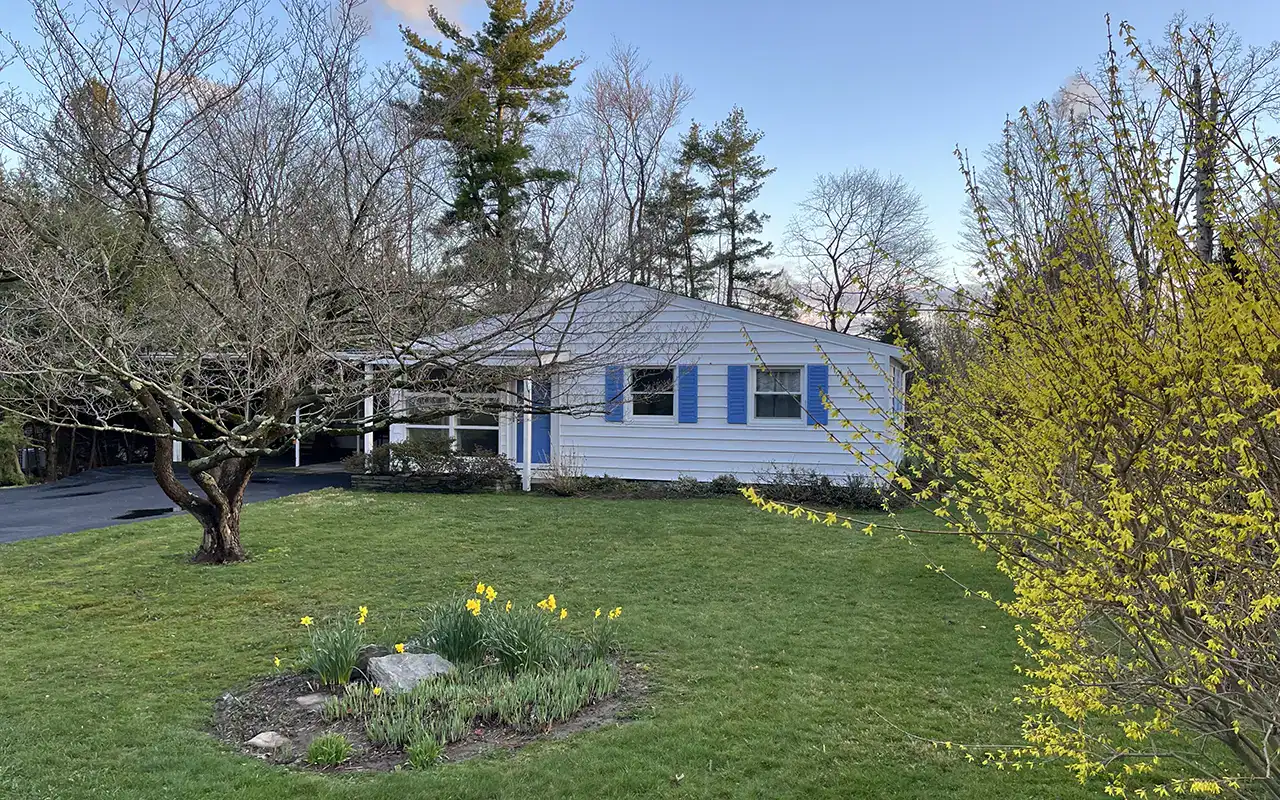
Drive the rural roads or village side streets of Litchfield, CT or Dutchess County, NY and you’ll spot them if you’re paying attention: the modest Cape, the 1950s ranch with aluminum siding, the Victorian with peeling paint and a sagging porch. Starter homes are not grand weekend estates with acreage, new modern builds perched on hillsides, or cosmetic flips. Starter homes are the houses that initiate people in homeownership.
The idea of a “starter home” sounds simple, a first house, not your forever house. The meaning of a modest, affordable stepping stone for a family has shifted dramatically over the past hundred years. The starter home hasn’t disappeared, but finding one requires quick, decisive response times, informed number crunching, and cash or mortgage approval in order to compete with real estate investors and flippers.
Traditionally, a starter home was defined as a small, detached house on its own lot, affordable to a first-time buyer, with the possibility that the first-time owner would eventually outgrow it. For decades, a starter home usually meant two to three bedrooms with one bathroom, 800 to 1,500 square feet on a small lot, and a price at the lower end of the local market.
A history of starter homes
In the early years of our country, a starter home was built by a landowner clearing land and building a one-room house that was gradually expanded or replaced. By the 1920s and 1930s, many working and middle-class families lived in compact or multiple-family buildings with less than 1,000 square feet of living space and limited amenities. Buyers didn’t start small and move up; small was standard. Function and affordability mattered more than resale value, and home ownership was limited to less than 50% of the population.
After World War II, the starter home became a cultural symbol. Returning veterans, aided by GI Bill financing, bought newly built Capes and ranches in expanding suburbs. These homes were deliberately modest and affordable, designed for entry into the expanding middle class. Garages were optional and one one expected en suite bathrooms or central air conditioning. Developers built tens of thousands of “starter homes” – modest, mass-produced, single-family houses designed to be affordable entry points into homeownership. The most iconic of these was Levittown on Long Island.
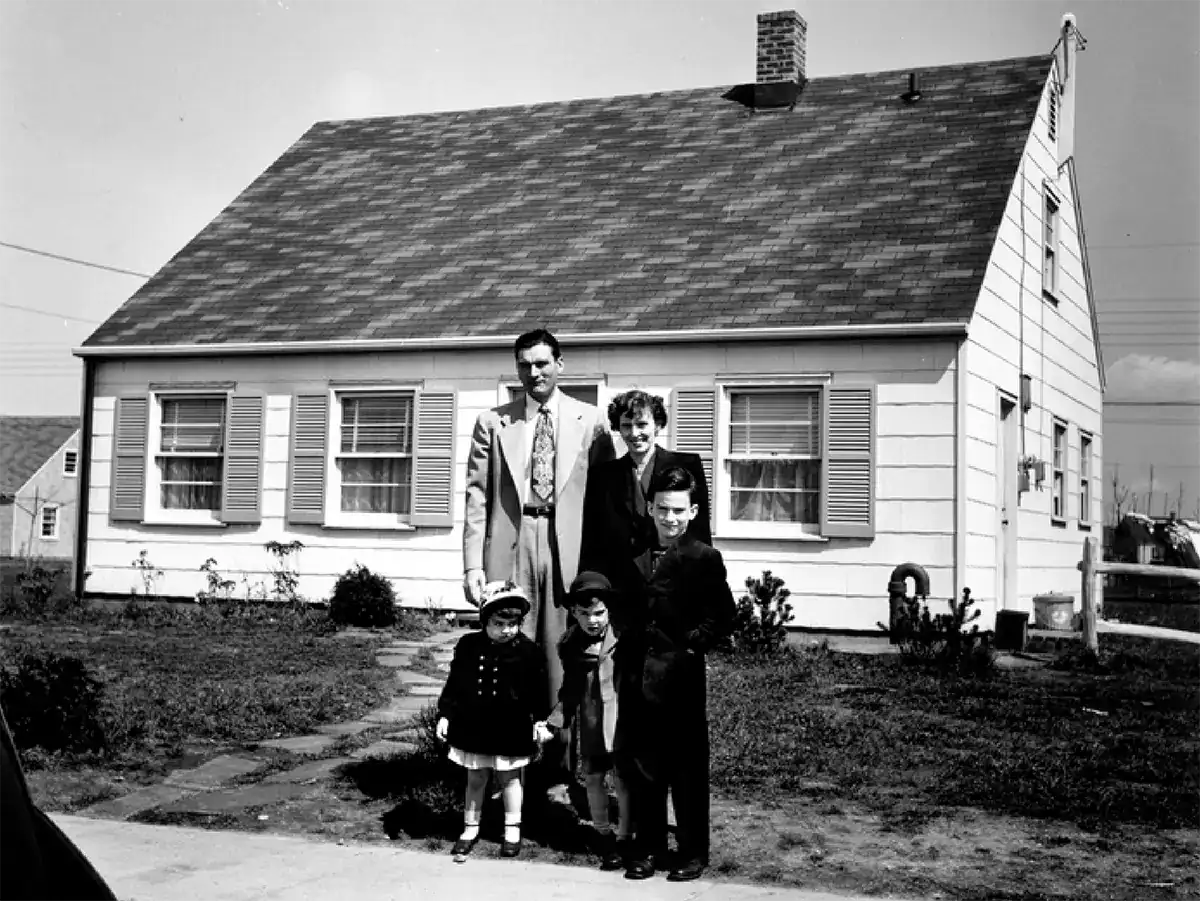
Between 1947 and 1951, the original Levittown expanded to approximately 17,000–17,500 homes built on about 7.3 square miles of land, making it one of the largest private housing developments in US history. The homes were priced to be affordable for working-class families. A house cost around $6,990–$8,000 – a price point far below most traditional houses at the time. ($8,000 in 1948 is equivalent in purchasing power to $108,000 today. Average household annual income was $8,000.) With federal support from the Federal Housing Administration and Veterans Administration through mortgage guarantees, buyers often could purchase these homes with very low down payments or even no down payment and favorable long-term financing. This made monthly mortgage payments comparable to or less than rent.
Starter homes were small and efficient, typically around 800 square feet with pared-down designs. Many original Levittown houses had no basements or porches, reflecting the focus on basic, affordable living space rather than luxury. Builders used mass-production techniques adapted from wartime industry: standardized materials purchased in bulk, assembly-line construction methods on site, poured concrete slab foundations (instead of basements), and frequent use of factory-cut lumber and components. These techniques allowed crews to build as many as 30 houses per day at peak production. In later decades, some of these 1950s-era houses were seen as targets for renovation or tear downs due to their minimal finishes and small scale. Today these Levitttown houses are listed at $750,000.
Bigger new houses, smaller households
Over the past 80 years, American houses have grown steadily larger even as the number of residents per household has shrunk. In 1948, the average newly built single-family home measured roughly 1,000 square feet; today it is closer to 2,400–2,600 square feet, depending on the year – more than twice the size of most 20th century starter houses. At the same time, the average US household size declined from about 3.6 people in 1948 to roughly 2.5 today, reflecting fewer children per family and more one- and two-person households.
The result is a striking reversal of the post-World War II model: larger homes built for smaller families, often with more bedrooms, bathrooms, and specialized spaces, than earlier generations of homeowners would have considered necessary for a “starter” house.
Today fewer small homes are being built. Builders face higher land costs, stricter zoning rules, larger minimum lot sizes, more building code and zoning regulations, and more expensive materials. If it costs nearly as much to build a small house as a large one, the math nudges builders toward larger homes with higher margins. The result is that the pipeline of brand-new starter homes has slowed to a trickle.
In places like Litchfield and Dutchess counties, that means today’s starter homes are usually older homes, many built between 1900 and 1980, requiring renovation, or subsidized “affordable” new builds for buyers who fall within certain income limits.
Are starter homes a good
investment?
Looking at the big picture, starter homes under 2,000 square feet still offer buyers the opportunity to build equity. The chart comparing four rural small towns, one of the most expensive and one of the most affordable, in Connecticut and New York, supports the wisdom of investing in home ownership at the entry level. In the last ten years, the median price of a 2,000-square-feet or less house in Salisbury rose 178% – more than the 150% increase of the median price of all single-family homes during the period. The median value of a starter home in North Canaan, CT increased 222%, similar to the overall 219% increase in the median price of any sized home.
A slightly different pattern emerges in lower priced Dutchess County with starter homes in Amenia increasing 184% less than the 219% in upscale Washington and less than the overall increase in prices of all homes in Amenia. Like Salisbury, starter homes in Washington, NY appreciated more than the town’s median price of any single-family home. Generally, if buyers can afford a more expensive starter home, they might want to pay more and buy a home in a more affluent market. However in the past ten years investing in any real estate was a smart idea during this period of historic house appreciation.
How handy are you? The
temptation of a fixer upper
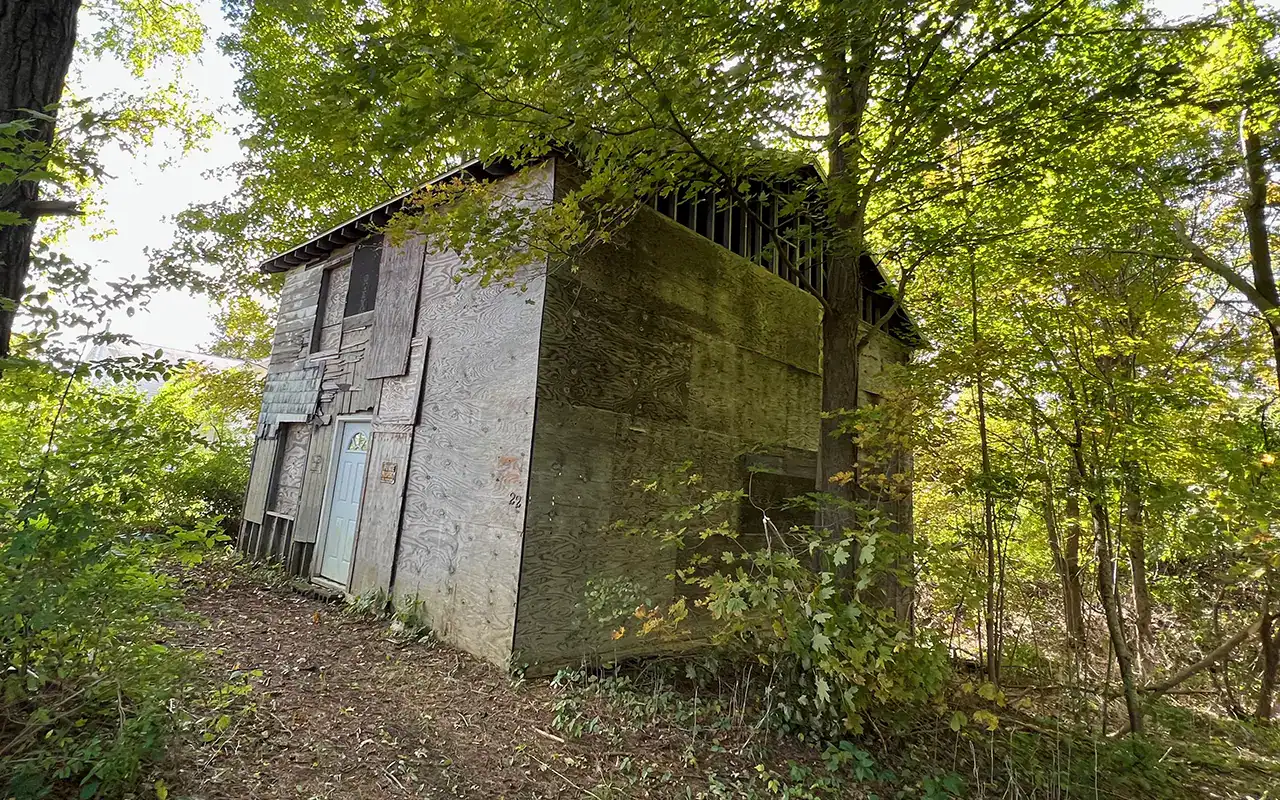
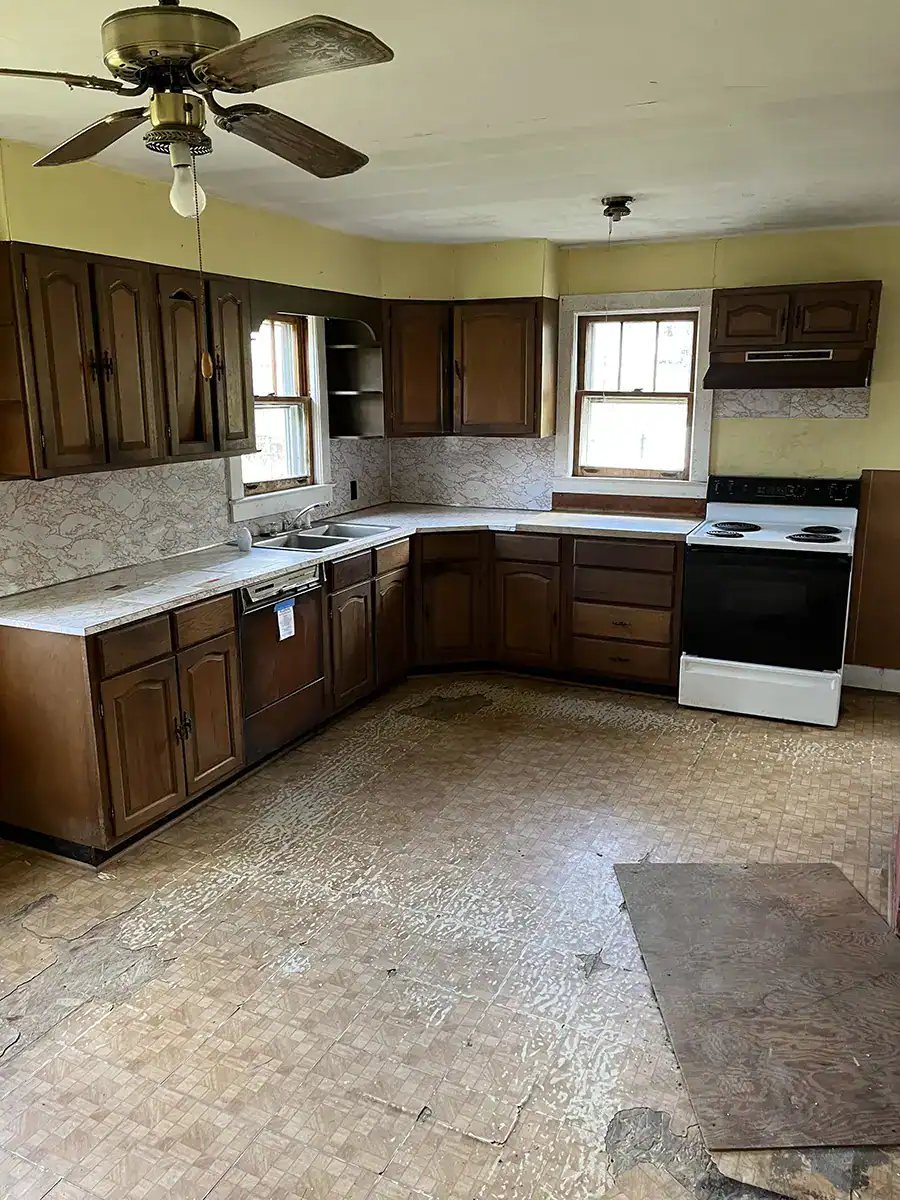
Because move-in-ready smaller houses are scarce, many first-time buyers consider distressed properties – the ones with leaning porches, no kitchen, or 1950s bathrooms – at a very low price. An extreme example is a 2,000-square-foot structure listed for $125,000 in Dutchess County, described in the listing as an “investor’s dream with endless potential.” A distressed home can look like an opportunity, and sometimes it is, or it can turn into an expensive surprise. (Watch the 1986 movie The Money Pit with Tom Hanks if you are tempted to buy one.) Renovation costs have risen sharply, contractors and subs are booked up years in advance, and materials fluctuate in price. So how much might necessary improvements to a small house cost? What’s considered a light renovation of painting, flooring, and minor carpentry could run up to $35,000. An economical kitchen refresh with new appliances, counters, and cabinets (think IKEA) may approach $50,000, and bathroom re-dos $15,000 to $30,000 each. A simple roof replacement will be at least $12,000, new septic anywhere from $20,000 to $45,000, and a new furnace $15,000 to $20,000.
A full gut renovation including major system upgrades, windows, and insulation could easily approach $200,000. The emotional math is tricky, and a buyer may think, “We’ll fix it slowly.” But houses do not age predictably. Roofs leak on their own schedule and furnaces fail on cold days. The best distressed-property buyers have renovation experience, reliable contractor relationships, and cash.
Great expectations, smaller homes
Another change to the starter home concept is cultural. First-time buyers today often arrive with high expectations shaped by renovation television programs and social media – sleek kitchens with islands, home offices, spa showers. Older starter homes were built for a different lifestyle – fewer possessions, fewer electronics, fewer rooms. This mismatch can make a perfectly solid small house feel inadequate until someone lives in it and realizes that smaller is also simpler, cheaper to heat, faster to clean, easier to maintain, and less expensive to insure.
Starter homes continue to serve a practical economic and important emotional role. Owners build value, pay down principal, and later use that equity toward a larger purchase. A starter home is where people learn home ownership skills – mowing the lawn, paying taxes, maintaining the deck, servicing the oil furnace, and developing working relationships with plumbers and electricians.
How to find a starter home
Today starter homes can still be found for less than $300,000, especially if you look in less affluent towns like Torrington, Amenia or North Canaan where they account for more than half of all sales, or in village locations with small lots. Smaller, less expensive houses are sold quickly, and buyers need to be prepared with financing in hand to act decisively with a buyer’s agent who understands the specific market and can guide negotiations and documentation. Don’t expect to bargain on price unless extensive renovation is required.
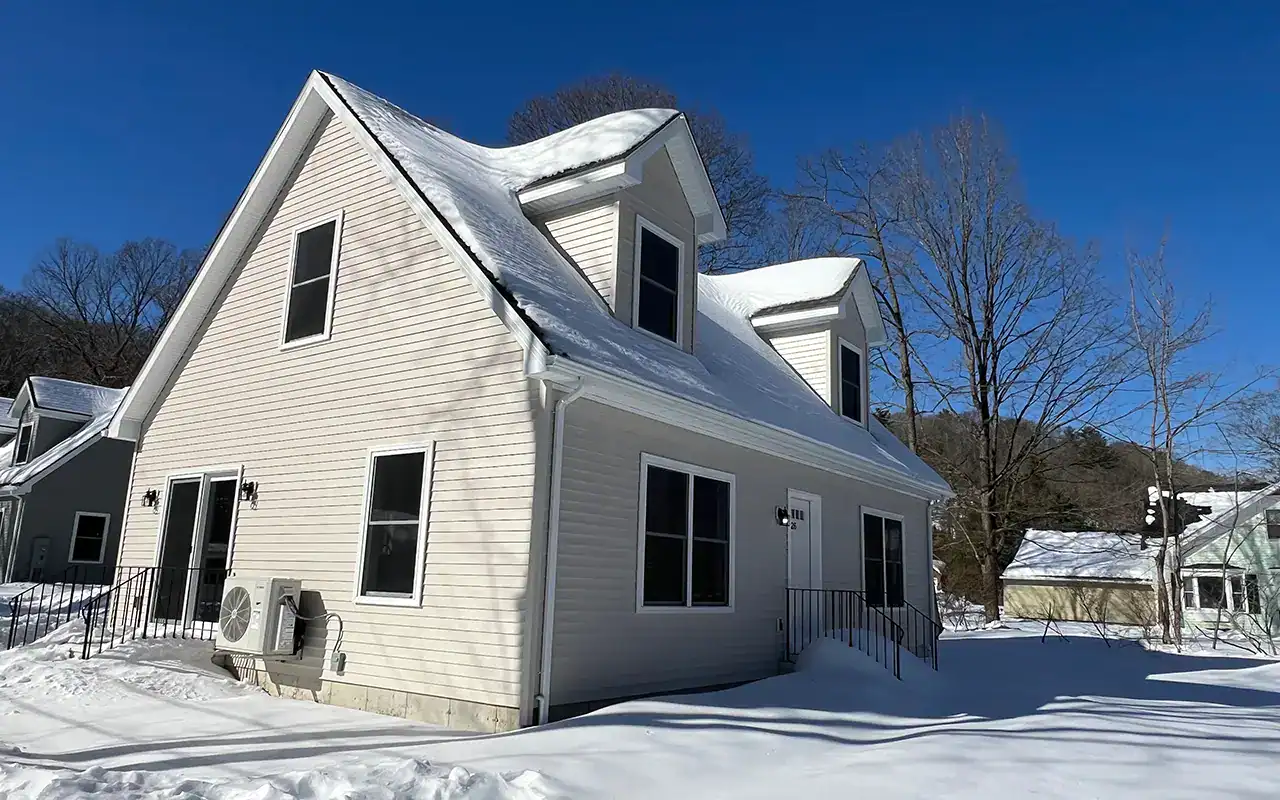
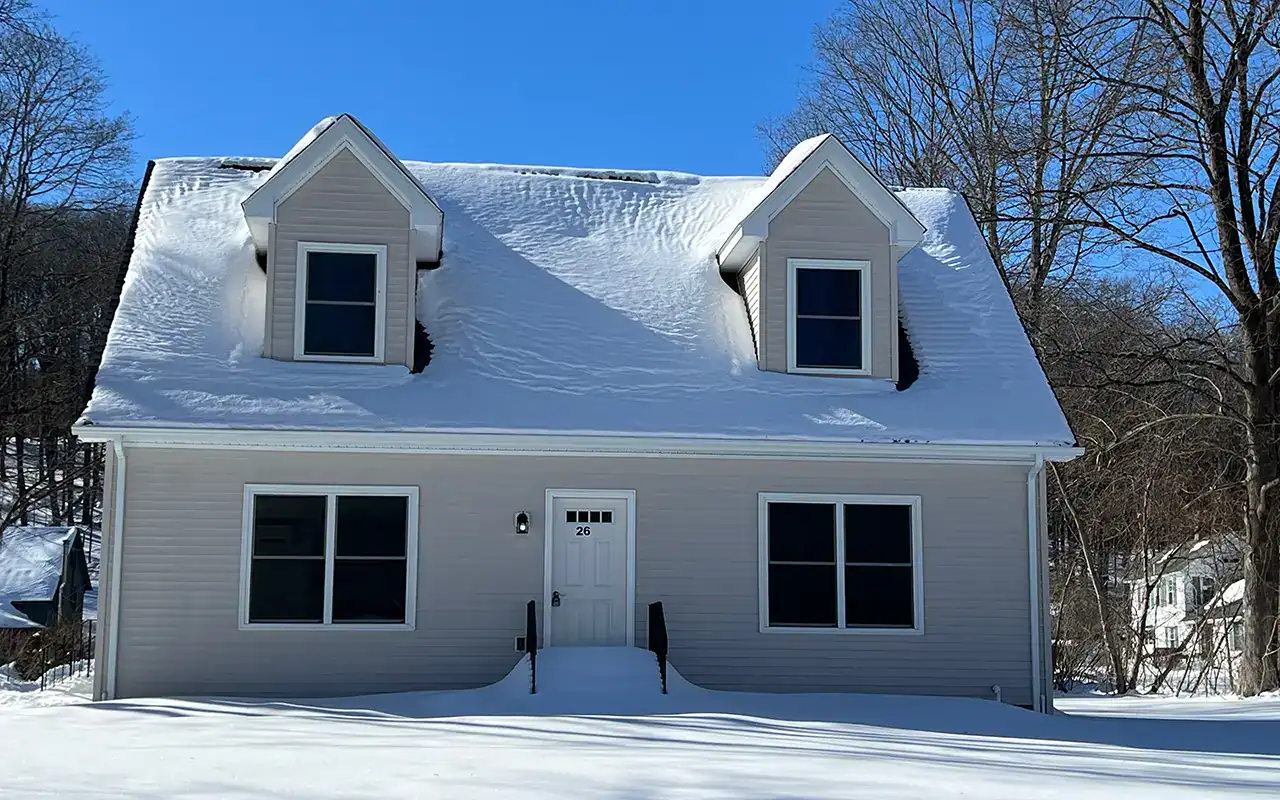
Another avenue to pursue is subsidized housing available for $250,000 to $300,000 to young families who meet certain income qualifications. 26 Undermountain Road in Salisbury, CT is a newly completed, ready-to-move-in three bedroom with a basement available for around $250,000. Using state and not-for-profit funds, the house cost approximately $500,000 to build according to Karen Sunnarborg, Housing and Planning Consultant. Potential buyers must complete a pre-application, and qualified candidates are entered into a lottery. After qualifying in terms of household income, the biggest stumbling blocks are credit scores, down payments and mortgage approval. Sunnarborg estimates that at current interest rates the monthly cost of ownership would be approximately $2,000 including mortgage, taxes, and insurance.
The starter home has always been about entry – a modest, imperfect house that makes homeownership possible. While postwar America built thousands of small, affordable houses for first-time buyers, rising costs, zoning, and changing expectations have inhibited new, market rate construction and pushed today’s buyers toward older homes, fixer-uppers, or subsidized options. In Litchfield and Dutchess Counties, starter homes still exist, but they sell fast, often need work, and demand financial readiness. Despite the challenges, smaller homes continue to offer a proven path to equity, practical living, and the hands-on education that comes with owning a first house. •
Christine Bates is a registered real-estate agent in New York and Connecticut with William Pitt Sotheby’s. She has written about real estate and business since Main Street Magazine’s first issue in 2013.