
This Month’s Featured Article
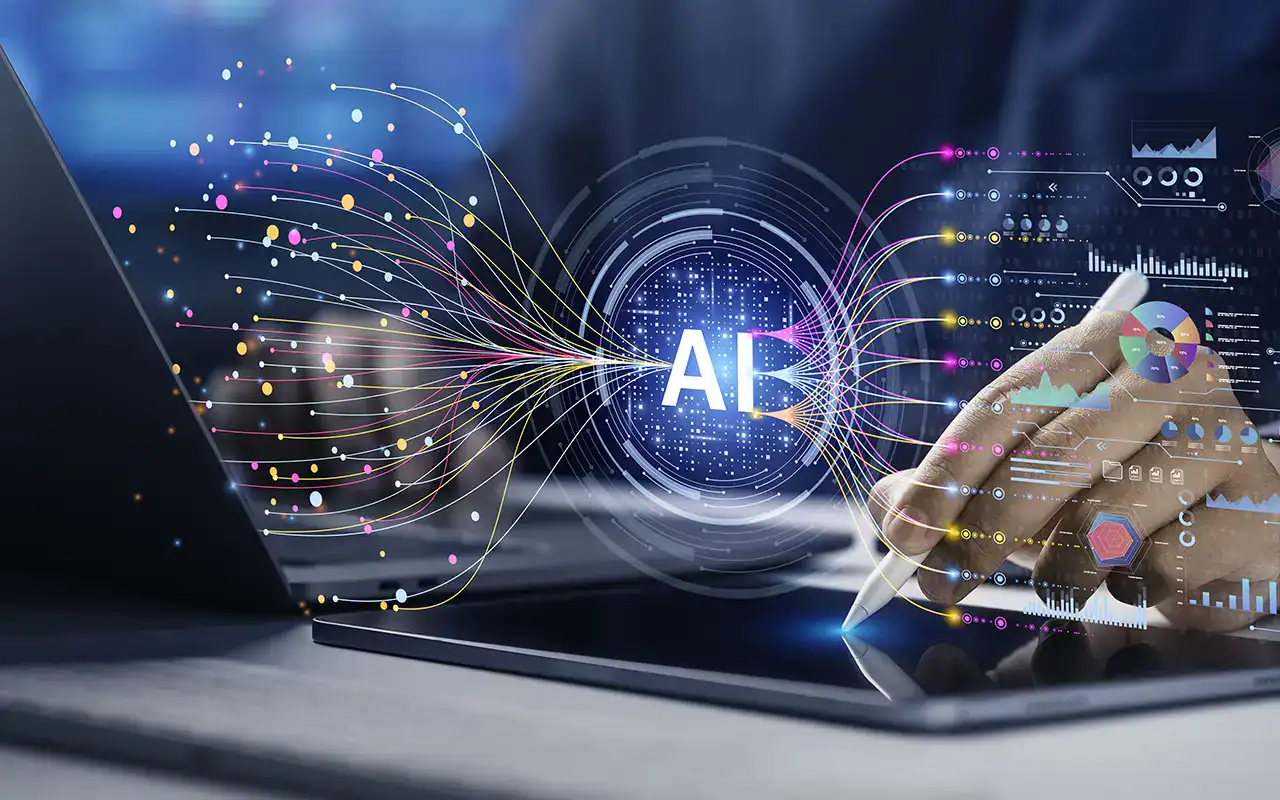
Tech & AI: Friend or Foe?
How many of you are like me and wondering what in the world is going on with AI? Yes, yes, I’m talking about AI – again. I’m sick of hearing about it too, yet here I am writing about it.
But just bear with me. This is a little bit different, and this hits much closer to home.
I was recently listening to Madison on Lithium on SiriusXM radio. For anyone familiar with Madison, you know that for the most part she keeps the conversation focused on music, but this time, in between playing Nirvana and Hole, she started talking about the impact of AI on jobs. This piqued my interest, because whatever article she was referencing mentioned that a lot of our job force, as we know it today, will be severely impacted with the trajectory that we are currently on. She went on to cite an article predicting that certain professions, including nurses and physical therapists, will be “safe,” for the most part, from any major impact.
I would certainly hope so! I personally don’t want a robot or computer going hands-on to read and assess my body if I’m not well. No thank you.
Well, this got me thinking about our local businesses and jobs. How has technology, including AI specifically because no one is immune, impacted where we live and how we work?
Didn’t we learn anything from The Matrix?
A few days after I heard Madison’s segment, and for the duration of September into October, news networks ran multiple stories focusing on the big AI companies, regulations (or lack thereof), and how AI could wipe out humanity within a decade. You know, just light topics for the 7 o’clock newshour.
Bill Maher, on one of his segments, talked about AI with Malcolm Gladwell and then discussed it further with a panel that included Fareed Zakaria and Anand Giridharadas. CNN’s Anderson Cooper talked with Bill Gates about how the “turbulent AI era was here.” Cooper also interviewed multiple heads of AI companies as well as whistleblowers. I have found these conversations to be both eye opening and frightening.
I’m sorry but did no one watch The Matrix? The film came out in 1999. Have we learned anything in the almost 30 years since? I know it was meant to be fictional and sci-fi, but it certainly doesn’t feel too far off from our current reality if we’re being totally honest with ourselves. I’m just saying …
I will fully admit that I cannot stand where a lot of technology is headed. Call me old school, but I am very wary. I think a lot of this tech is detrimental to our well-being, and especially to our children’s well-being. There are also many other parts of tech (big and small) that I can’t stand, for example when my phone autopredicts words for me in my texts, DMs, and emails … I’m sorry, but stop. Those autofills are nine times out of ten incorrect anyway and I never asked you to autofill for me in the first place! Like … just stop.
My experience with tech and AI is similar: they get it wrong a lot of the time, so why would I want to make myself dependent on something that’s wrong, making myself dumber, more dependent, and less competent at the same time? No thanks.
On the flip side and hence the conundrum for many, I understand that there are amazing benefits to not just technology but also AI. I am referring specifically to sectors like healthcare in which technological advancements can help with things like early detection of illnesses, which is amazing! We can all stand to benefit from that. There are also advantages with streamlining, efficiency, and speed, like if you have one of these AI thing-a-mijiggies take a photo and change out the background for you or you ask it to give you an alternative layout for your kitchen.
But here’s the flip side of that coin: You do realize that what AI is doing as it spits out this alternative kitchen layout in a matter of a few seconds is taking a job away from an educated interior designer and or architect? Because it is. So do we consider this technology to be a good or bad thing? The jury might still be out.
Is AI stealing jobs?
In my opinion (even if no one asked me), a lot of our jobs as we know them today are in jeopardy, or at least in a place of major transition. And I believe it is our duty to be very careful about how the future will look like for humanity. I wholeheartedly agree that AI needs to be regulated, and I believe that we need to take a closer look at the pros and cons of certain types of tech as it pertains to our physical, mental, and emotional wellbeing as well as to jobs and the environment.
By all accounts, technology as a whole is really and truly impacting a lot of jobs. I’ll give you a personal example: In addition to being the owner and publisher of this magazine, I also own and run a graphic design and marketing firm. In the last few years I have noticed a tremendous change in my clients’ needs as well as in queries for work. There are now many options for your average Joe to create their own graphics with the likes of Canva, social media, and other apps. One can edit videos and create content with just your phone. Not too long ago, you would have needed a person who actually went to school for this stuff and made it their profession – like me. Now everyone with a smart phone, some apps, and an Internet connection is a graphic designer, photographer, videographer, editor, and social media marketer.
So, is my job in jeopardy? It might just be. But I’m not alone in that.
Sure, some of the content created and the work produced is amazing, beautiful, and effective, but for every great piece there is an equal amount of bad work being created. Let’s just keep it real.
The upside to all of this access and tech is that there is more availability and flexibility, and it’s all immediate. And I’m all about efficiency! Believe me. But I beg us to stop and consider one question: at what cost?
You can argue the positives to this too, I’m not saying you can’t. But it seems that our constant desire for needing things right now is actually becoming a slippery slope, and as a parent, I can see the impact on my kids. And it has me gravely concerned.
That’s my opinion. But I was curious what other local folks and businesses had to say about all of this, and how they felt about the impact of technological advancements, including AI. Here is what some of them had to say.
The beauty industry
“I hate what AI is doing to my profession. It gives fake expectations about hair. Clients are misled by AI-generated photos with hair colors that are unrealistic and unachievable,” states Loren Whiteley, owner of The Hair Lounge in Millerton, NY. Loren went on to explain that her clients will often bring in “inspo pics” that they’ll get on places like Pinterest, not realizing that they are AI. She continued to explain that a lot of times the hair colors in these images aren’t colors that exist in this world, so there is no way that she can replicate them and give her clients the hair colors that AI has generated.
“However, I think that when clients use a picture of themselves and have AI put bangs on them, or if they are going from blonde to black hair, and AI spits out an image for them to see before they make a drastic change, that can be helpful. By doing so they are able to see if they like this look on themselves before they commit to it, and that is helpful. But AI-generated content can give people totally unrealistic expectations.”
She added, “Even though I’m not a fan, I don’t mind using AI as an aid. It can be useful to ask it a question or seek out additional information on a doctor’s report to better understand something. But I have to take its answer with a grain of salt because I have found on multiple occasions that when I have asked ChatGTP something, the answer it provides is just straight-up wrong. It’s hard to tell how much AI-generated content is incorrect.”
The health industry
I was curious to hear what Peter Donohoe of Donohoe Training in Lakeville, CT, had to say on the topic. Peter is a strength and movement specialist with a background that spans structural engineering, competitive athletics, and high-level performance. He is a two-time Olympic bobsledder and spent 15 years at Boston Ballet, where he applied an athlete-based approach to training dancers – from developing artists to world-class principals.
“Today, as fitness director at Hydrow and founder of Donohoe Training in Lakeville, I combine strength, movement, performance, and exercise science to help people become stronger, move better, recover from injury, and perform at their best. My approach is grounded in purposeful, progressive training and the continual integration of new research and technology. Current fitness-industry research shows AI is already being used heavily for programming, marketing, communication, and administrative work, while the areas that remain difficult to automate include real-time judgment, movement correction, accountability, trust, and understanding an individual client.”
I was also curious to hear Richard Mack’s thoughts on the subject. Richard is a psychotherapist based in Sharon, CT. He shared, “In my world of psychotherapy, technology had an immediate and profound impact, starting with the pandemic. Using Zoom and other online video-meeting software, we were able to seamlessly continue our work with patients when the pandemic struck. And still today this is a valuable tool. There is talk of AI and other computer software replacing live therapists, but such activities could be nothing but a mirage – the essence of good psychotherapy is the one-on-one personal relationship formed between the therapist and the patient. So, psychotherapy is countercultural in that way – even if delivered over Zoom.”
The field of education
Younger Millennials, Gen Z, and Gen Alpha have grown up with the most recent technological advancements. Curious to learn about the impacts being felt in the education sector, I talked with Carita Gardiner, who is an English teacher and dean at The Hotchkiss School in Lakeville, CT.
Carita shared, “In our English classes at Hotchkiss, we’re reverting to more paper-and-pencil writing and assessments in the classroom. We try to instill in the students that they need to learn how to complete every step of the writing process themselves rather than relying on AI to feed them ideas, organize/outline their thoughts, craft claims and thesis statements, provide evidence, or fix wording.” She explained, “I advise my students that the best use of AI for English is to ask it to tutor them as they memorize vocabulary and/or grammar. ChatGPT will never get tired of giving them practice sentences and quizzing them on new material. Other than that, I tell them it’s better to stay away.”
The publishing and printing world
The publishing world is one that I am quite familiar with, case in point: publishing this magazine for almost 14 years. This is first and foremost a print publication, but we have had to adapt and adjust many times since we first began publishing. Sure, we have embraced certain technologies, including growing our website and using that as an additional place to create and publish content. The same goes for social media: we’re able to create a different kind of content and reach more people.
The flip side, however, is that with the advancements of technology in the last decade-plus, we are now competing with soooo many more content-creating platforms, companies, and individuals. But one can argue that competition is good. Sure, it can be. It also inspires us to stand out from the rest with our original content. But the fear is that with the plethora of content available, our intended audience might be so overstimulated and overwhelmed by being constantly bombarded with content that they’re just no longer interested nor want to engage … with anything.
I reached out to Dean Snyder, owner of Snyder Printer in Troy, NY. Snyder Printer has printed this magazine from our very first issue. I was curious to hear Dean’s professional perspective.
Dean shared, “AI hasn’t really affected our production yet. It has affected prepress though and my estimating software. I can just type in the size and quantity(s) of an item, and it immediately lets me know the best sheet size to run it on. I’m sure when we start to upgrade our equipment (folders, cutters, etc.) that AI will be built into the firmware, which is crazy!”
As part of my design and marketing firm, I work with a lot of indie authors, and in the last few years they have been talking more and more about the negative impact of AI on their industry. One of them (a very prominent author based in England) shared an article with me that stated that 100,000 ebooks used to be published per month, but now it’s over 300,000. The additional 200,000 books? According to this report, they are all AI-generated.
So you can only imagine the impact that AI is having on authors in general, but specifically on independent authors, when they are now not only competing with other authors who sit down and write their own books without the help of AI, but also with two-thirds of their market being flooded with AI-generated content. Writing is about using your mind, imagination, and talent to create. How is it creating when you just tell AI to write a book for you? This shouldn’t be allowed.
Another big change within the book world as of late regards influencers and readers who post promotional content for authors; some authors are now specifying that they do not allow or endorse AI-generated graphics or content, some even going so far as banning it.
An article published by NPR earlier this year posed this question: “All this is marking a turning point for the publishing industry. How can authors ethically use this technology? And do readers really need new AI-authored books in a market already saturated with options?”
Professional services
Kirk Kneller of the Kneller Insurance Agency is a man who wears many hats. In addition to owning Kneller Insurance, Kirk is a farmer, and for many years has sat on various local boards including that of Columbia Memorial Hospital. I asked Kirk what he thought of tech and AI.
“The impact of AI/tech on the insurance industry has been quite interesting. From an employment standpoint, there should be no major impact since we are in the service business. As insurance policies become more complicated to construct and interpret, our clients will need personal service even more. This raises the question of adding staff to ensure appropriate response times for client questions as well as underwriting questions from carriers. From a claims standpoint, AI is helping us check carrier claim decisions. We have recently succeeded in overturning claim declinations by using AI to pull case precedent and/or coverage determinations within minutes. Using AI’s findings, we can substantiate our case for payment instead of denial. All in all, at this point, we are happy with the benefits of using AI/tech to service our clients more efficiently and professionally.”
In the October issue of Main Street, our resident real estate professional and realty writer, Christine Bates, penned an article titled “Real Estate and Artificial Intelligence.” (You can find the article on our website under the real estate section.) In it she discussed how AI is affecting the real estate industry – both positively and negatively. So I asked Christine the same question as everyone else: how does she feel that technological advancements and/or AI are impacting her job as a real estate agent.
“AI is a terrific assistant in assessing the condition of a house and then estimating how much repair, renovation, or replacement might cost. And then listing quality contractors in the area. As an objective source, it also helps navigate the delicate conversation with clients about preparing a house for listing. AI is also useful for document contract checking. You just have to remember to ask and ask again and then check the information. My least favorite part of AI is vendors pushing AI referral and targeting services to realtors.”
I then asked her about the AI-doctored photos that some real estate companies are using. These photos can range from simply removing eye sores like telephone poles or clutter in a living area to full-on “imagine what this house could look like” photos. I posed the question of whether she found these photos misleading for potential buyers. Christine replied, “If a photo is digitally staged, it should be indicated. People need to know what they are looking at. It can be helpful to buyers to see a room empty, painted a different color, or with different furniture. Most buyers can’t imagine a different space.”
I posed the same questions to an area attorney who observed that AI lacks the ability to exercise professional judgment, or fully account for contextual nuances, which can affect the reliability of its outputs.
Drawing on their professional experience, the attorney noted that clients and members of the public increasingly use AI tools to interpret legal documents. According to the attorney, this practice can generate questions or concerns that are not always grounded in the substance of the document itself. While AI may increase access to information and encourage engagement, the attorney cautioned that its outputs may be misunderstood or over-relied upon when not evaluated critically or in conjunction with professional guidance.
So what say you?
By a lot of accounts, there are certainly great advantages, but there are also many downfalls and dangers. I find hearing the different perspectives to be very helpful to create a rounded opinion on the matter. We each have to look at our own life specifically. From there we can decide what makes sense for us and our families today as well as tomorrow and in the coming years. Of course a lot of this is totally out of our control as individual citizens of this world, we don’t control technology nor policies after all. Further, most of us don’t even think twice about the technology that surrounds us in our daily lives if we’re being totally honest. That’s not to say that we shouldn’t raise red flags where we see them. This is our future, too. This is the future of our children. And these technologies are shaping our everyday lives and that of future generations. We have a responsibility to do right by them and do right by our planet.
I don’t know what the right answers are. I just know what feels right and wrong to me. And as I look at this world and our society, I have to admit that I am worried. Call me a skeptic, call me old fashioned, but I believe there are bigger issues at play and that we need to look at the greater good. We have to think about the future of Planet Earth and what is the right thing to do – for everyone who calls Earth home. •
If you have thoughts and viewpoints on the subject that you’d like to share, please reach out to us at info@mainstreetmag.com.